Synthetic Sports Turf Engineering & Installation Specs
Advanced subgrade stabilization, laser-graded aggregate base preparation, high-flow sub-base drainage pipe networks, and ASTM-compliant foam shock pad underlayments engineered for Southern Nevada fields.
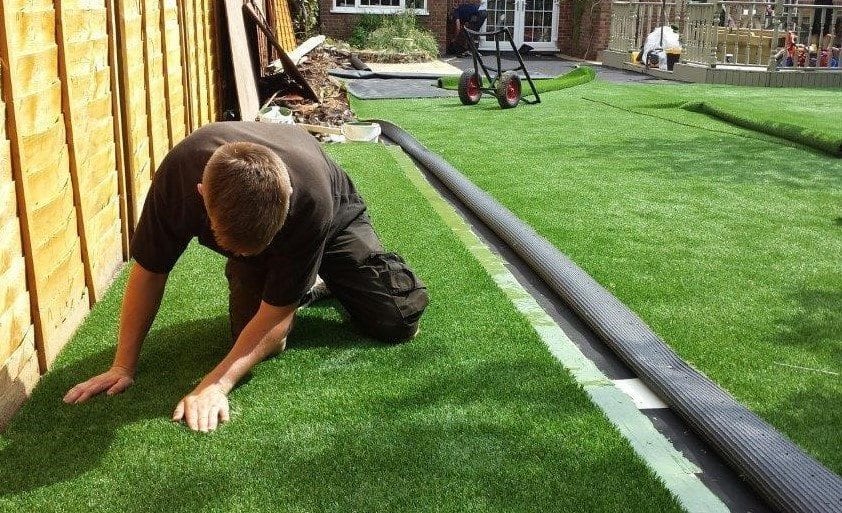
Subgrade Soil Grading & Caliche Excavation Engineering
Long-term field flatness relies entirely on base engineering. Southern Nevada's heavy caliche clay soils require specialized excavation and compaction protocols.
Standard landscaping installations cannot support the lateral shear forces, heavy maintenance machinery loads, and high friction of competitive team sports. Without deep soil excavation, graded aggregate stabilization bases, and safety-tested foam underlayments, an athletic field will efficiently develop subgrade depressions, drainage failure, and high G-max shock values that increase player concussion risks.
Our team manages base preparation and infill engineering to match soccer, football, and multi-sport complexes. For general facility management, scheduling advantages, and municipal cost savings, see our sports field turf page, or explore our indoor fitness tracks on our indoor gym turf page.
Durable Soil Stabilization
We configure subgrade soils to achieve a 95% standard proctor density, laying heavy-duty geotextile stabilization fabrics over native clays to prevent soil migration while maintaining permeability during intense desert storms.
Precision Civil Specifications for Sports Turf Fields
Athletic fields require strict geotechnical engineering tolerances. A flawed foundation base leads to premature seam failure, backing rot, and G-max safety violations.
Laser-Graded Subgrade
We excavate native soil and laser-grade the surface to a 0.5% slope, laying a compacted aggregate base of clean crushed granite to resist shifting and direct runoff.
G-Max Shock Attenuation
We install high-density closed-cell foam shock pad underlayments beneath the turf, absorbing impact energy to keep G-max ratings consistently below 110.
Fiber Polymer Integrity
Our dual-fiber systems combine high-density slit-film and monofilament fibers, certified for UV stability, tensile strength, and heavy-metal-free safety.
Infill Materials Comparison for Athletic Fields
Selecting the correct infill type stabilizes the synthetic grass blades, supports player traction, and maintains safety compliance.
| Infill Class | Technical Performance Specifications | Optimal Athletic Application | Thermal Behavior (Desert Sun) |
|---|---|---|---|
| Rounded Silica Sand | 20/40 mesh clean quartz; resists fiber abrasion and compaction | General practice fields, multi-sport community zones | High heat retention |
| Acrylic-Coated Infill | Acrylic polymer encapsulation; antimicrobial and dust-free coating | School fields, municipal playgrounds, pet-friendly zones | Medium heat (remains cool to touch) |
| Organic Coir / Cork | 100% natural organic cork and coconut coir fibers; moisture retaining | High-intensity soccer, rugby, and football complexes | Very Low (drops temp up to 30°F via evaporation) |
Silica Sand Gradation & Compaction Resistance
Silica sand is the standard ballast for sports turf systems. We specify rounded grains (20/40 mesh) that resist compaction and prevent the abrasive grinding of synthetic grass fibers. This maintains uniform vertical blade orientation and ensures consistent footing under rotational cleat forces.
Acrylic-Encapsulation & Antimicrobial Protection
Ideal for school fields and municipal play areas, acrylic-coated green sand features antimicrobial active coatings that resist odor-causing bacteria, mold, and mildew. The rounded polymer coating prevents dust formation, maintaining a clean surface during intensive training sessions.
Organic Cork/Coir Thermal Dissipation
To counter Southern Nevada's extreme summer temperatures, organic infills made of coconut coir and cork absorb moisture and release it slowly through evaporative cooling. This drops surface temperatures by up to 30°F. For pet-recreation surfaces, we combine these with zeolite odor neutralizing minerals; see our artificial grass for pets page.
Key Phases of Sports Turf Installation
We follow a strict, multi-step construction protocol to ensure a flat, stable, and durable athletic field.
Caliche Excavation and Subgrade Geotechnical Leveling
Las Vegas soils contain hard, clay-like caliche that blocks water flow. We excavate 4 to 6 inches of native dirt and level the subgrade using laser-guided scrapers. We lay a crushed granite base and compact it using heavy 10-ton rollers to build a solid foundation that prevents dips and shifting.
Industrial Seaming & Border Anchor Collars
Athletic use subjects turf to immense pulling forces. We roll out the synthetic panels and join the seams using 12-inch wide industrial seaming tape and two-part polyurethane adhesives. We secure borders using concrete collar headers and stainless steel spikes to prevent edge lifting.
Dynamic Infill Distribution & G-Max Diagnostics
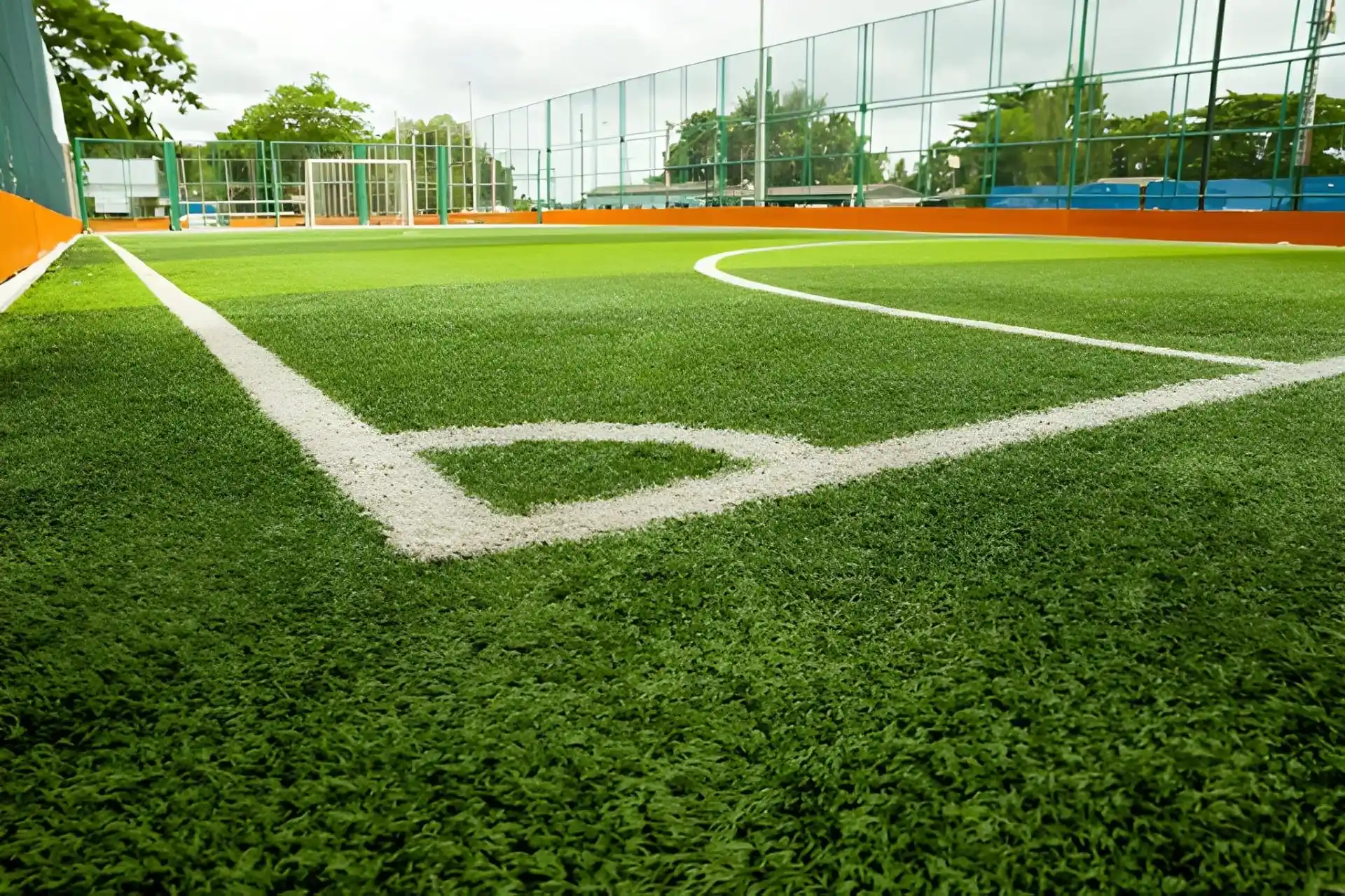
Once the turf panels and permanent boundary lines are in place, we distribute aggregate infill sand evenly using drop spreaders. We use power brooms to groom the grass fibers upright. We conduct G-max impact tests across the field to ensure it satisfies safety requirements before opening it for play.
For residential options or paver patios bordering play areas, check our pavers installation or visit our synthetic grass design services.
Permanent Inlaid Boundary Lines
Rather than painting lines that fade and require toxic chemicals, we integrate permanent colored turf markings (regulation white, yellow, blue) for soccer, football, and agility grids. We cut and secure these markings directly into the field structure during construction, ensuring boundaries remain clean and crisp forever.
Commercial Utility Savings and SNWA Rebates
Replacing high-water natural grass with synthetic sports turf supports local conservation efforts and drops monthly bills.
Water Consumption Elimination
Irrigating a natural turf field in Clark County consumes 2.5 to 3.5 million gallons of water annually. Transitioning to synthetic sports field surfaces eliminates irrigation water requirements completely, ensuring compliance with local conservation mandates and dropping utility bills to zero.
Grounds Crew Labor Overhead Reduction
Natural sod fields require continuous mowing, chemical fertilization, and sod patch recovery cycles. Synthetic sports systems remove these maintenance overheads, allowing facilities to redirect labor and resources. For specialized repair work, see our guide on turf maintenance and repairs.
SNWA Water Smart Landscapes Rebate
The Southern Nevada Water Authority (SNWA) offers financial rebates of up to $3 per square foot for converting natural turf to water-efficient synthetic surfaces. We handle the paperwork, layout measurements, and pre-approval documentation to ensure your sports field project complies and secures the rebate.
For public and private school play areas, visit our artificial grass for schools page to explore kid-safe installations.
Our Sports Turf Design & Installation Process
We manage every phase of sports field construction, from the initial site survey to the final safety testing.
Geotechnical Site Survey
Evaluate soil structure, density requirements, and design the precise drainage gradient.
Caliche Soil Excavation
Excavate rocky desert clay to 4-6 inches using excavators to prepare subgrade depths.
Aggregate Base Compaction
Granite aggregates are laid and compressed using heavy vibratory rollers to achieve compaction targets.
Shock Pad Underlayment
Roll out closed-cell foam shock pads to absorb impact energy and lower G-max scores.
Turf Panels & Seaming
Glue seams using 12" wide tape and polyurethane glue, and cut in colored boundary lines.
Infill Grooming & G-Max
Distribute selected infills using power brooms and run diagnostic G-max impact tests.
Frequently Asked Questions
G-max is the standard metric used to measure a playing field's shock absorption. It measures the impact attenuation of the turf using a missile drop test (ASTM F355-A). ASTM F1936 limits the maximum rating to 200, but we specify systems targeting scores under 110 by incorporating high-density closed-cell polyethylene foam underlayments.
Our turf fibers are UV-stabilized to prevent degradation. For thermal mitigation, we offer cooling infill systems (organic coir/cork or green acrylic-coated sand) which release absorbed ambient moisture slowly through evaporation, dropping surface temperatures by up to 30°F.
We use a dual-layer aggregate base. The lower 3-4 inches consists of 1.5-inch clean crushed stone (no fines) for permeability and water storage. The top 1 inch consists of 0.25-inch crushed granite leveling stone, compacted using 10-ton rollers to achieve a flat surface with high load capacity.
Yes. Regulation boundary markings (white, yellow, blue) for soccer, football, and lacrosse are cut and seamed directly into the green turf panels using colored synthetic grass rolls during installation, ensuring clean boundary lines that never require maintenance or repainting.
Our sub-base features perforated collector pipe networks and high-flow aggregate bases that drain water at rates exceeding 30 to 45 inches per hour. Storm runoff filters professionally into the subgrade drainage outlets, keeping the surface dry and preventing muddy patches or standing water.
Monofilament fibers are single strands that mimic natural grass blades, providing realistic ball roll and player comfort for sports like soccer. Slit-film fibers are wider, flat strands that split during use, offering superior infill encapsulation and wear resistance under high-impact sports like football.
Our commercial athletic installations include an 8 to 15-year manufacturer warranty covering UV stability, fiber wear, and backing integrity. We also provide a comprehensive installation craftsmanship warranty covering seam security and perimeter anchoring collars.
Schedule a Technical Design Consultation
Work with our commercial estimators to plan, design, and budget your synthetic sports field installation project.