OUR SERVICES
Commercial Artificial Grass Systems in Las Vegas, NV
When a commercial property installs artificial grass, the turf product itself is only one part of what determines how well that installation performs over time. The base layer beneath it, the drainage design, the infill material, the seaming method, and the way all of those elements work together under Las Vegas’s specific climate conditions — that combination is what defines a system. A well-specified commercial artificial grass system is an engineered installation built for the demands of the property, not a residential product scaled up and dropped into a commercial setting.
The distinction matters because commercial environments put demands on outdoor surfaces that residential applications simply do not. Foot traffic is higher, maintenance access may be limited, appearance standards are tied to business presentation, and in Las Vegas, the environmental conditions — sustained UV exposure, extreme heat, thermal cycling between hot days and cooler nights, desert dust — affect every material in the system from the backing to the infill to the base aggregate.
At Las Vegas Artificial Grass, we design and install complete commercial artificial grass systems for properties across the valley. That means specifying the right turf product for the use type, engineering the base and drainage for the site, selecting infill appropriate for the traffic and climate, and installing everything to a standard that holds up for a decade or more without the kind of premature failure that comes from undersized or mis-specified systems. This page explains what goes into a commercial system and how each component affects the performance of the finished installation.
What Makes a System Different from Just Turf
A common misunderstanding about commercial artificial grass is that the turf product is the primary variable. In reality, the turf is the visible surface of a multi-layer system, and the layers below it are often more important to long-term performance than the turf itself. Two identical turf products installed with different base preparations will look and perform differently within a few years — and in Las Vegas conditions, that difference shows up reliableer than in more moderate climates.
The System Is What Gets Specified
When we approach a commercial project, we specify a system, not just a product. That means the base depth and aggregate type are determined by the soil conditions, expected load, and drainage requirements of the site. The turf product is chosen based on the use type and traffic level of each zone. The infill is selected for the specific demands of the application — whether that is a high-traffic pedestrian corridor, a pet area, a putting green, a pool surround, or a rooftop deck. All of these decisions interact, and changing one element affects the others.
Why Commercial Systems Require More Precision
Residential installations are typically lower stakes. If a residential front yard base settles unevenly, it is a nuisance. If the base of a 20,000-square-foot HOA common area settles unevenly, it creates a liability exposure across the full surface and a repair cost that dwarfs the savings from cutting base depth at installation. Commercial systems require engineering precision because the consequences of under-specification are proportionally larger. For an overview of how we approach large-scale commercial installations as projects, see our commercial and HOA turf installation page.
The Components of a Commercial Artificial Grass System
Each layer of a commercial artificial grass system has a specific function. Understanding what each component does — and why it is specified the way it is — makes it easier to evaluate proposals and understand why system quality varies significantly between contractors.
Subgrade Preparation
The native soil layer excavated and graded before base material goes in. Proper subgrade preparation includes removal of organic material, grading for positive drainage, and treatment of any unstable soil conditions. Skipping this step is where failures begin.
Aggregate Base Layer
Crushed decomposed granite or crushed aggregate compacted to a specified depth — typically 3 to 4 inches for standard applications, more for heavy-load or rooftop installations. Base depth is determined by soil type, expected traffic, and drainage requirements.
Weed Barrier
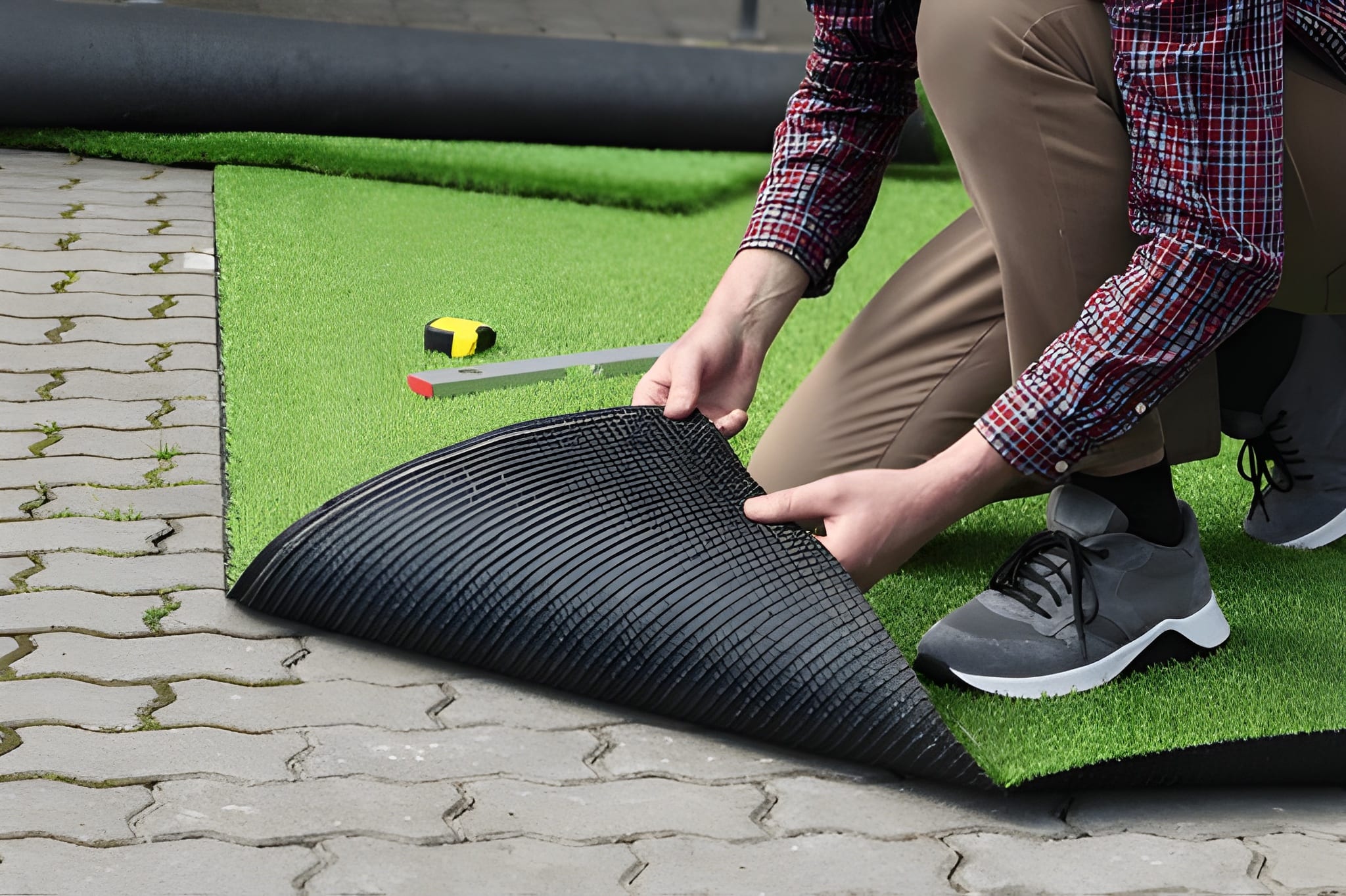
A permeable geotextile fabric installed between the compacted base and the turf backing. Prevents weed penetration from below while allowing water to drain freely through the system. Commercial-grade fabric differs from residential in puncture resistance and permeability rating.
Turf Backing System
The structural layer of the turf product — typically a primary backing that holds the fiber tufts and a secondary backing (polyurethane or latex) that locks them in place. Backing permeability determines drainage rate. Commercial backings are heavier and more puncture-resistant than residential.
Fiber System
The pile itself — fiber material (polyethylene, polypropylene, or nylon), pile height, face weight (ounces per square yard), and blade shape all affect appearance, durability, heat retention, and how the surface feels underfoot. Specified by use type.
Infill Material
The granular material brushed into the fiber after installation. Stabilizes the pile, adds ballast, affects surface temperature, cushioning, and drainage. Silica sand, crumb rubber, coated sand, and specialty infill products each serve different applications.
Drainage Infrastructure
For sites with limited natural drainage, perforated drain pipes, French drains, or aggregate drainage channels integrated into or beneath the base system direct water off the surface area. Required for large flat installations, rooftop systems, and pool surrounds.
Seaming and Edge Systems
The method and materials used to join panels and secure perimeter edges. Commercial seaming uses structural adhesive and seam tape rated for outdoor UV and temperature exposure. Edge systems include bender board, concrete borders, and integral edging depending on the border condition.
System Specification by Application Type
Different commercial applications require meaningfully different system specifications. The same turf product installed with the same base in two different use contexts will perform well in one and fail prematurely in the other. Below is how our system specifications change across the most common commercial application types.
Landscape and Common Area Turf Systems
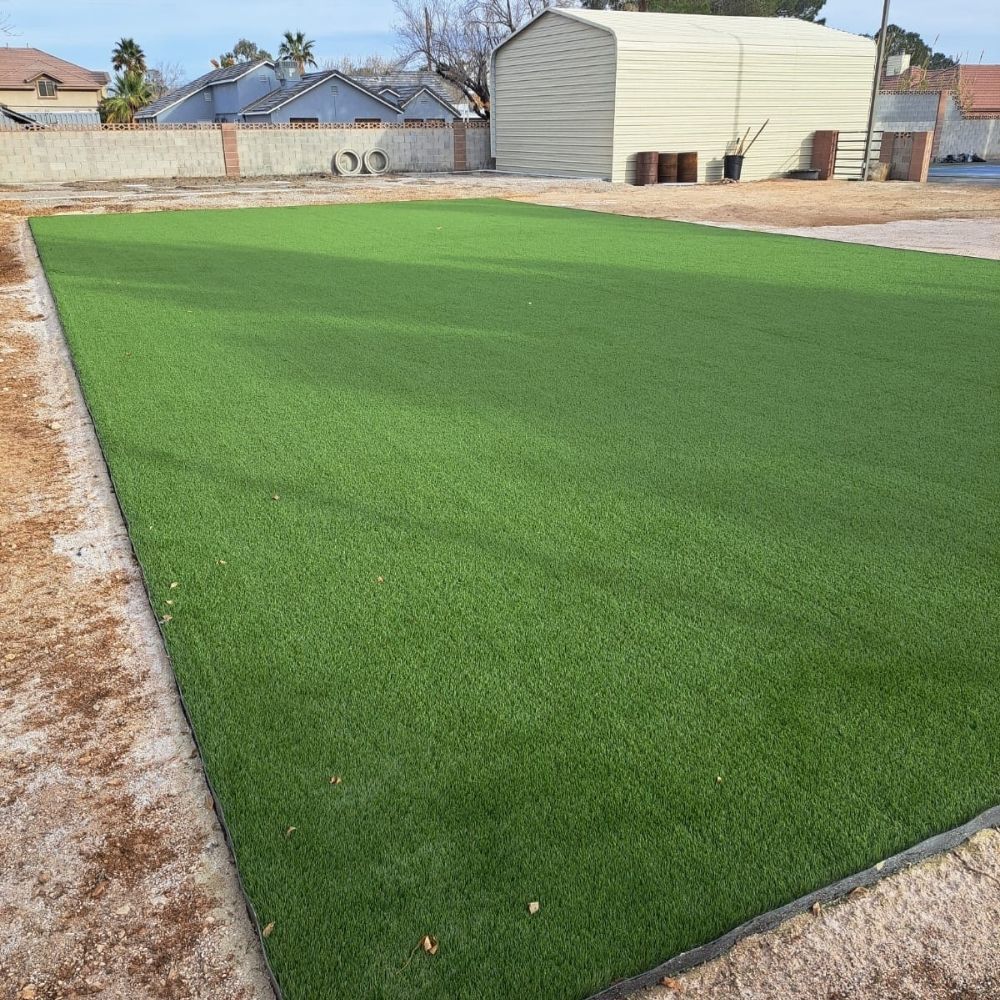
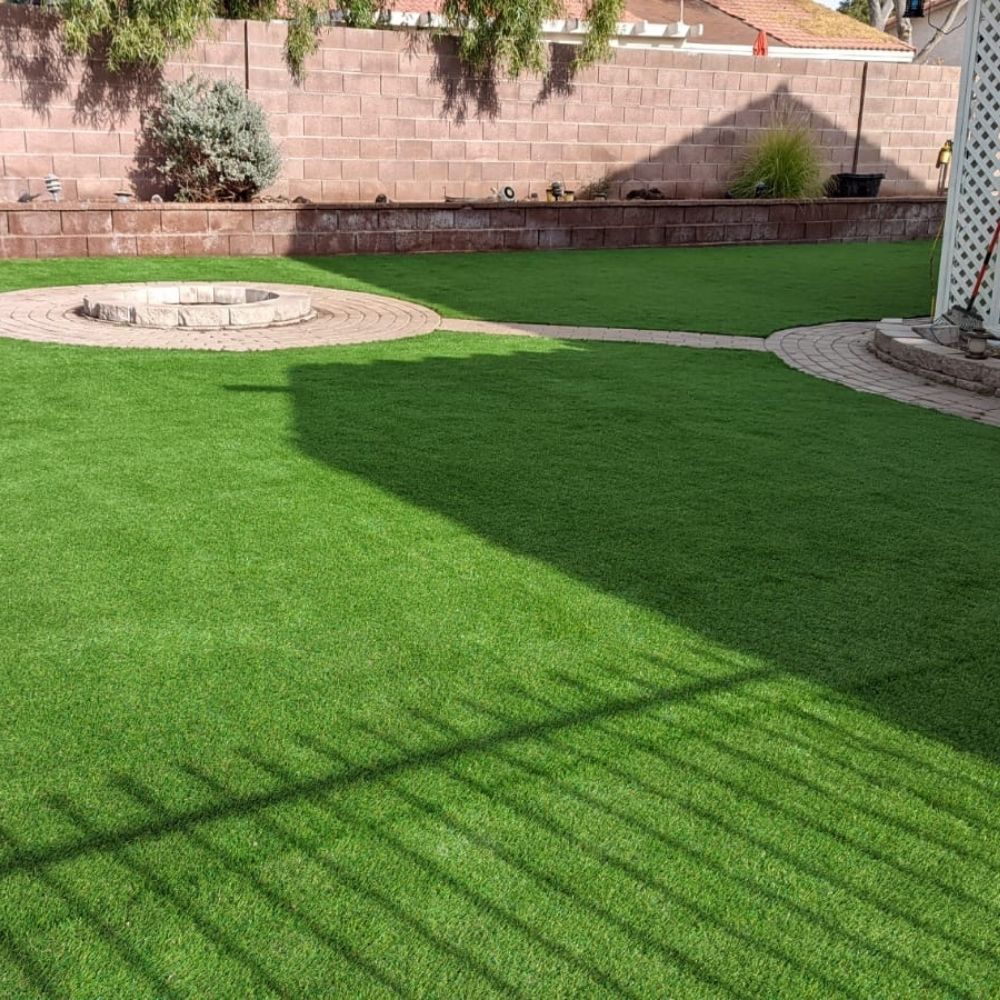
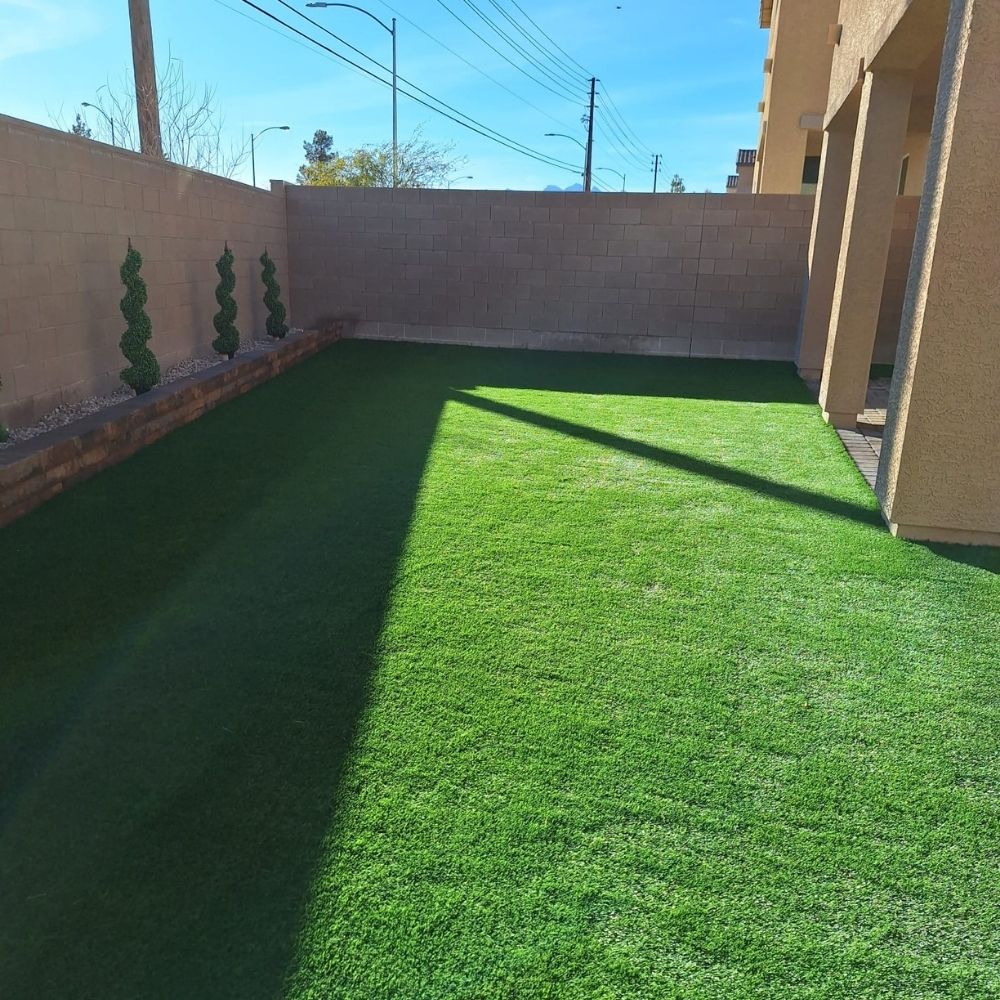
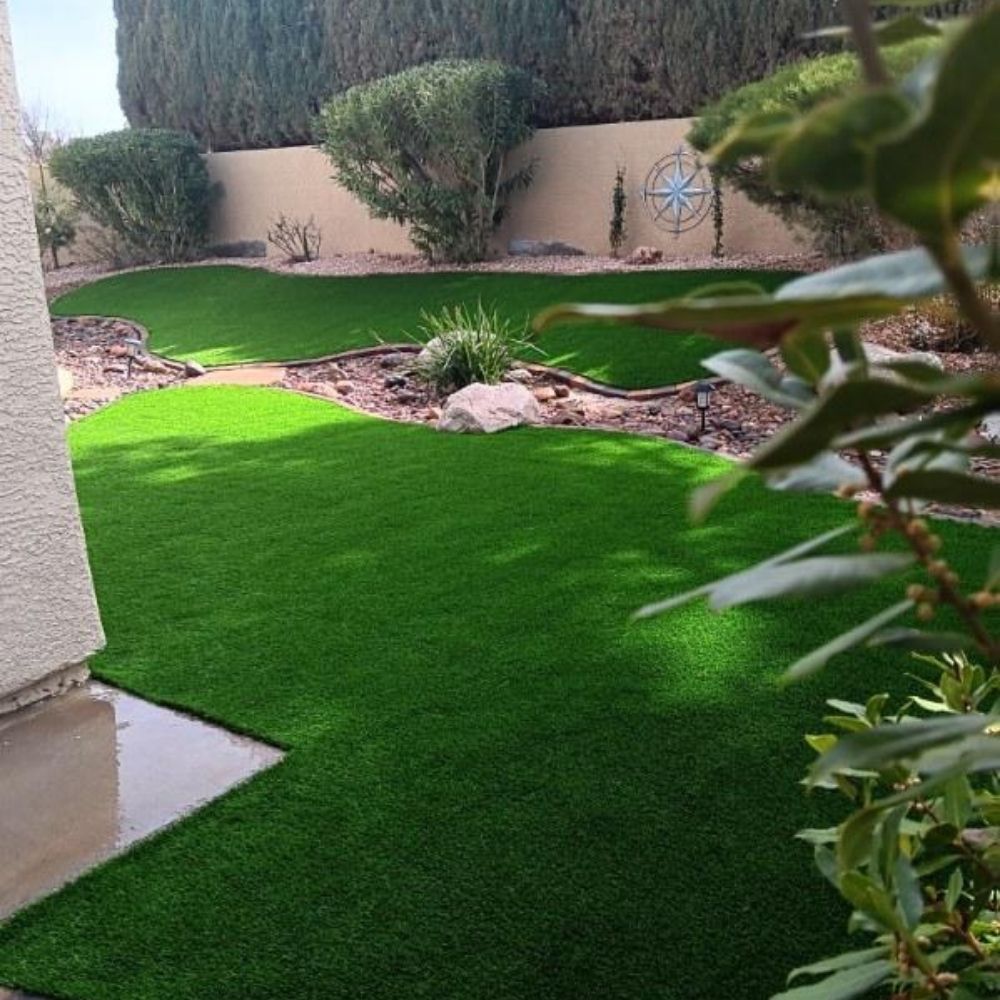
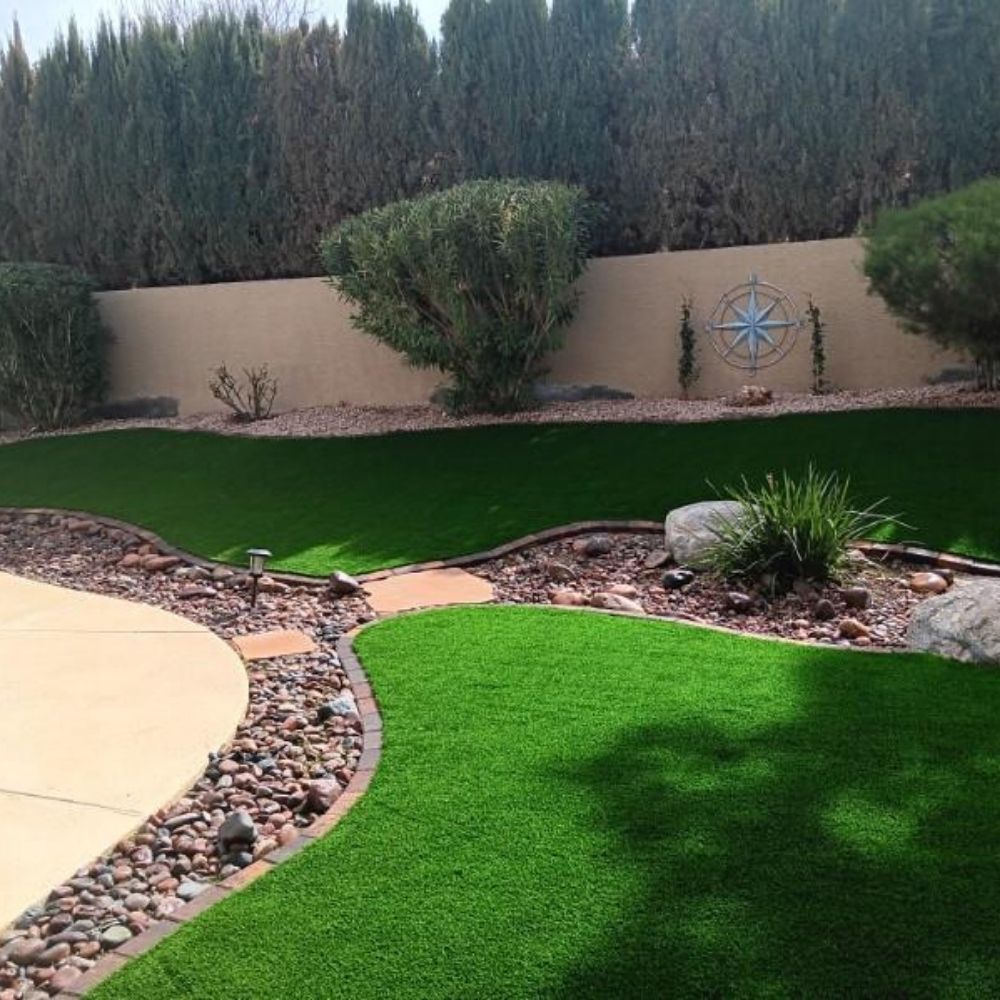
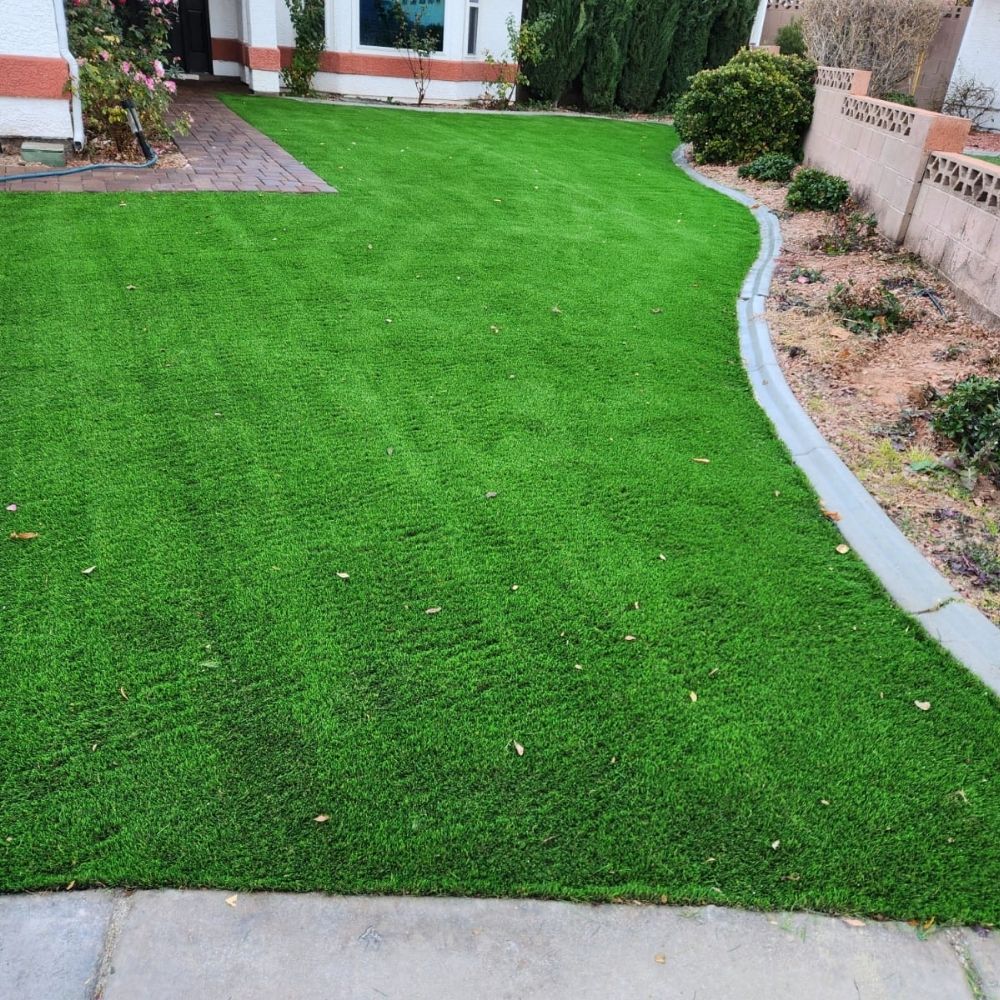
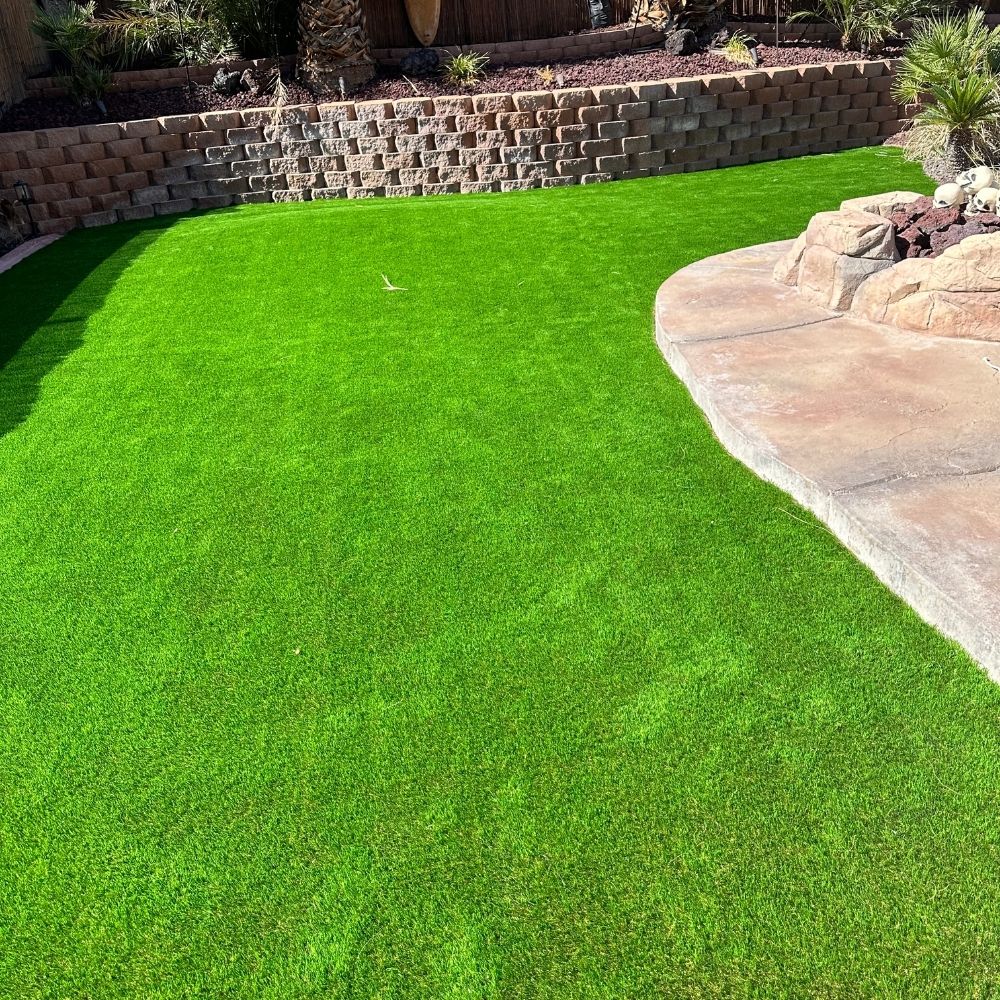
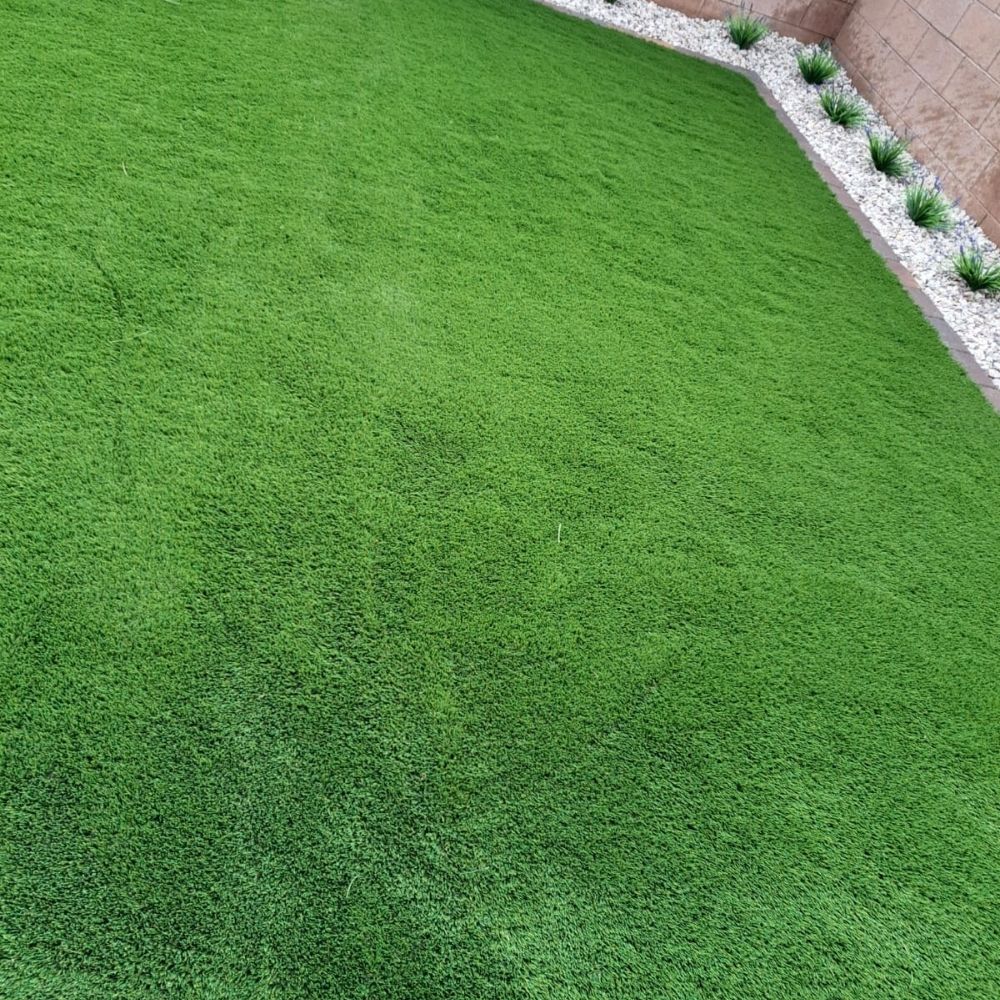
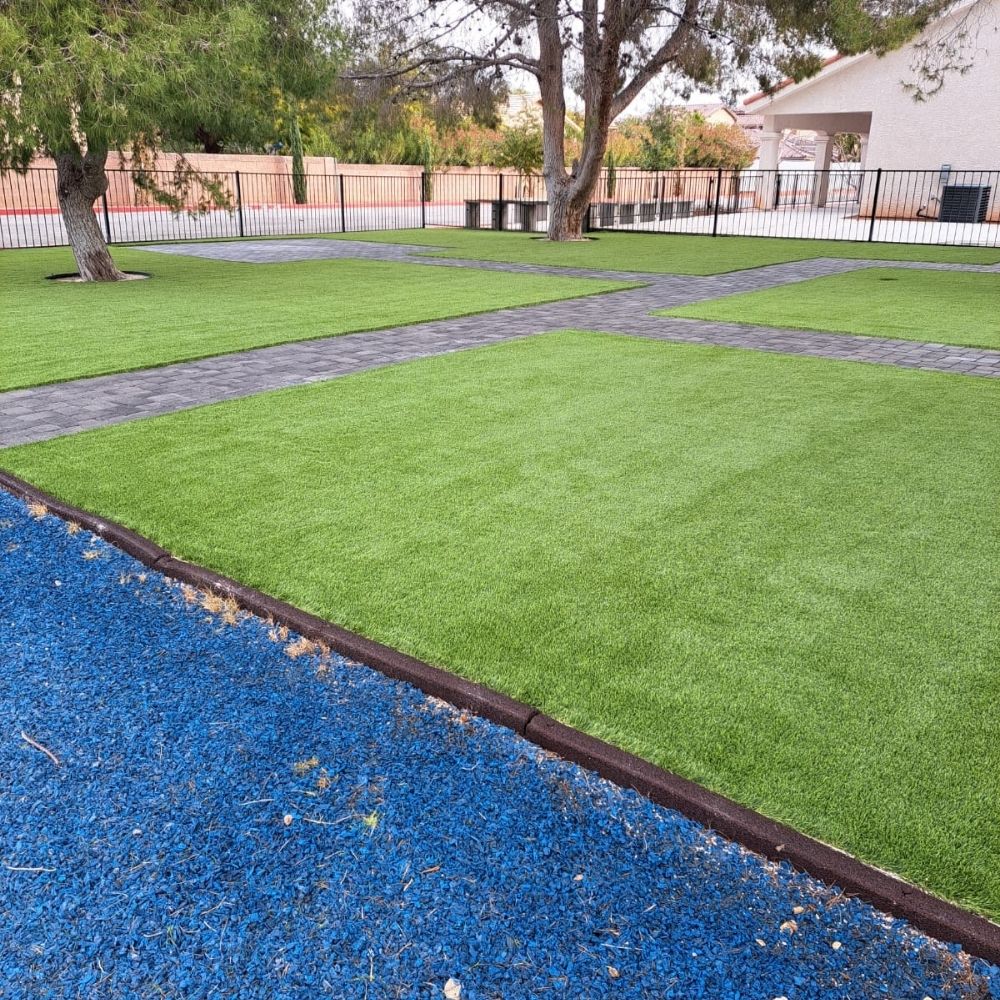
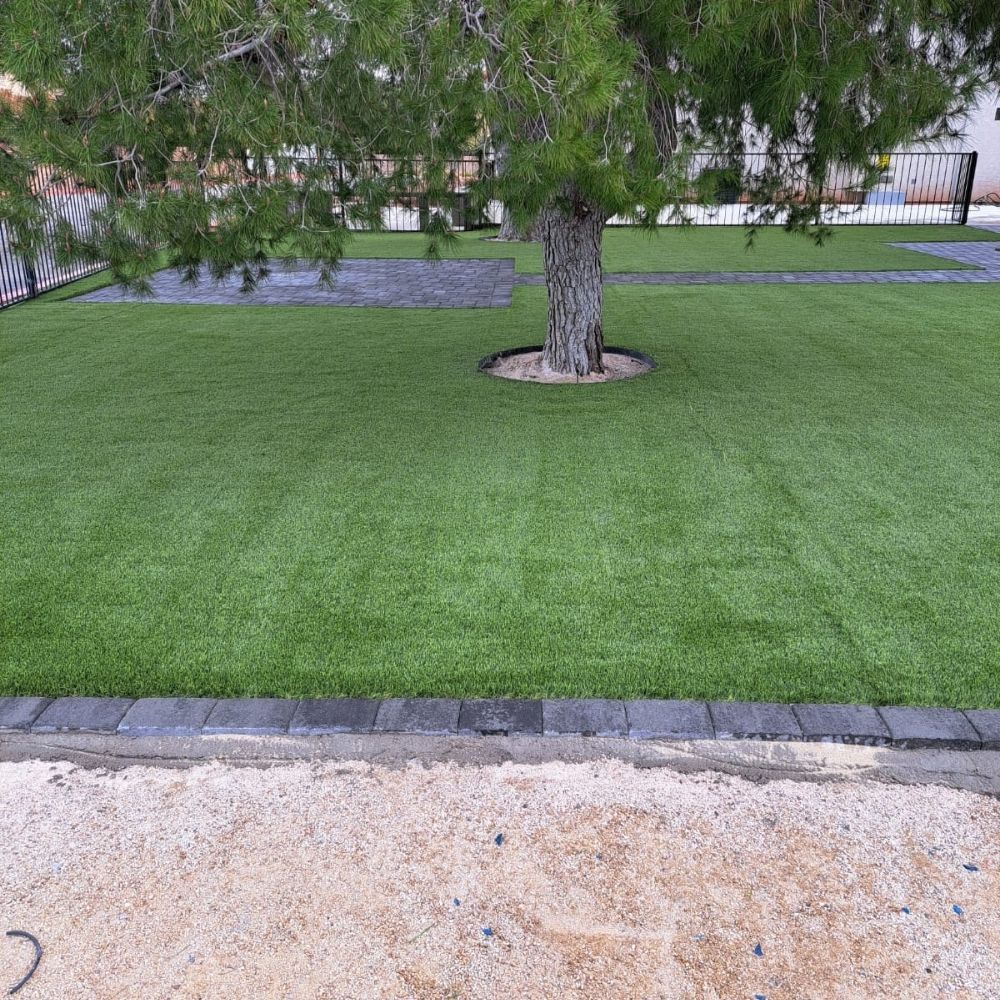
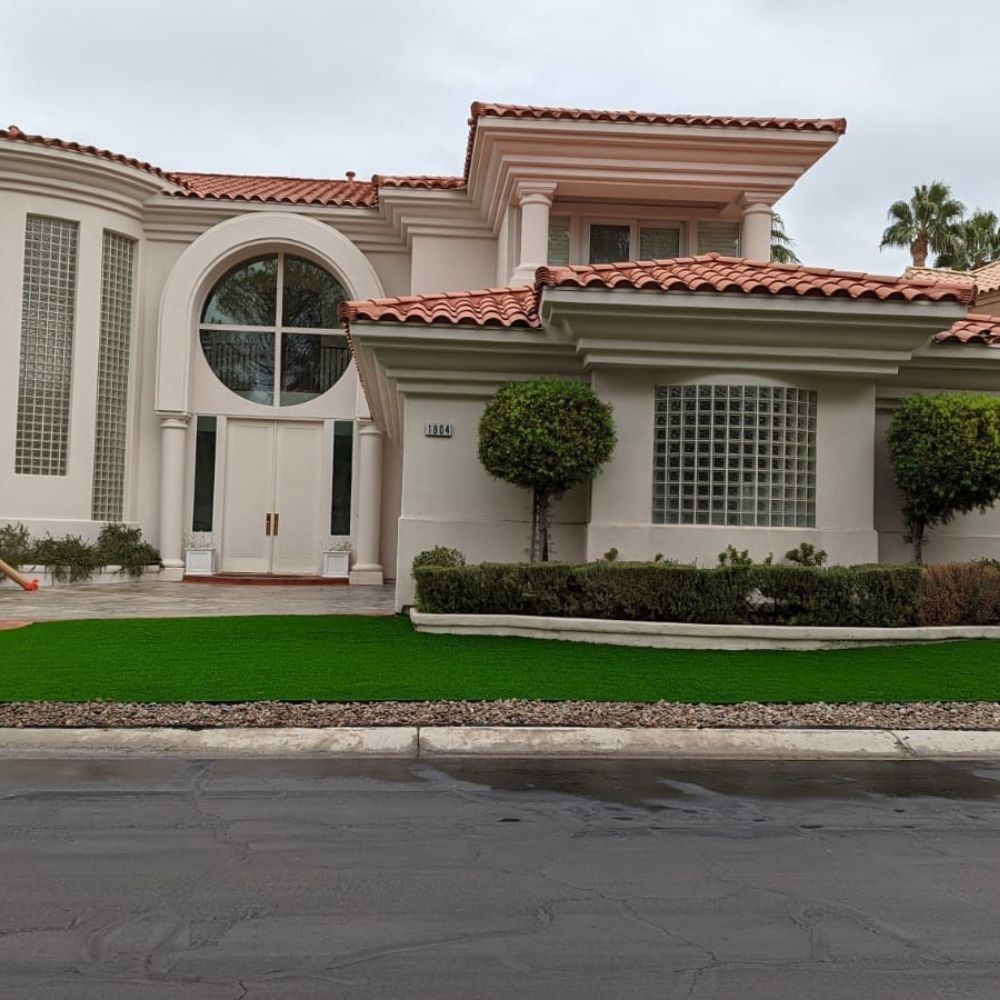
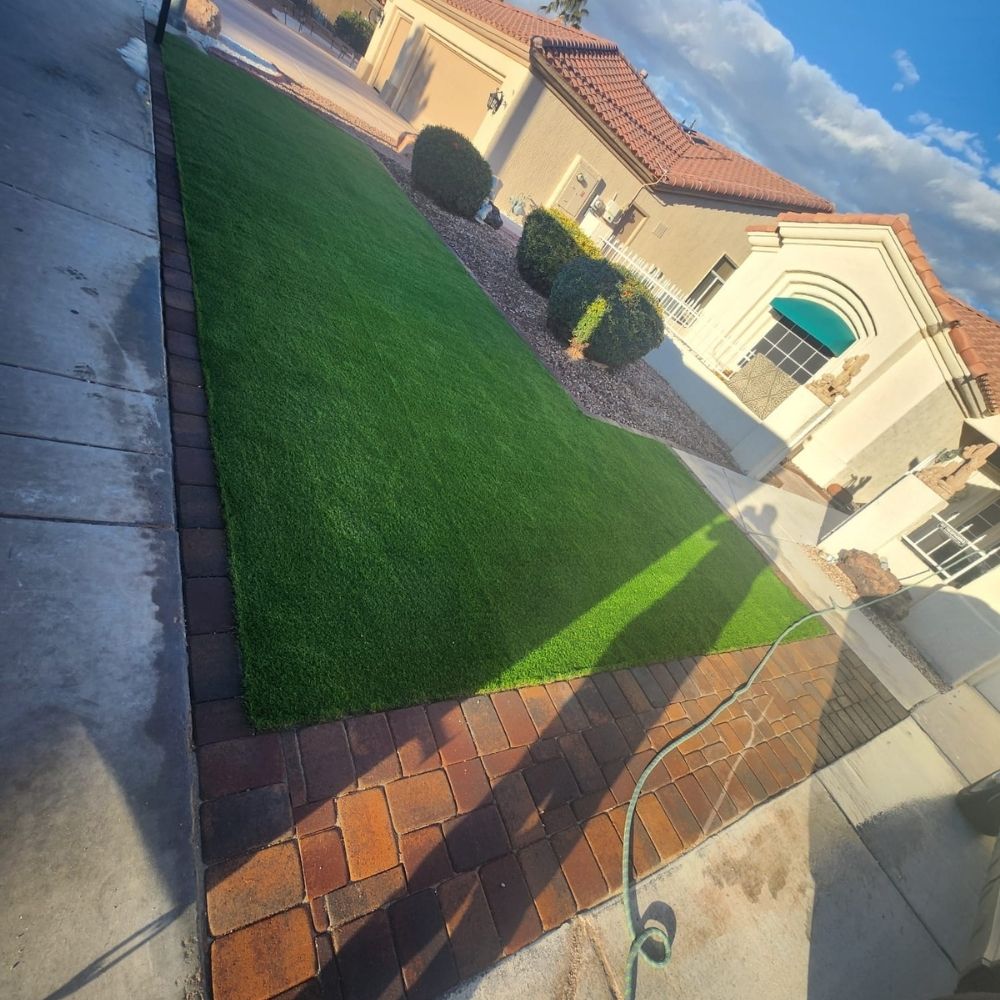
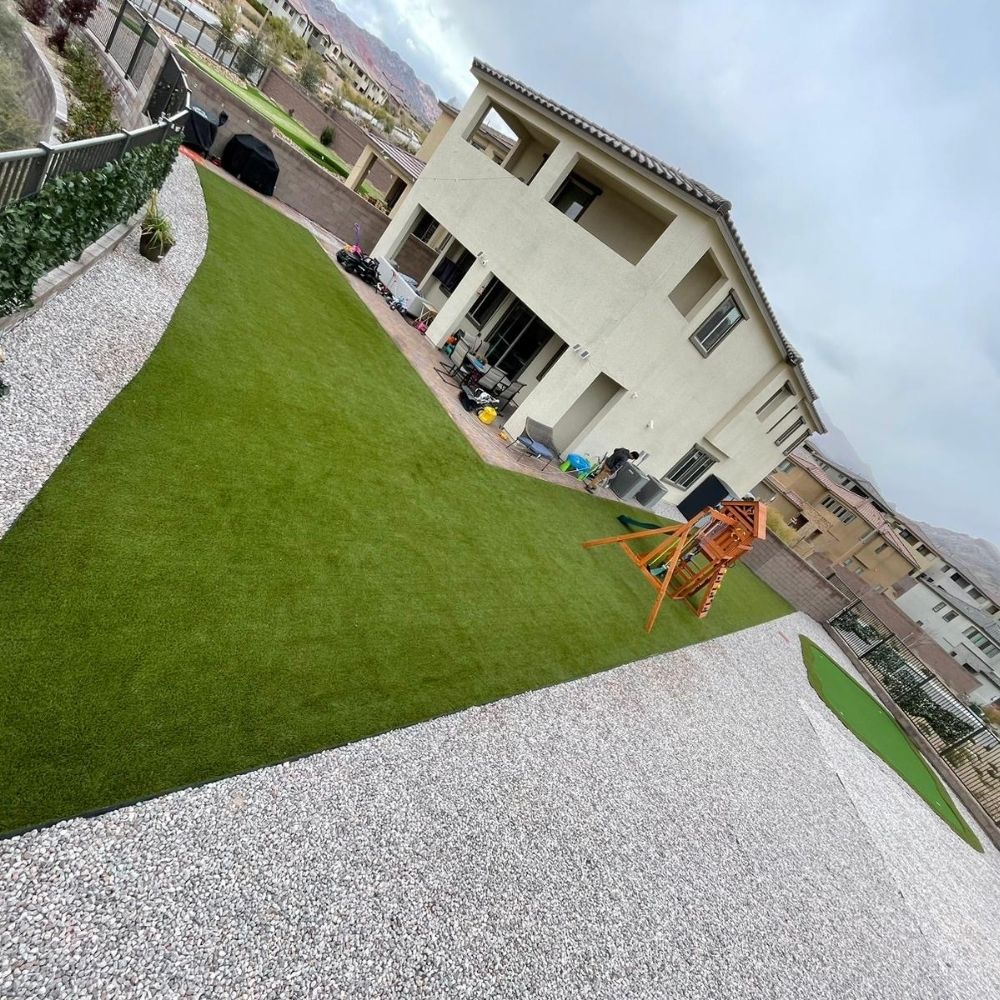
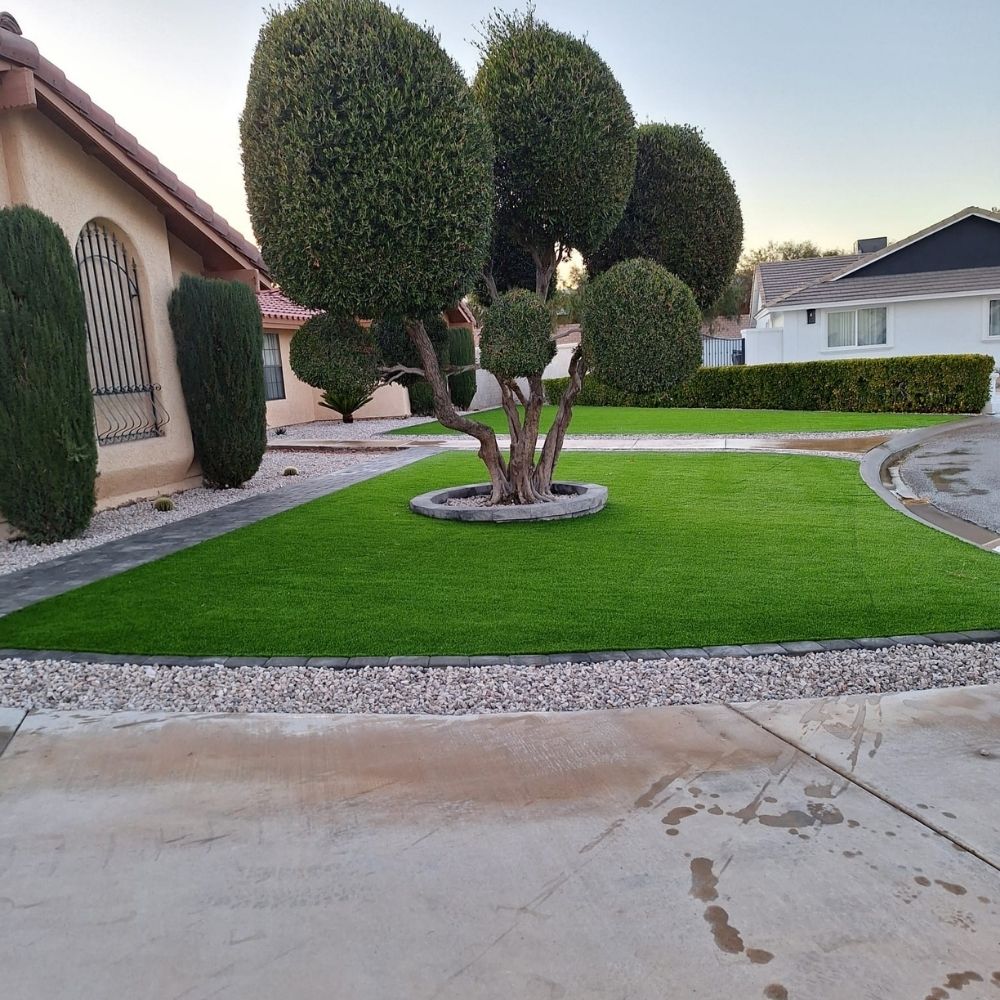
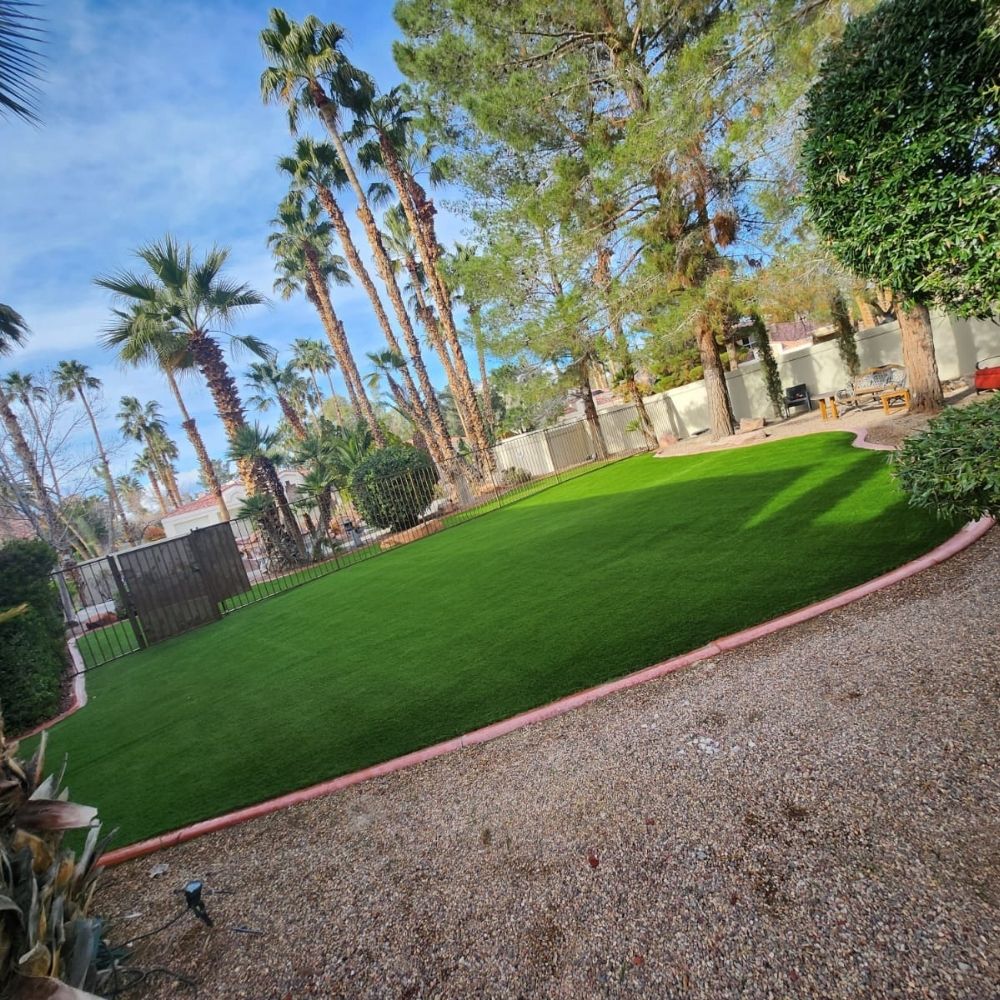
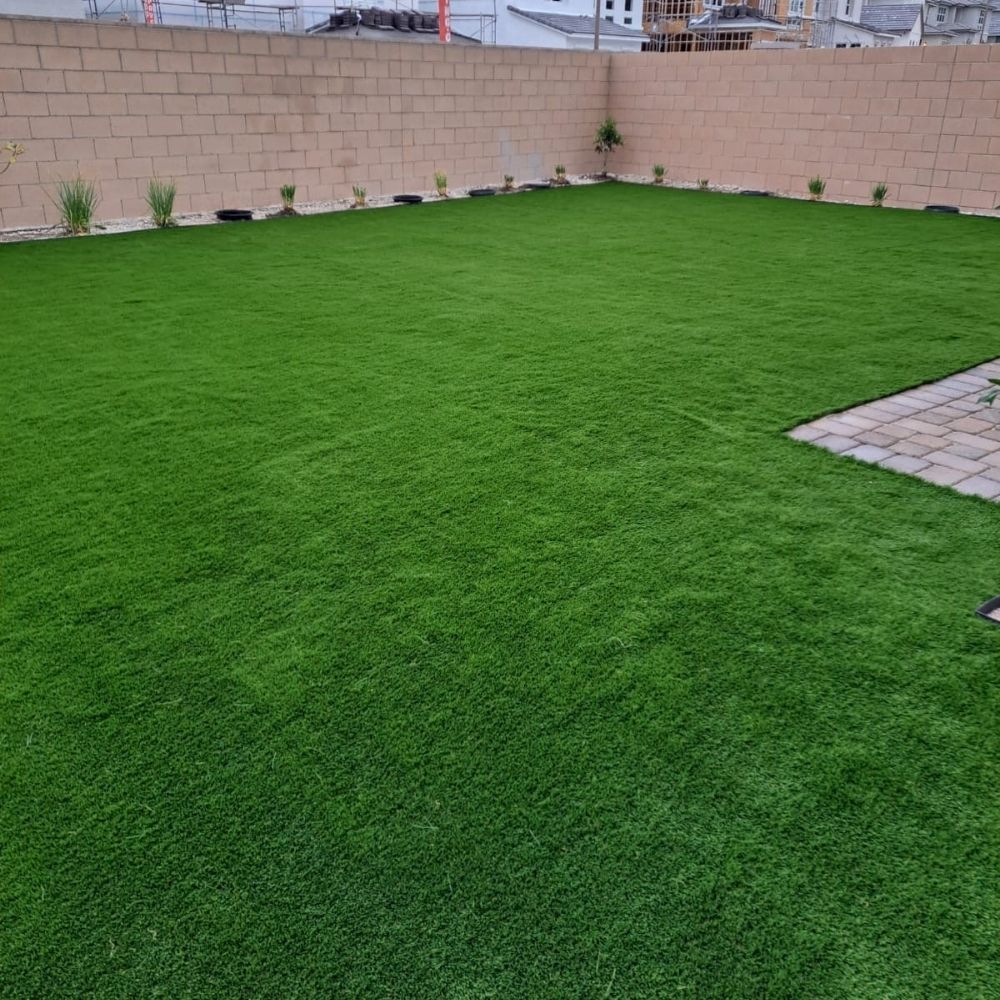
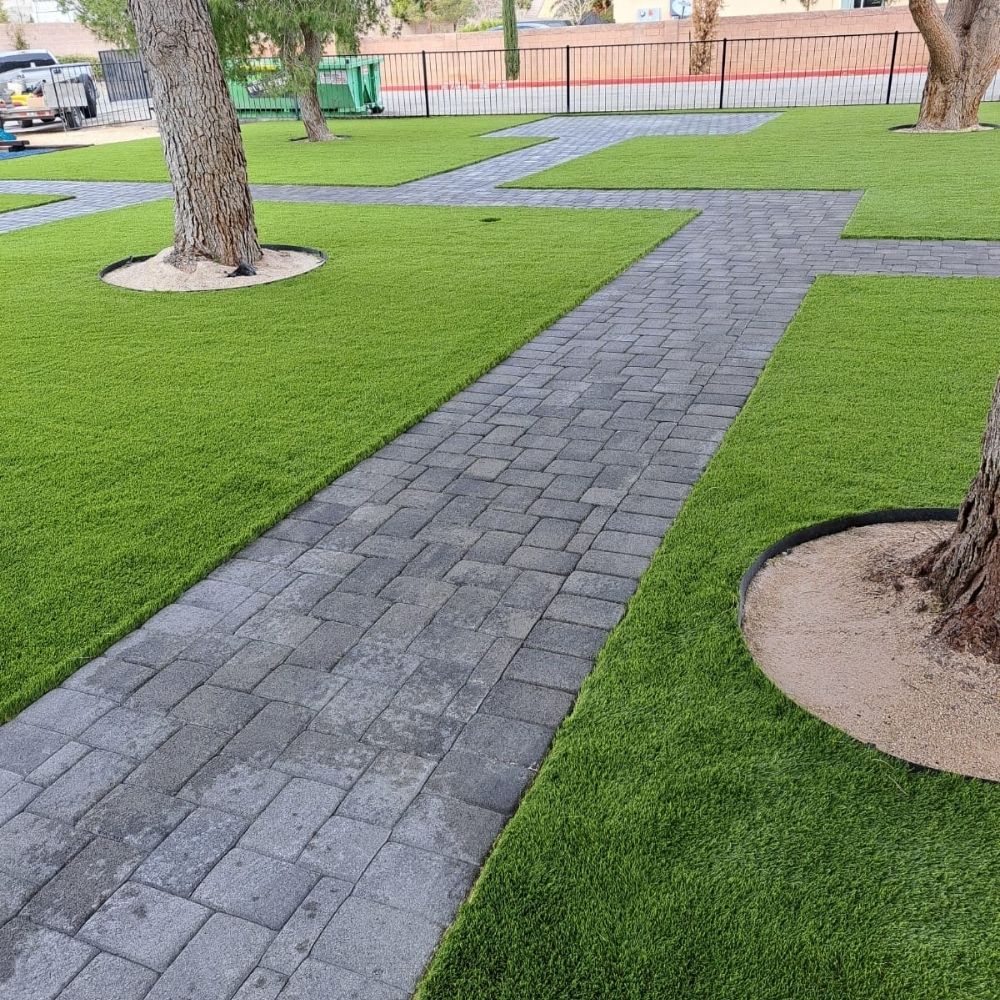
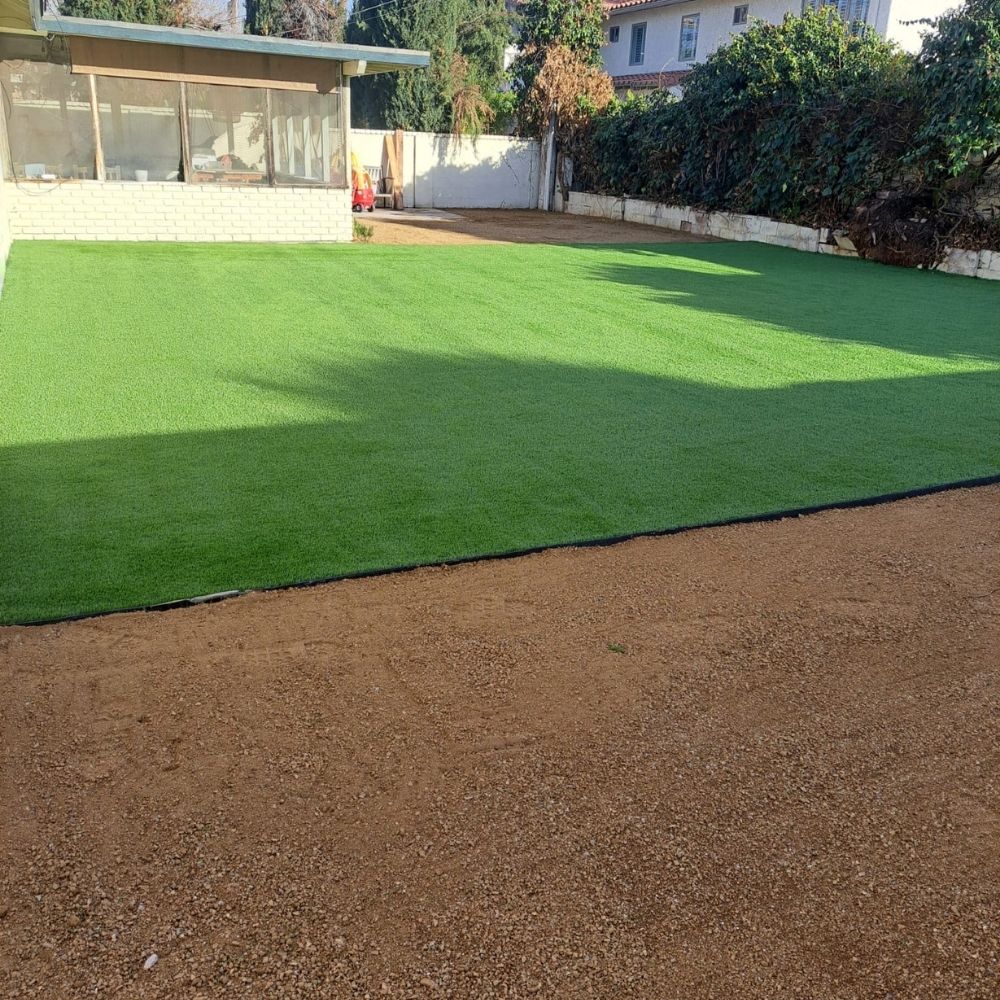
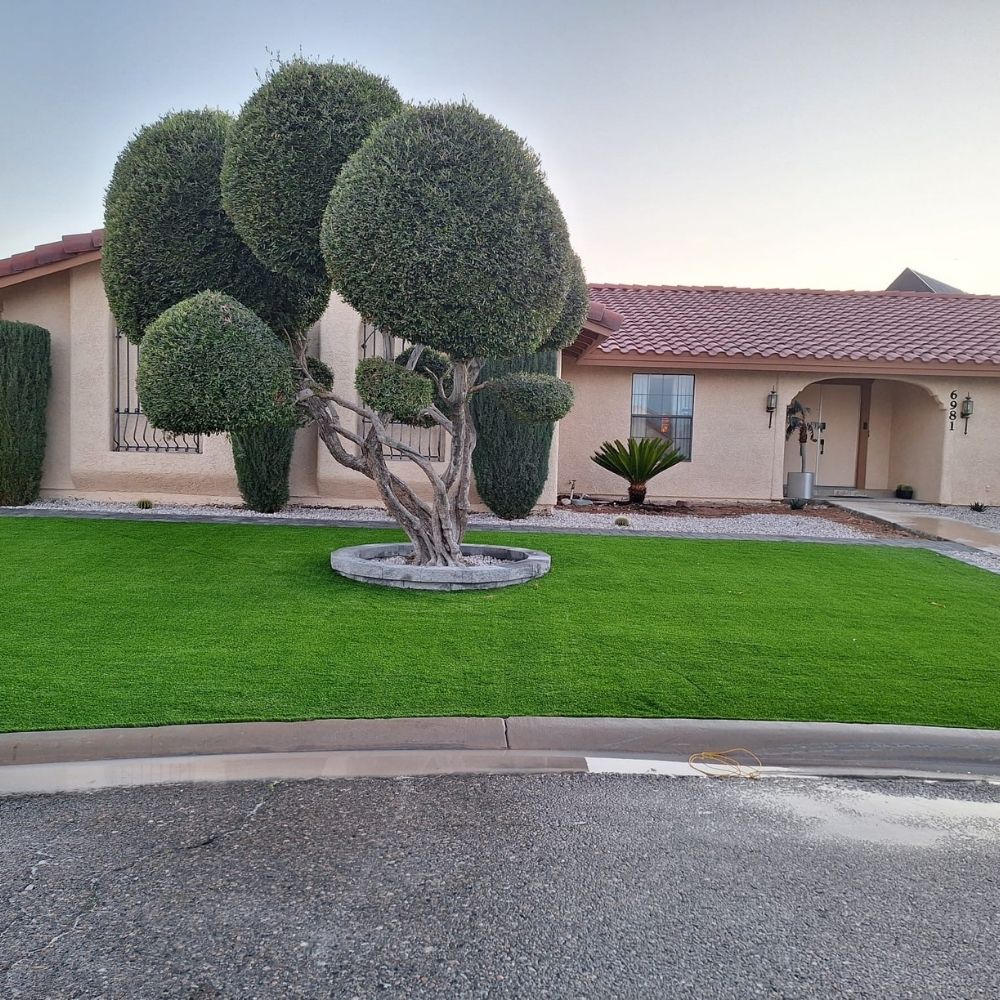
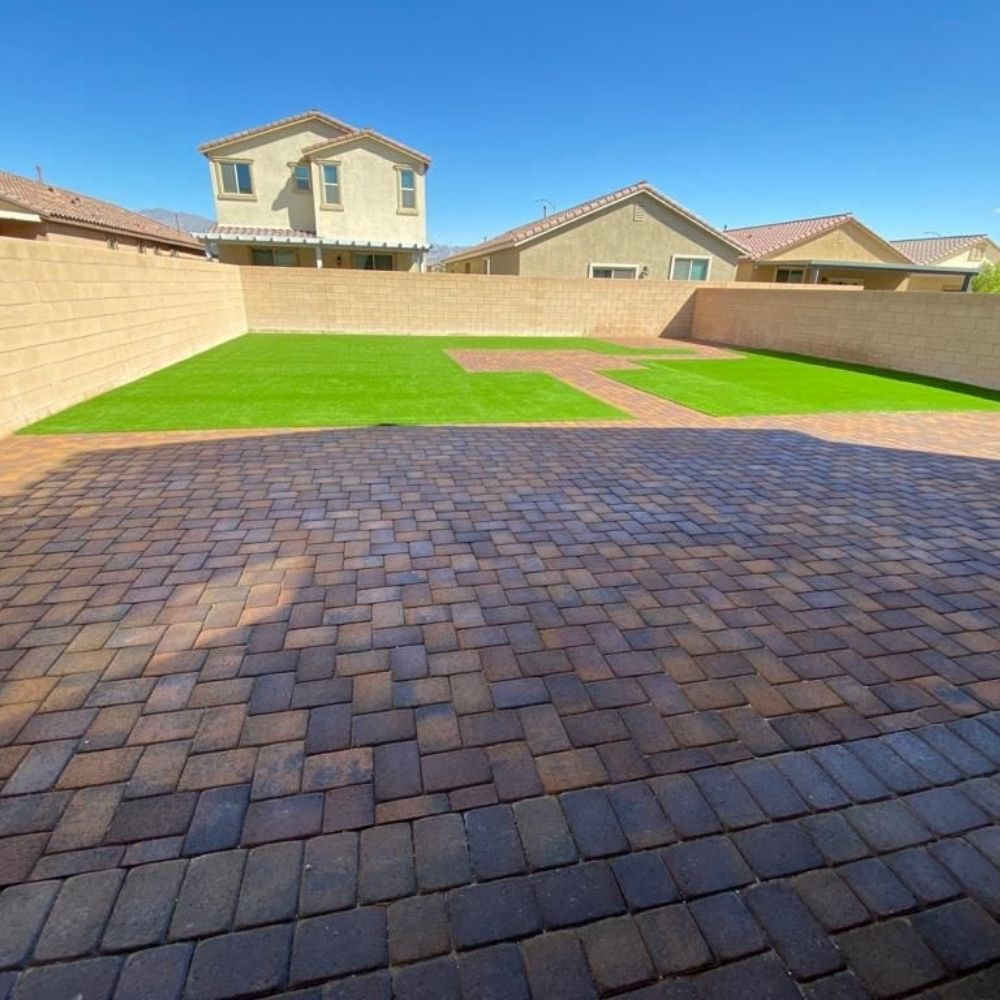
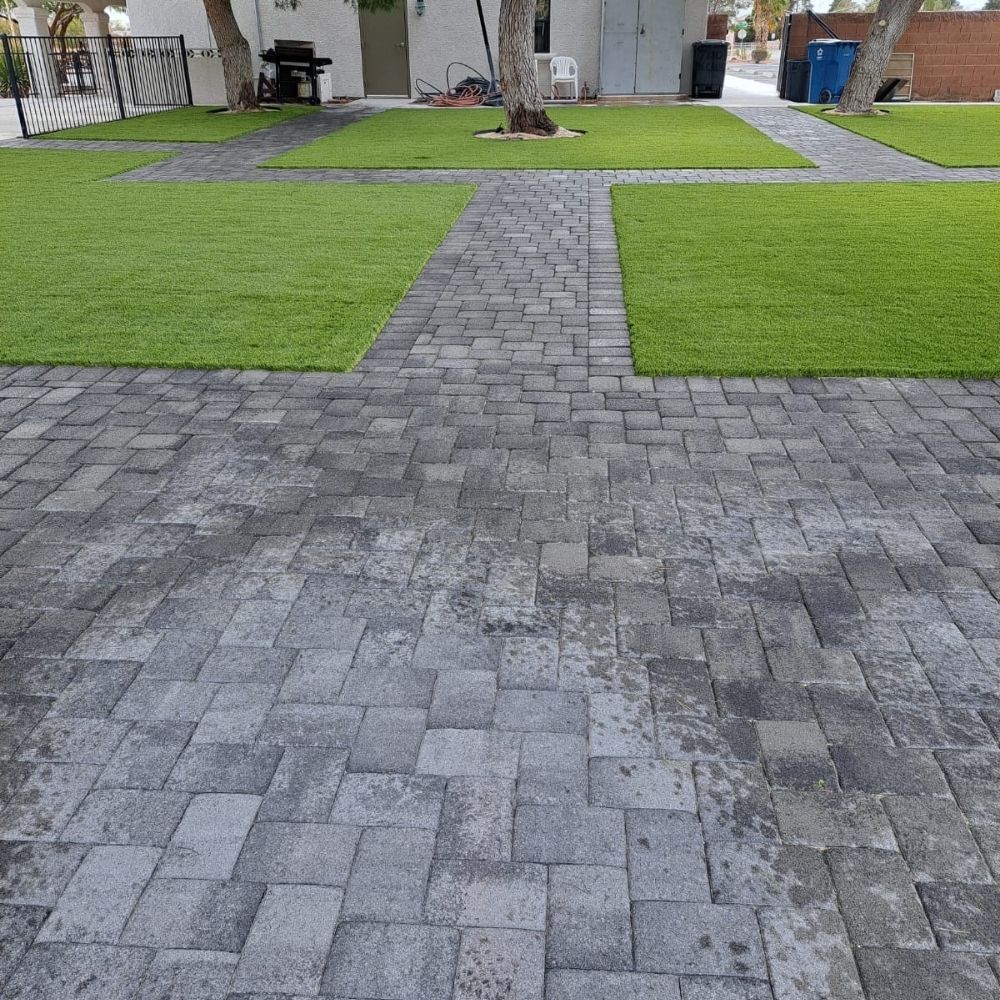
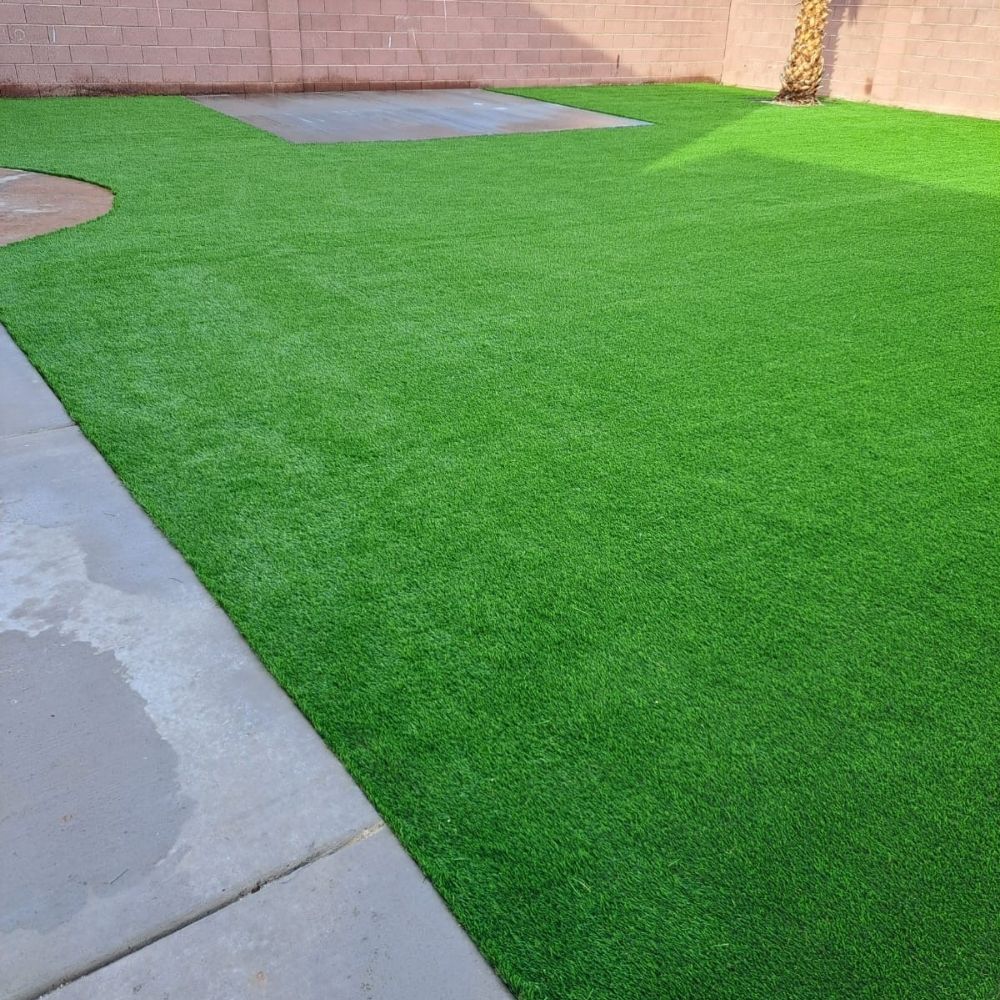
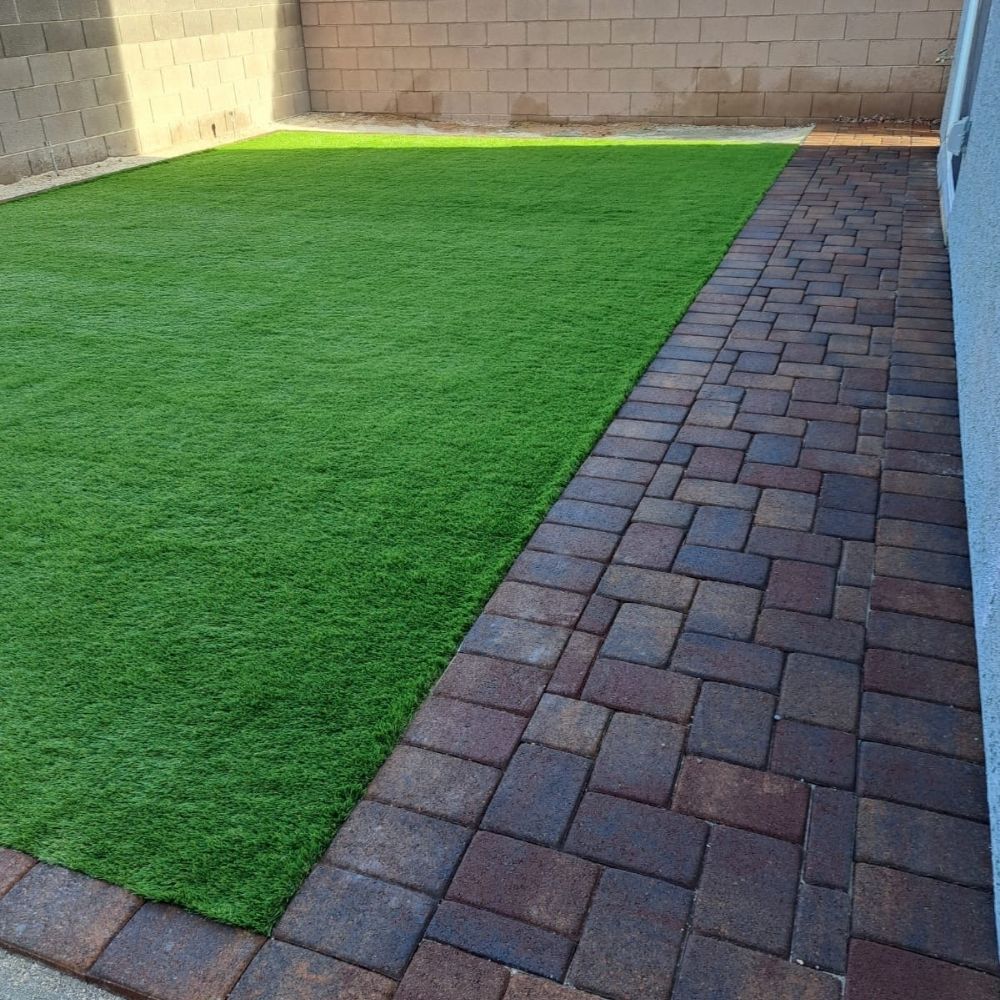
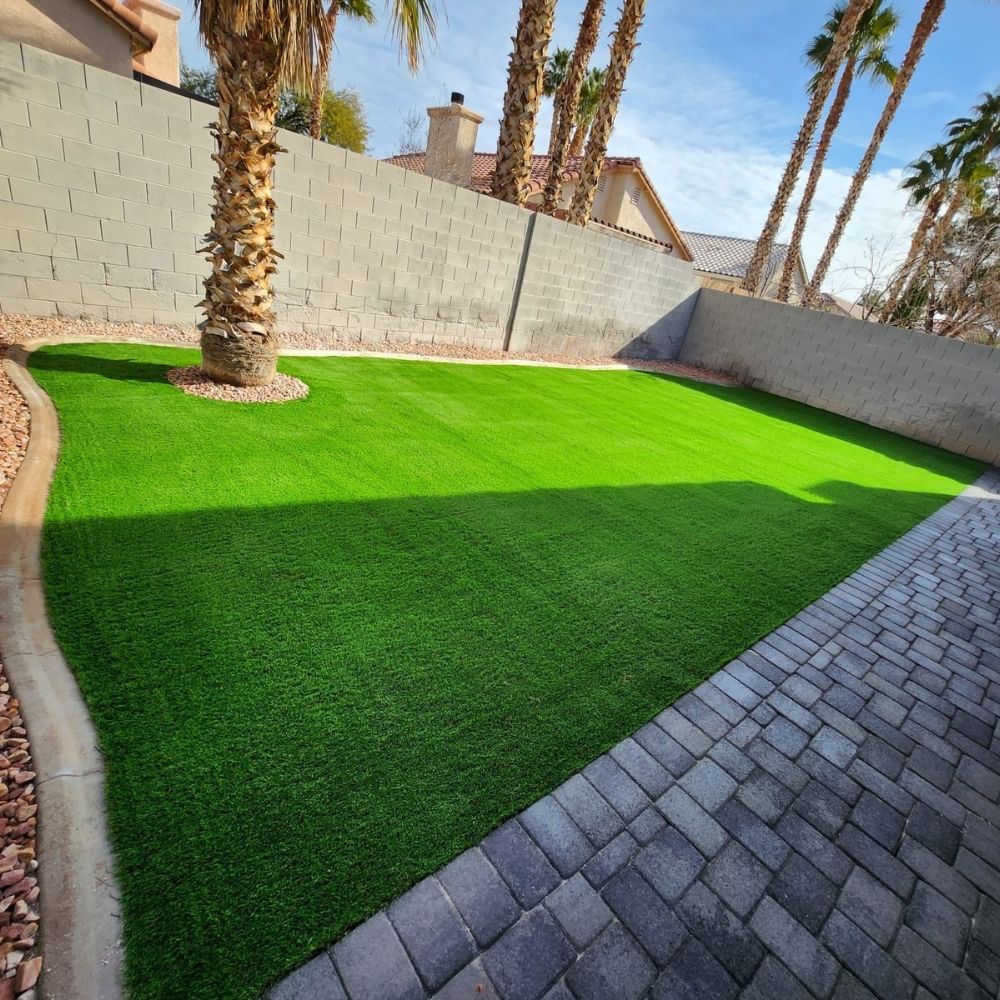
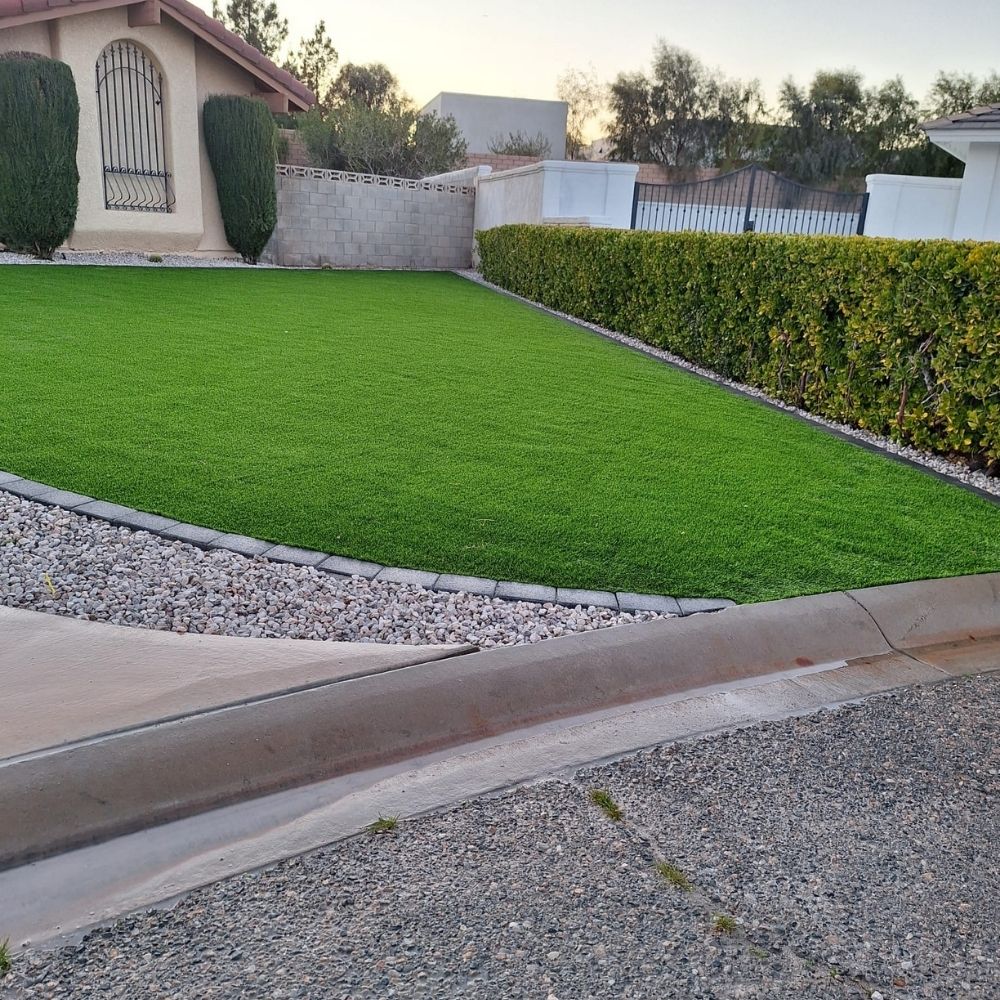
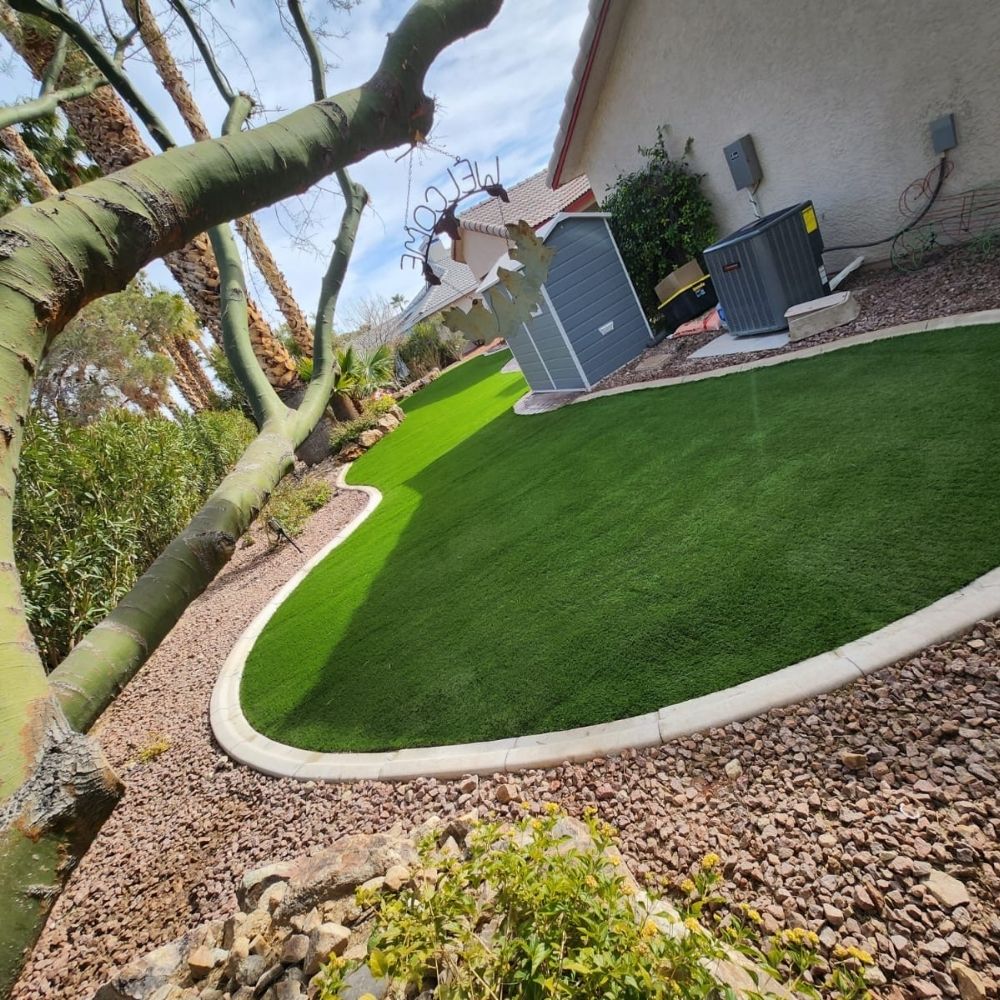
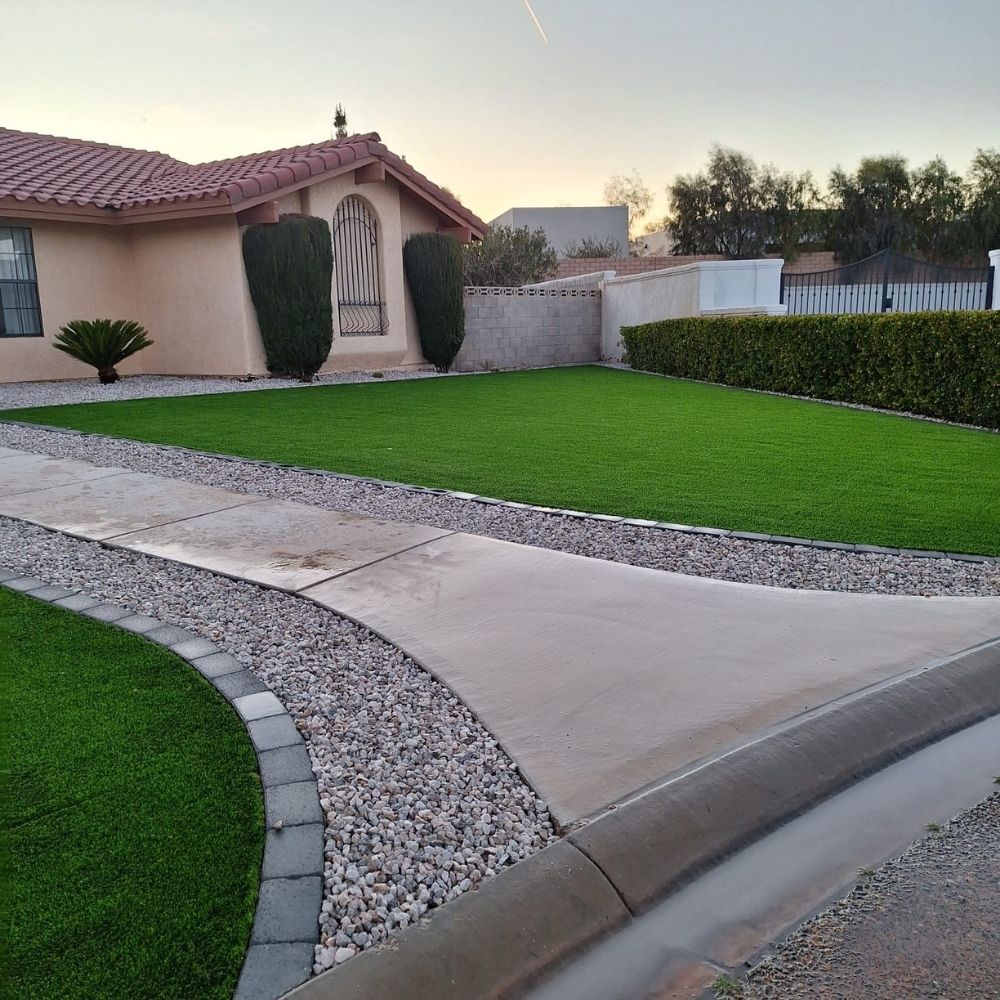
For HOA common areas, business campus entry landscapes, retail surrounds, and similar low-to-moderate-traffic aesthetic applications, the priority is appearance consistency and drainage performance over an extended service life. We specify mid- to high-face-weight polyethylene fiber products in natural-looking blade shapes, a compacted aggregate base of 3 to 4 inches, silica sand infill for ballast and pile stability, and seam placement designed to be invisible from normal viewing distances. For full detail on landscape commercial projects, see our commercial and HOA turf installation page.
High-Traffic Pedestrian Systems
Entry corridors, event surfaces, pool surrounds, and areas where foot traffic is heavy and sustained require turf products engineered for recovery — the fiber’s ability to spring back after repeated compression. Higher face weights, nylon fiber blends, and shorter pile heights perform better under sustained pedestrian load than longer, softer landscape products. Infill is specified to maintain consistent pile support under traffic rather than for cushioning. Base compaction standards are tighter and compaction testing may be warranted on large footprints.
Commercial Pet Area Systems
Dog runs, pet relief areas, and communal pet zones at apartment communities and hotels require a system specifically engineered for waste management. Perforated backing with high drainage rates, antimicrobial infill, and a base design that flushes waste through the system without allowing it to pool or saturate the aggregate layer are all essential. For properties where odor control is a management concern, we specify infill products with zeolite or antimicrobial coatings that neutralize ammonia at the source. For more, see our commercial pet turf installation page.
Putting Green and Sports Systems
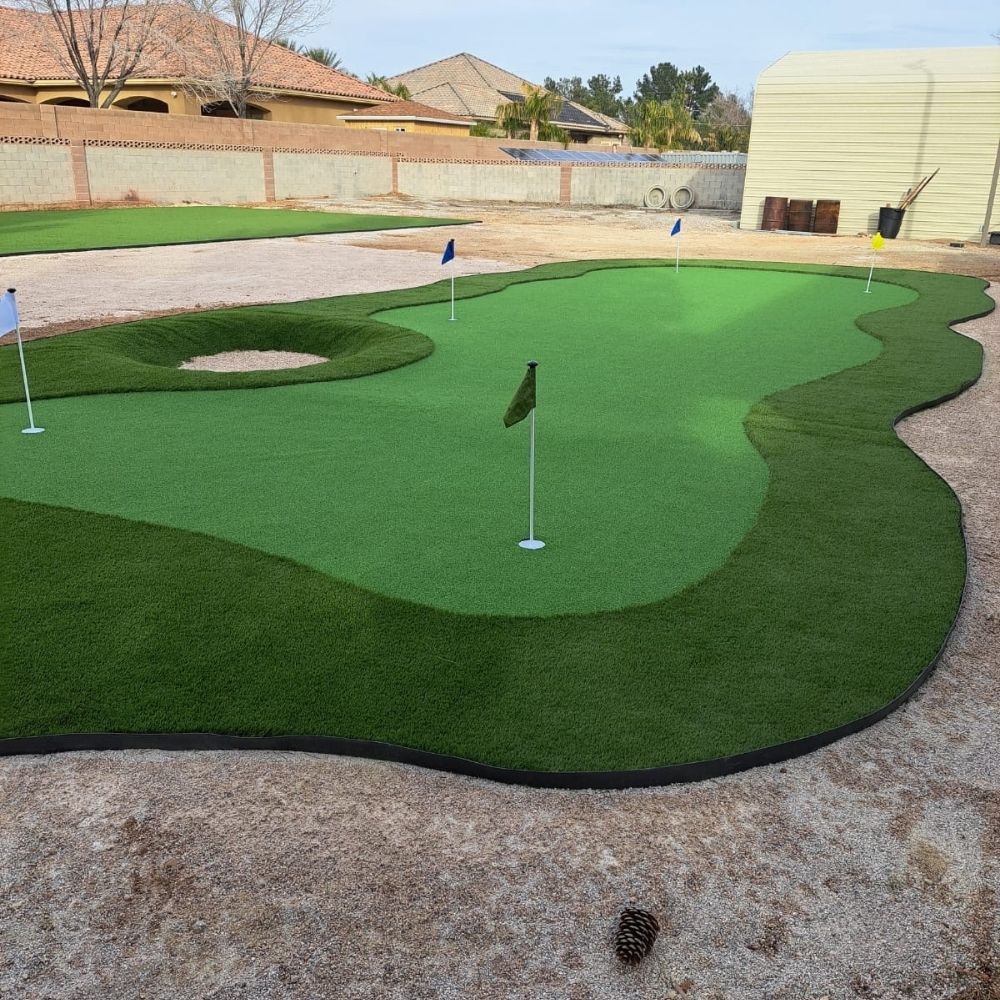
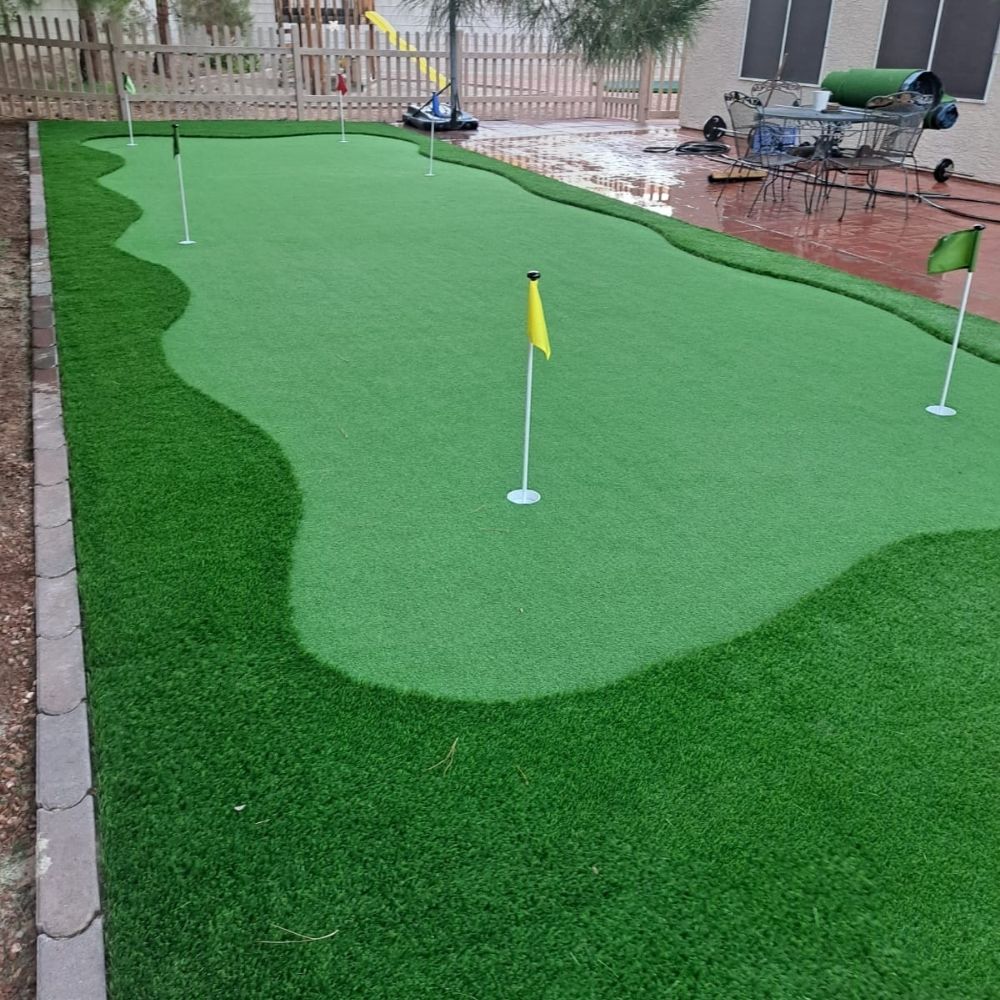
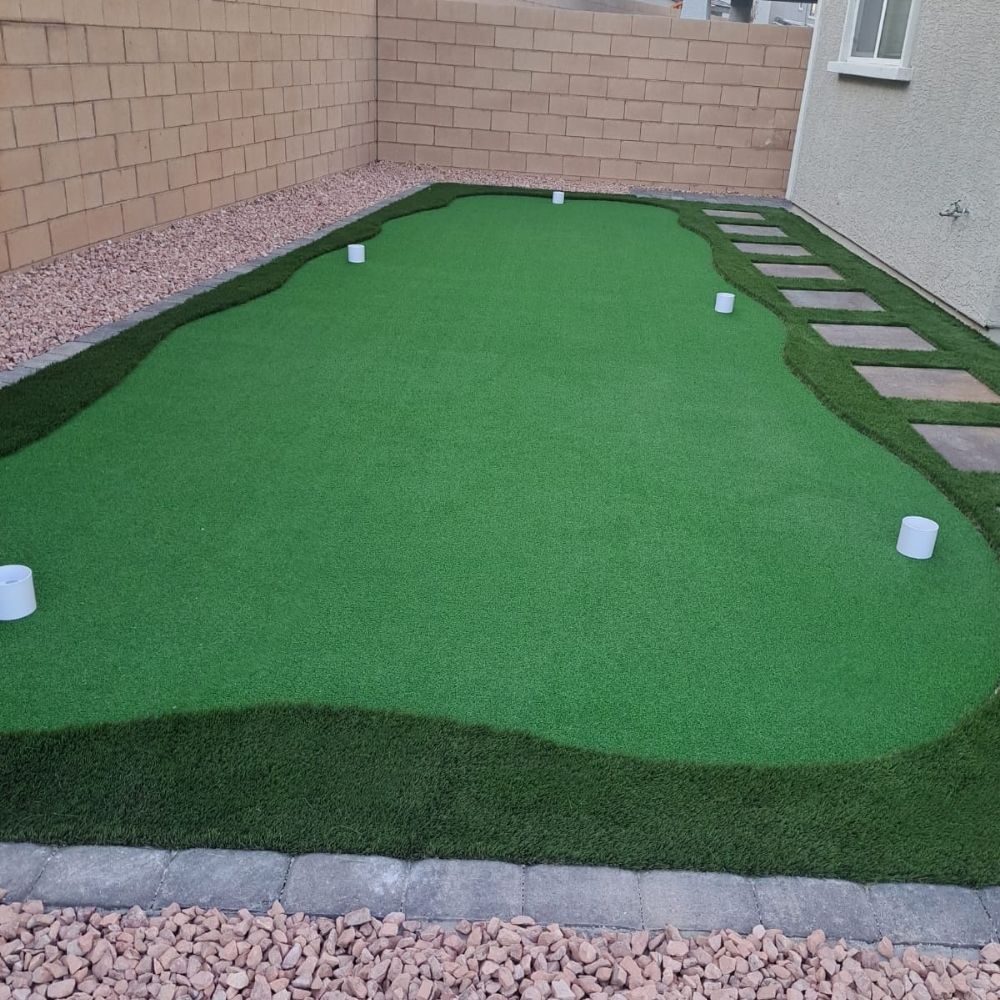
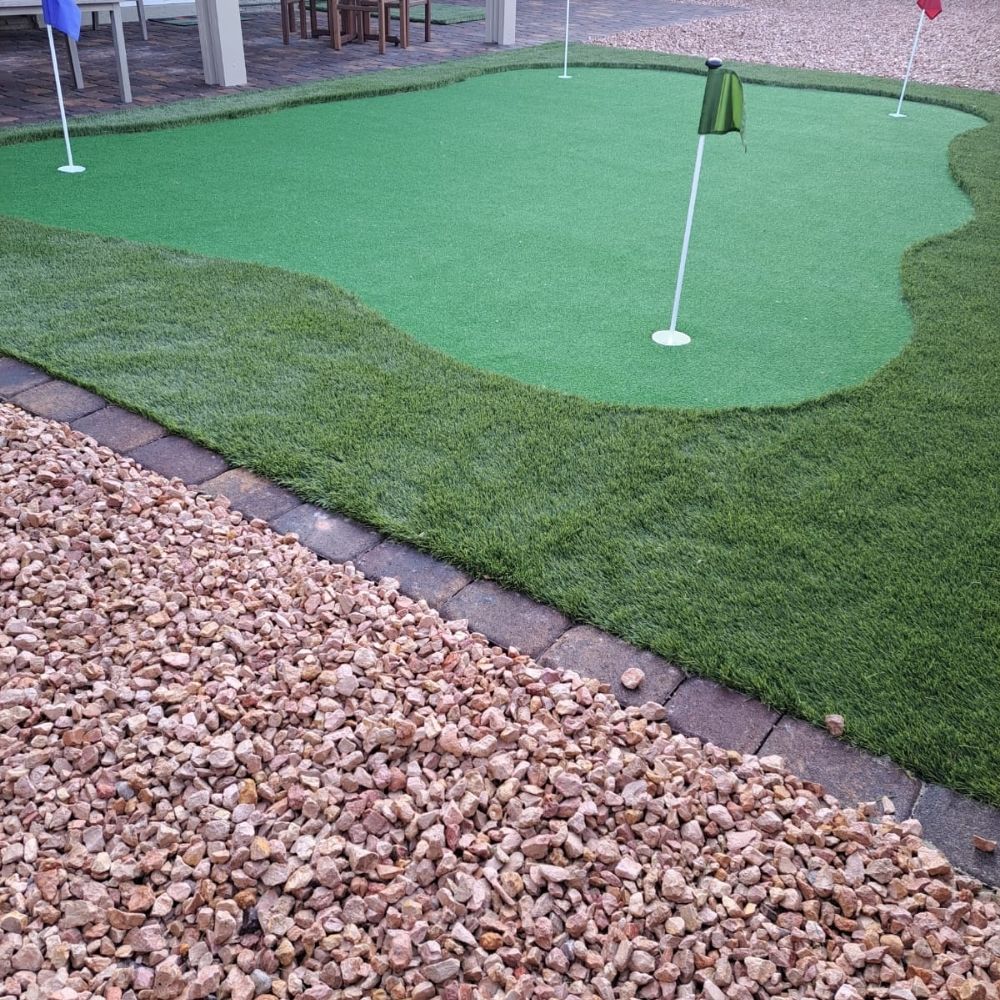
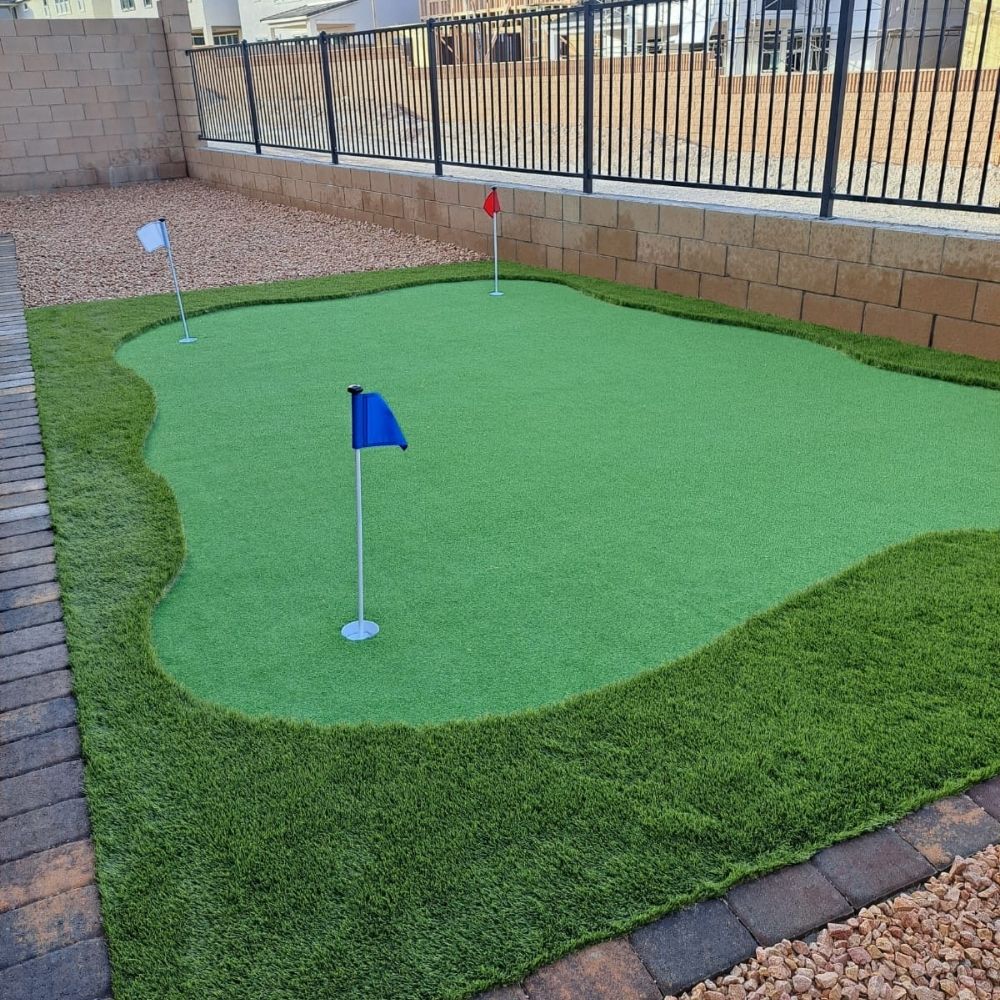
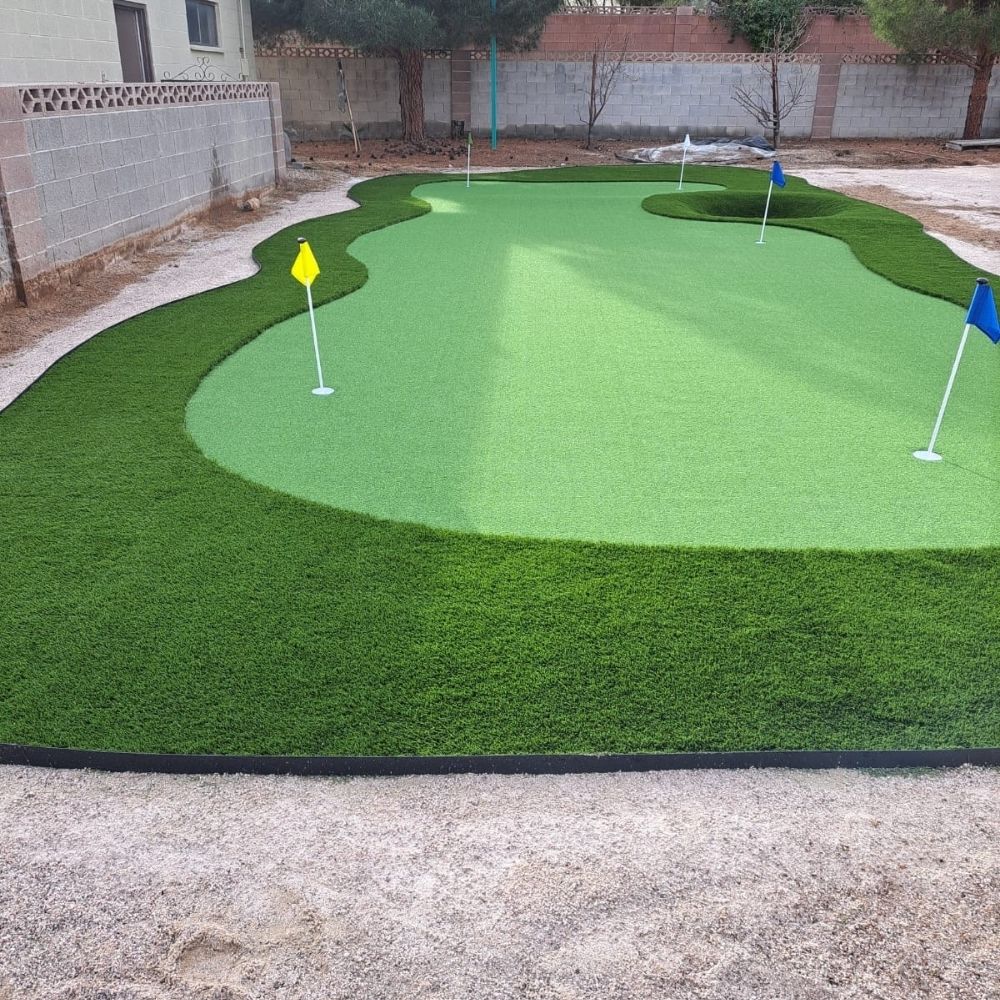
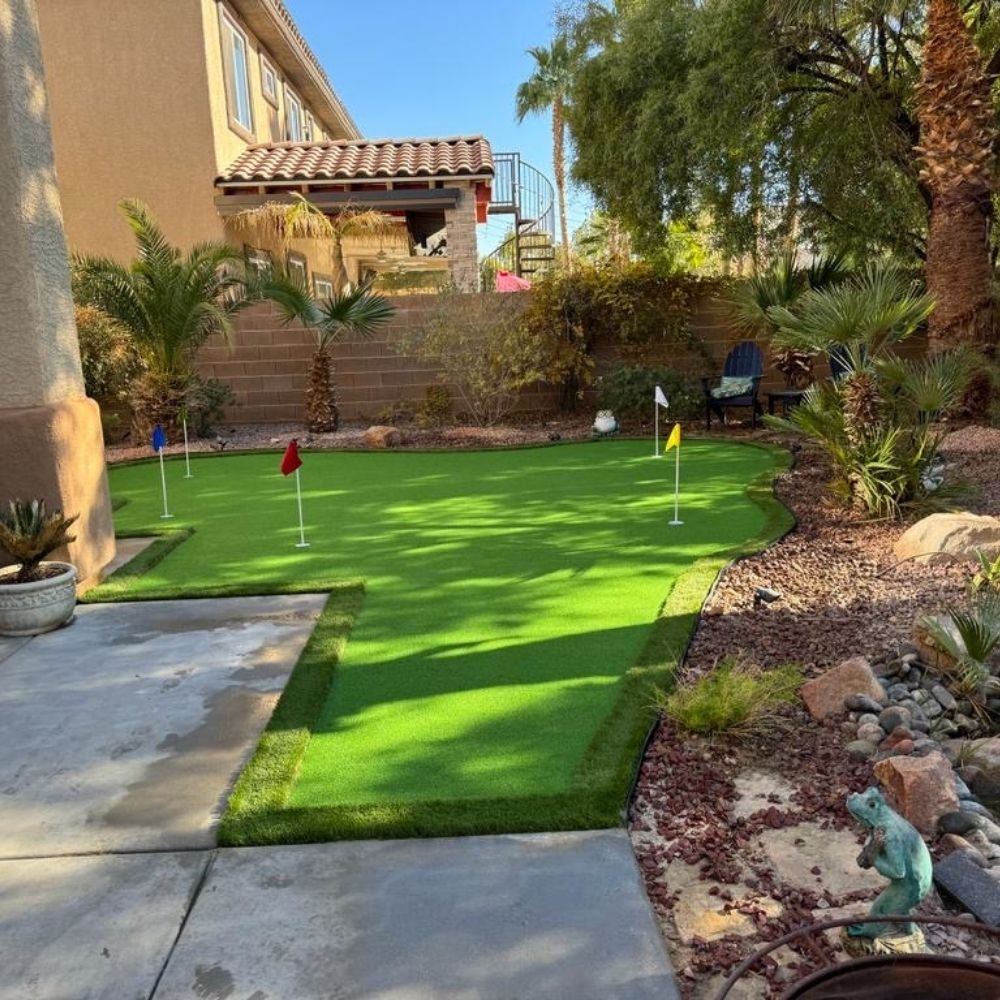
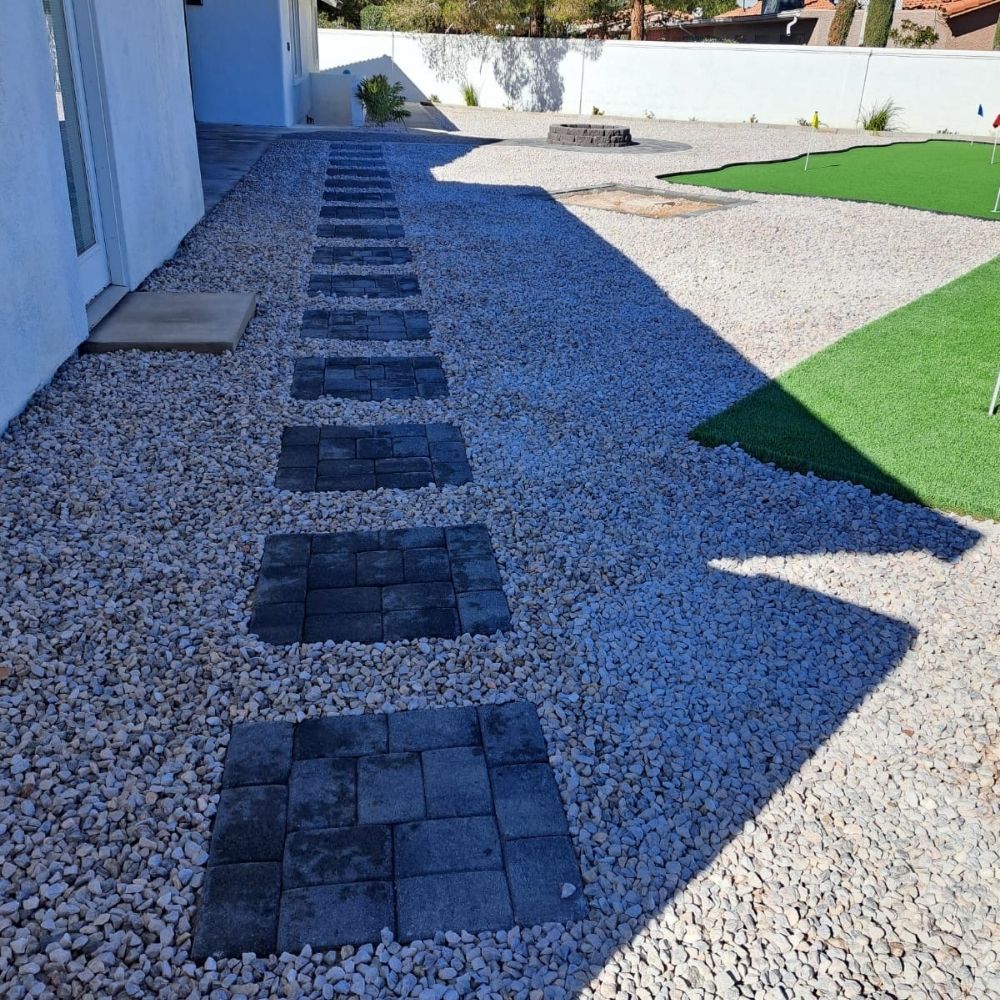
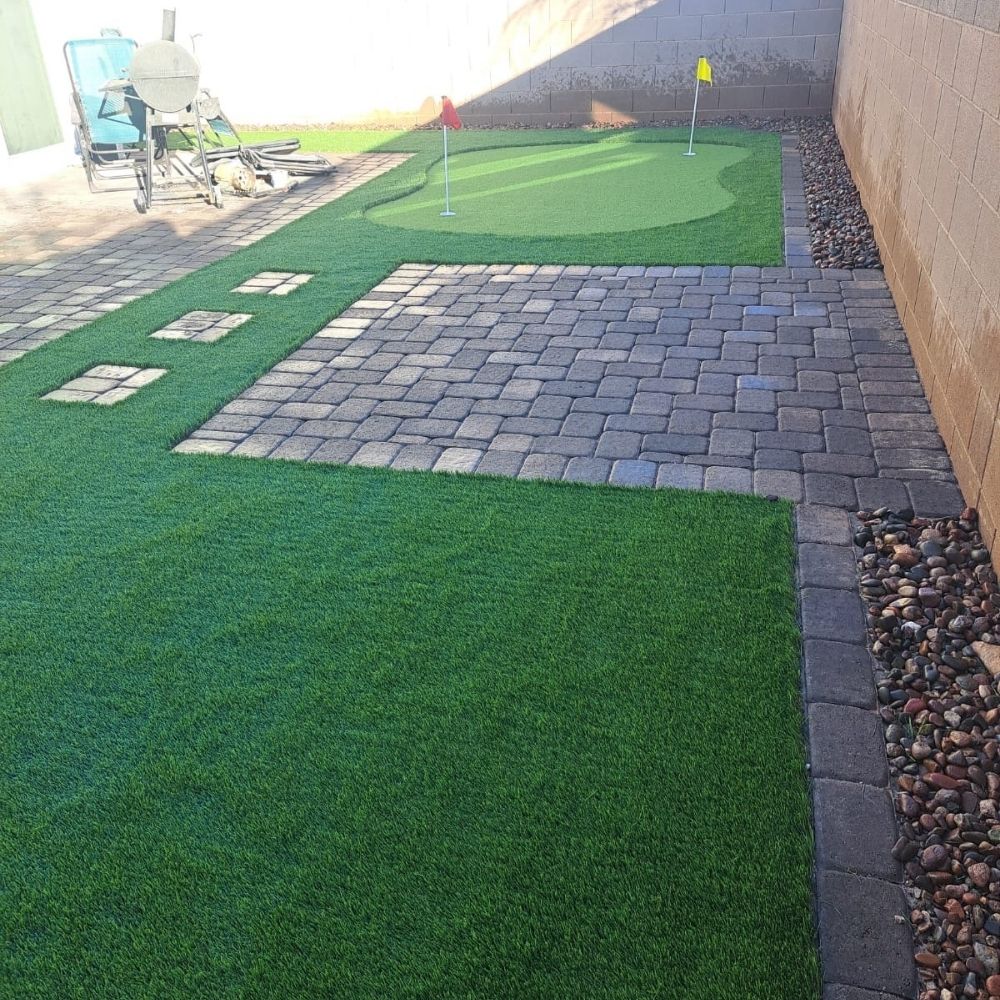
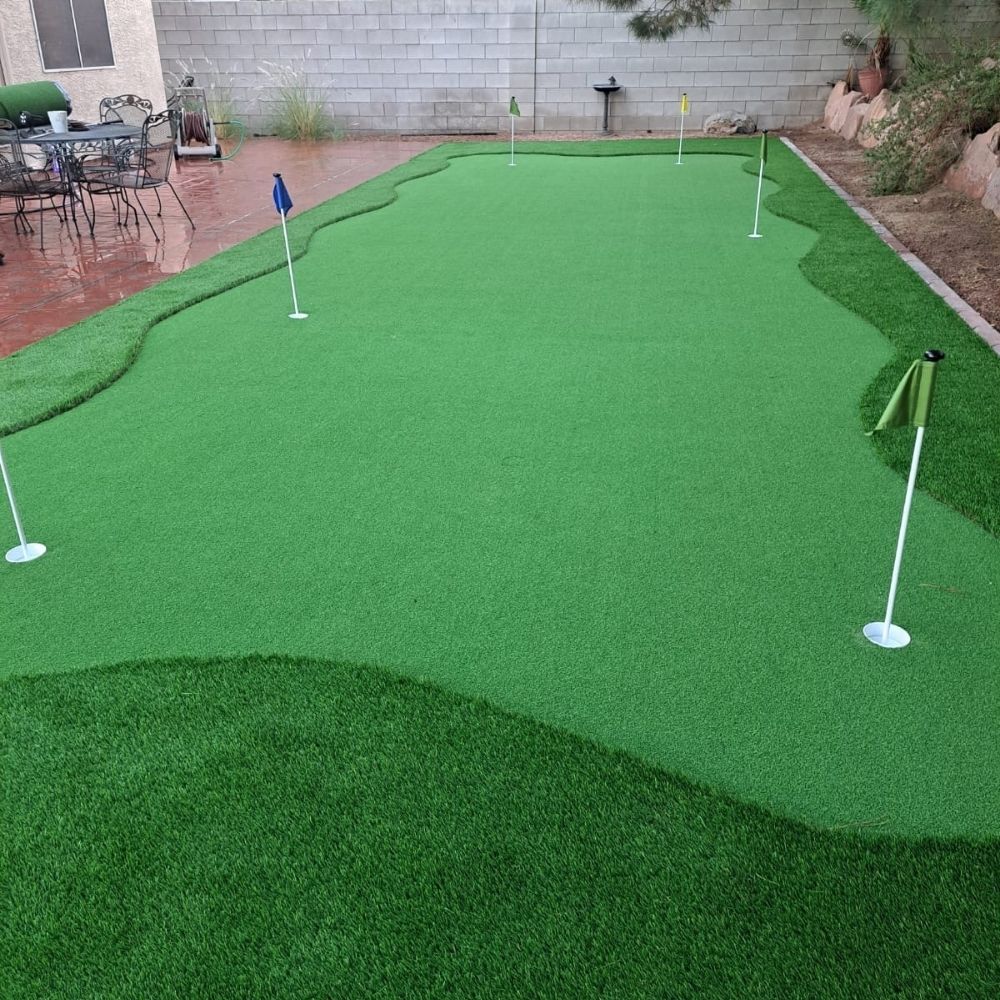
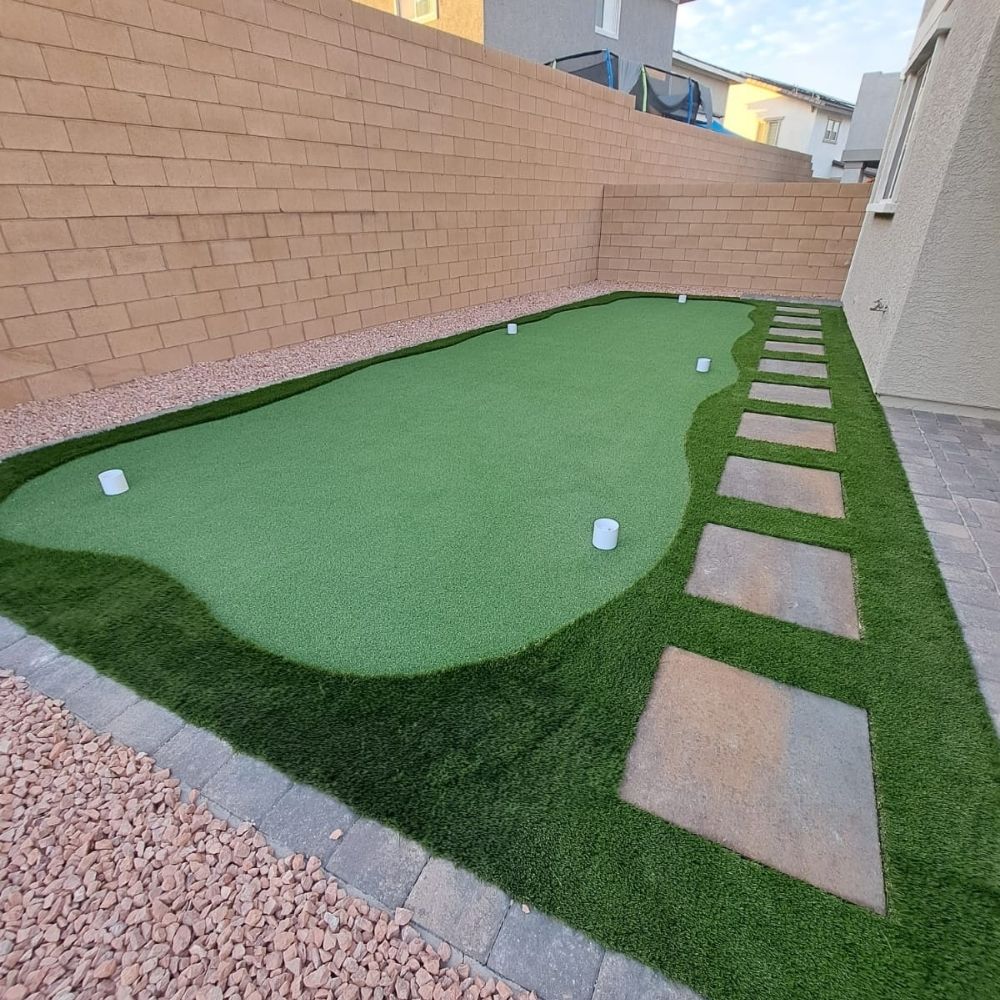
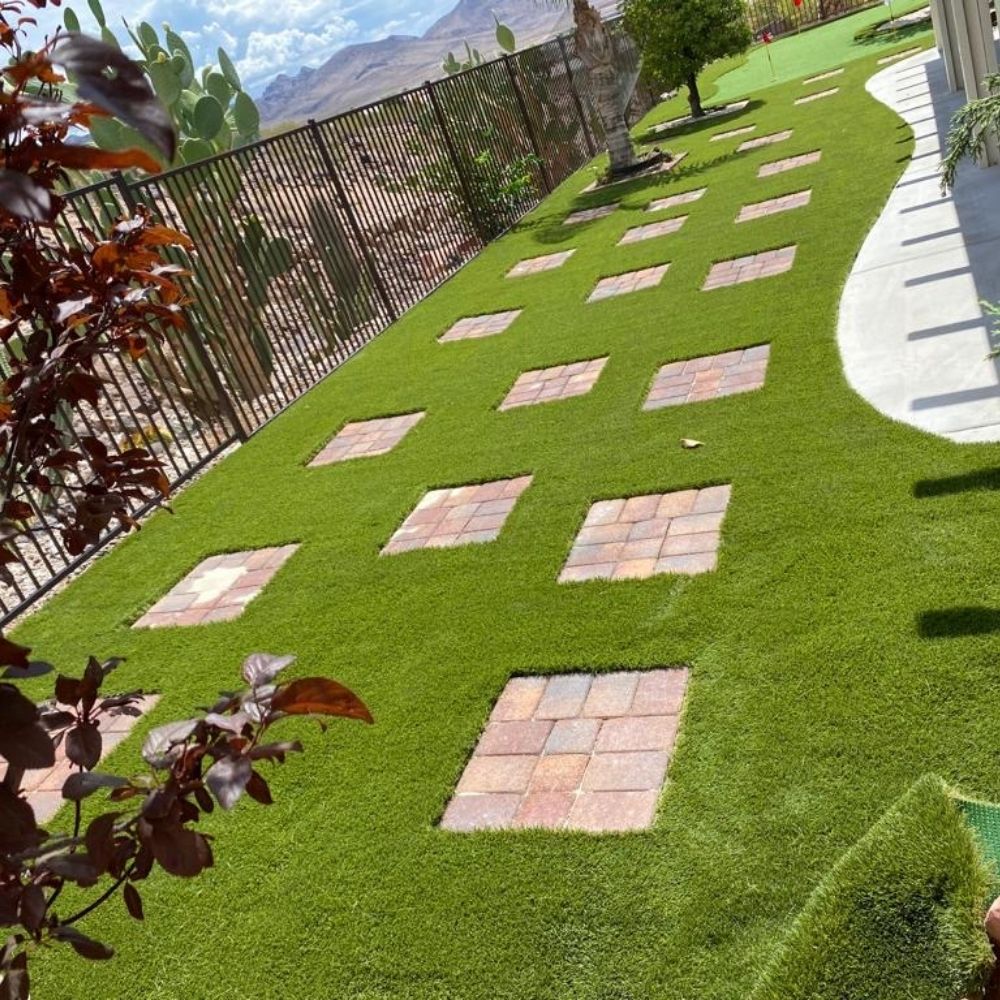
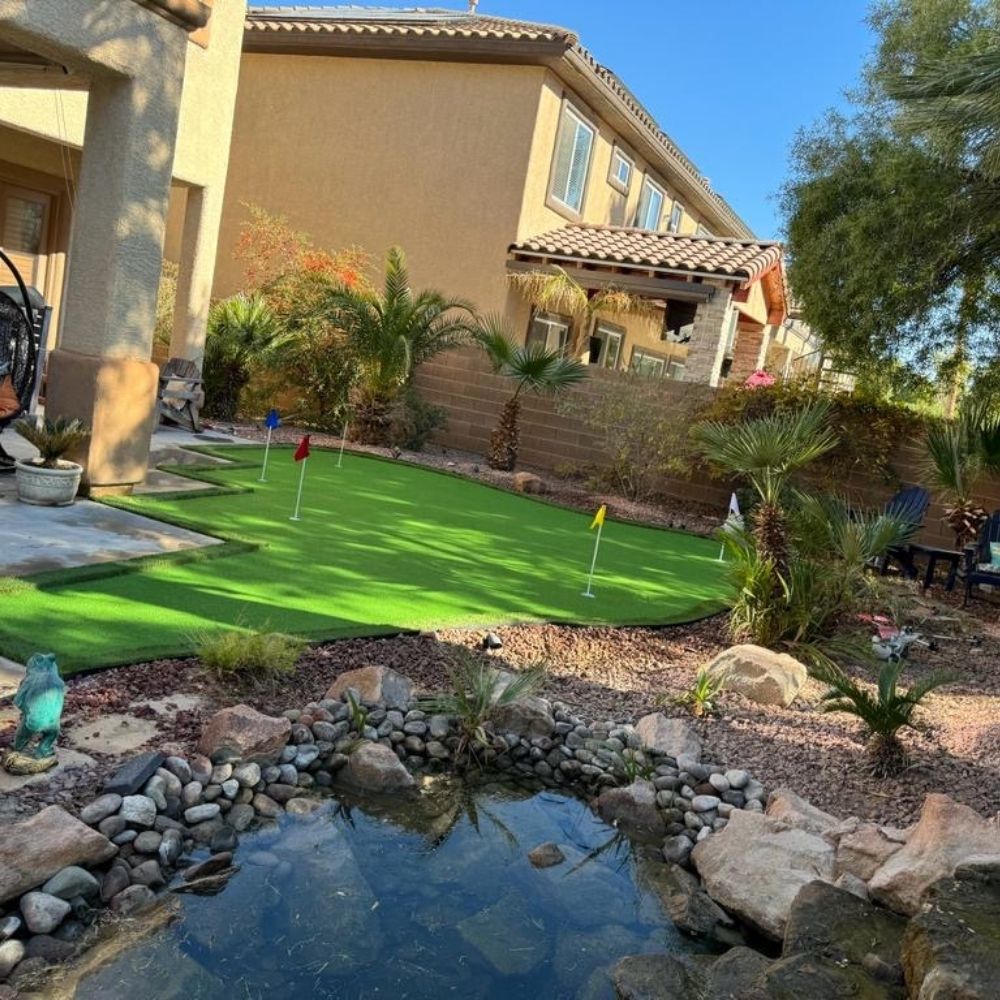
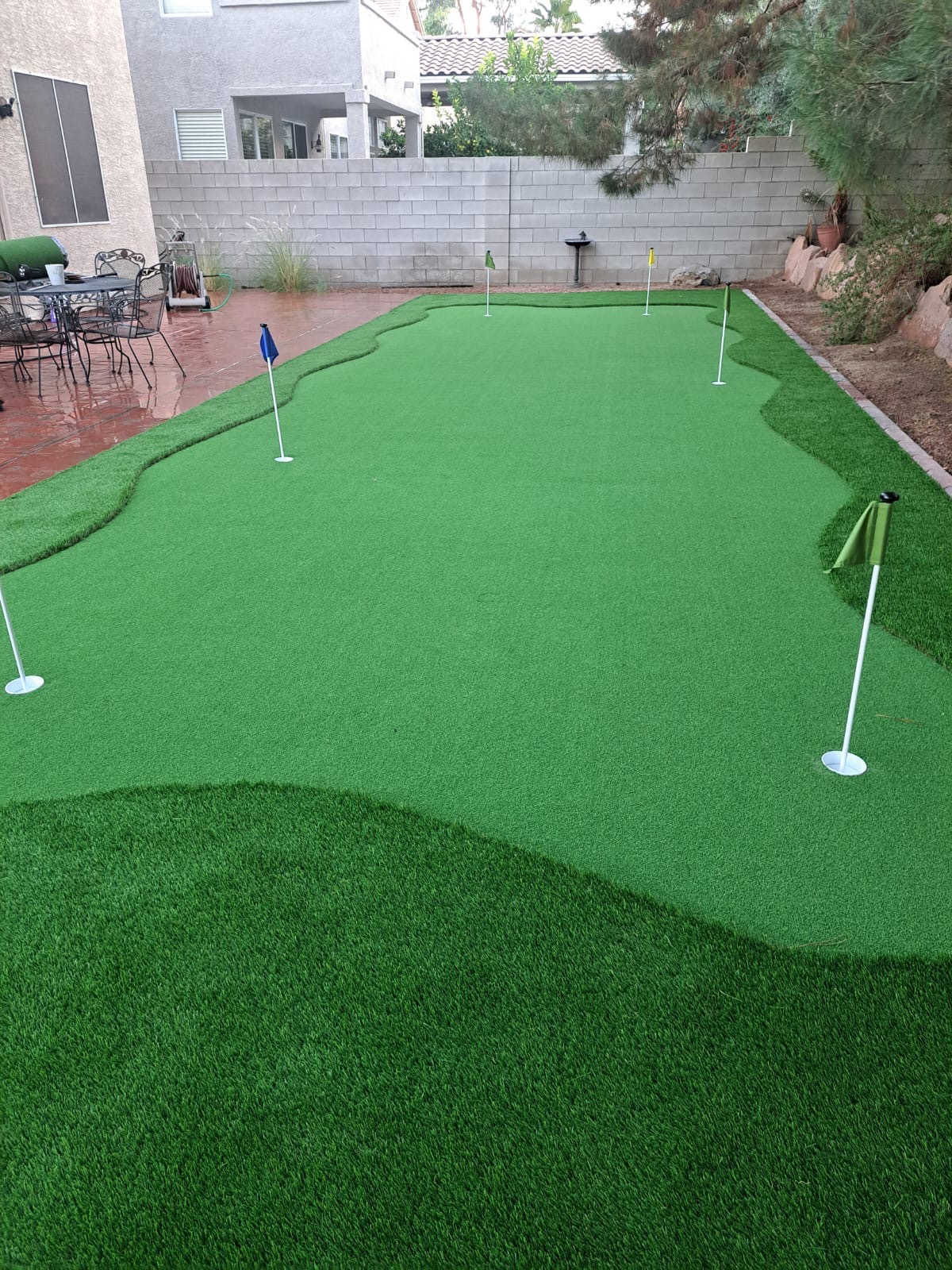
Putting greens require a fundamentally different system from landscape turf. The fiber is shorter and denser, the pile direction is consistent for predictable ball roll, the base is prepared to a tighter grade tolerance, and the infill is specified for the required pace (speed) of the surface. Perimeter fringe turf is a different product from the playing surface and transitions at the cup and collar require precise finishing. For commercial putting greens at resorts and apartment amenity areas, see our commercial putting green installation page.
Rooftop and Elevated Deck Systems
Rooftop and deck applications require the system to handle load constraints of the structure, drainage that exits through the deck drainage system rather than into soil, and attachment methods that do not penetrate waterproofing membranes. Base depth is typically reduced or replaced with a drainage mat system. Turf is secured at edges rather than through the deck surface. Weight per square foot of the full system must be within the structural load rating of the deck. For more on rooftop and deck applications, see our turf for rooftops, decks, and balconies page.
Indoor Turf Systems
Indoor commercial turf installations — fitness facilities, retail display floors, hospitality event spaces, and office design features — require no UV-rated fiber and no drainage infrastructure. The base is typically foam padding or rubber underlayment rather than aggregate, and the turf is adhered directly to the subfloor. System weight is negligible. These installations have the lowest complexity of any system type and the widest product selection available, since outdoor performance requirements do not apply. For indoor application detail, see our custom landscape and turf integration page.
Las Vegas Climate Requirements for Commercial Systems
Las Vegas imposes specific performance demands on outdoor artificial grass systems that do not apply in most other markets. Specifying a system that meets general outdoor ratings is not sufficient — the materials and construction methods need to be appropriate for conditions that sit at the extreme end of what outdoor products are tested against.
UV Stabilization
Las Vegas receives some of the highest cumulative UV radiation of any metro in the country. Turf fiber that is not UV-stabilized throughout the material — not just coated at the surface — will show color fade within one to two seasons of outdoor exposure on south and west-facing installations. We specify fiber products with UV inhibitors formulated into the polyethylene during manufacturing. This is not a product feature that can be added after the fact, and it is one of the primary differences between systems that look the same on installation day and diverge significantly within a few years.
Thermal Performance and Infill Selection
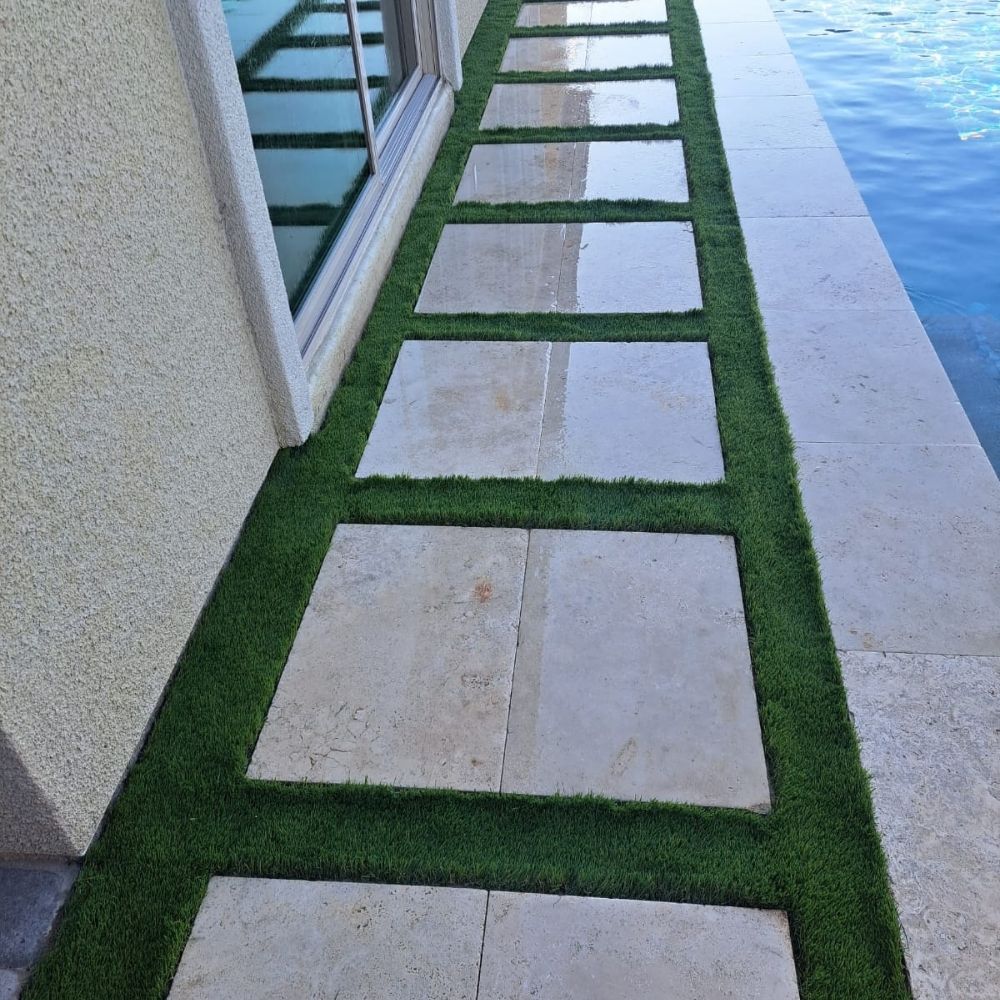
Surface temperatures on artificial turf in direct Las Vegas summer sun can reach 150 to 170 degrees Fahrenheit on dark-colored products with standard crumb rubber infill. For commercial applications where the turf surface is used by guests, residents, or the public during daytime hours, thermal performance is a system design consideration. Lighter-colored turf products absorb less solar radiation. Coated sand infill and organic infill products (cork, coconut fiber) retain less heat than standard crumb rubber. For pool surrounds, dog areas, and anywhere barefoot use is expected, we discuss infill selection and any shade infrastructure — pergolas, sails, tree canopy — that mitigates peak surface temperature.
Drainage Design for Desert Rain Events
Las Vegas rain events are infrequent but can be intense — monsoon-pattern storms deliver significant rainfall volume in short windows. A commercial turf system on a large footprint needs to move that water off the surface and out of the base without pooling or saturating the aggregate layer. Base grading, backing permeability, and any supplemental drainage infrastructure are designed together for the site’s drainage context. For properties where turf drains toward structures or adjacent hardscape, drainage direction and volume calculations are part of the base design, not an assumption.
Seam and Hardware Durability
Seam adhesive and backing tape used for outdoor commercial installations need to maintain bond strength through thermal cycling between summer highs and winter lows in the Las Vegas desert. Standard indoor-rated seaming products will fail at outdoor temperature extremes over repeated seasonal cycles. We use seaming systems rated for sustained outdoor temperature ranges and specify stainless or galvanized hardware for all edge reliableening and border attachments, since standard steel corrodes efficiently in the combination of heat and intermittent moisture present in desert outdoor environments.
Commercial System Selection by Property Type
The table below summarizes how system specifications differ across the most common commercial property types. These are general parameters — every site assessment may reveal conditions that shift individual specifications.
| Property Type | Recommended Fiber | Base Depth | Infill Type | Key System Priority |
|---|---|---|---|---|
| HOA Common Areas | Mid-weight PE, natural blade shape | 3–4 inches compacted aggregate | Silica sand | Year-round appearance, drainage, longevity |
| Office / Retail Landscape | Mid-weight PE, finer pile | 3 inches compacted aggregate | Silica sand | Professional appearance, low maintenance |
| Hospitality / Resort | High-weight PE, premium appearance grade | 3–4 inches compacted aggregate | Coated sand or light crumb rubber | Appearance quality, guest comfort |
| High-Traffic Pedestrian | High-weight PE/nylon blend, shorter pile | 4 inches heavily compacted | Silica sand, high-density | Fiber recovery, base stability |
| Commercial Pet Areas | Mid-weight PE, perforated backing | 4 inches with drainage slope | Antimicrobial / zeolite infill | Drainage rate, odor control, hygiene |
| Putting Greens | Nylon, short dense pile | 4–6 inches, precision grade | Kiln-dried sand, pace-specific | Surface trueness, ball roll consistency |
| Rooftop / Deck | Lightweight PE, UV-stable | Drainage mat system (no aggregate) | Light infill or no infill | Load rating, membrane protection, drainage |
| Indoor Commercial | Any PE or nylon — no UV req. | Foam or rubber underlayment | None or minimal | Aesthetic quality, subfloor compatibility |
How Commercial Systems Coordinate with Other Site Work
A commercial artificial grass system does not exist independently of the rest of the property’s outdoor infrastructure. The way it interfaces with hardscape, irrigation, lighting, and other landscape elements determines both the quality of the finished result and how cleanly the installation comes together.
-
✓
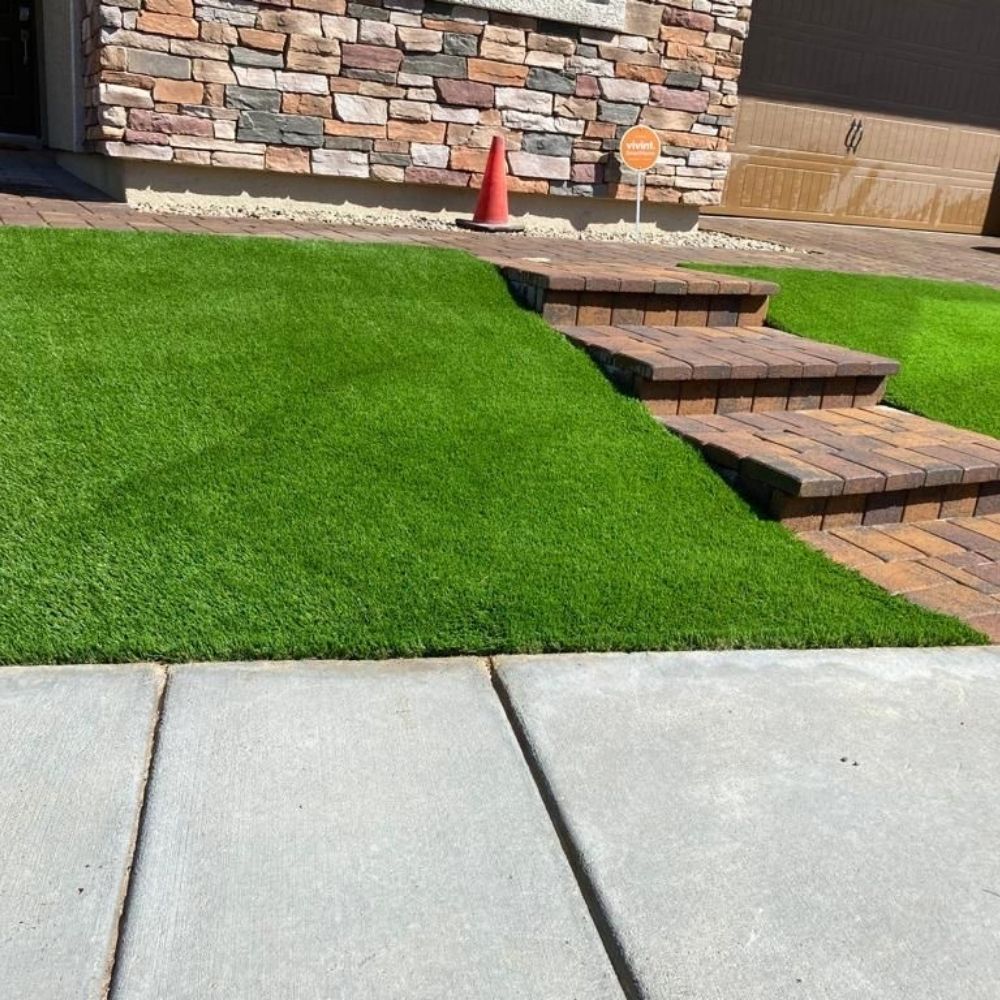
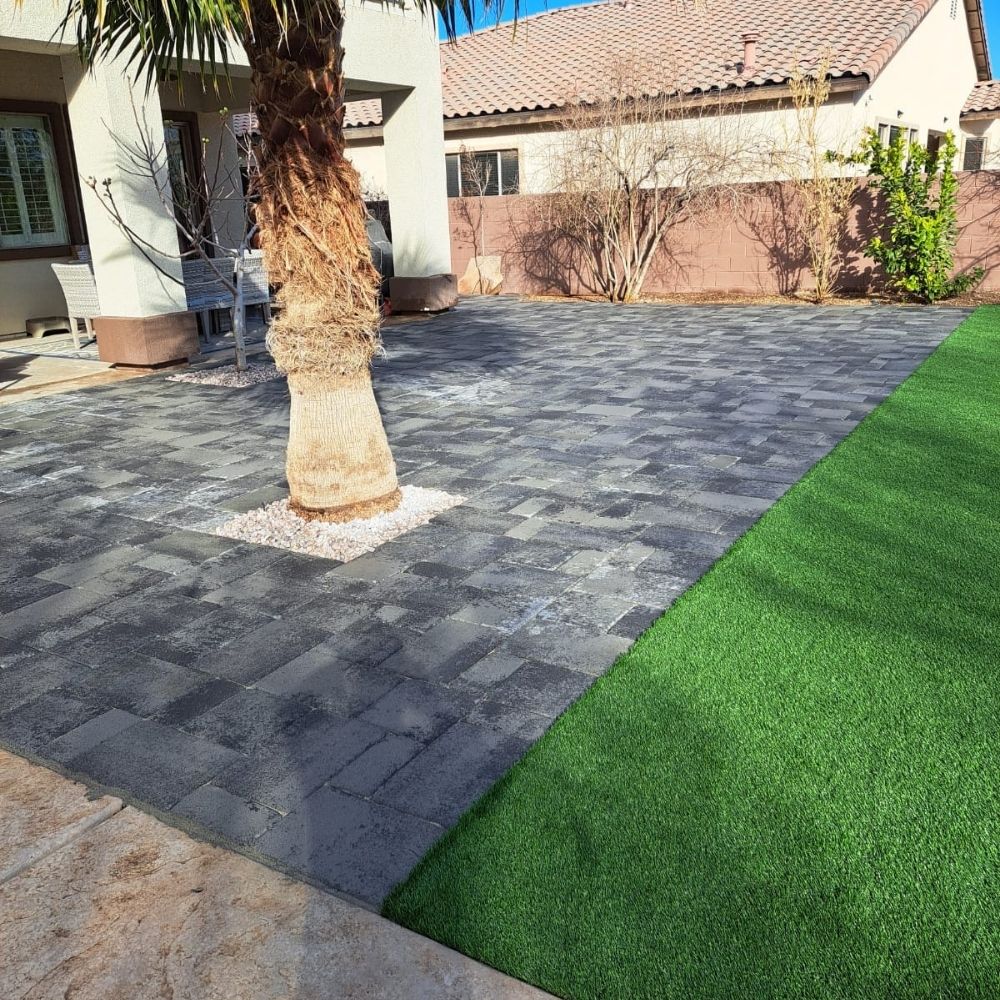
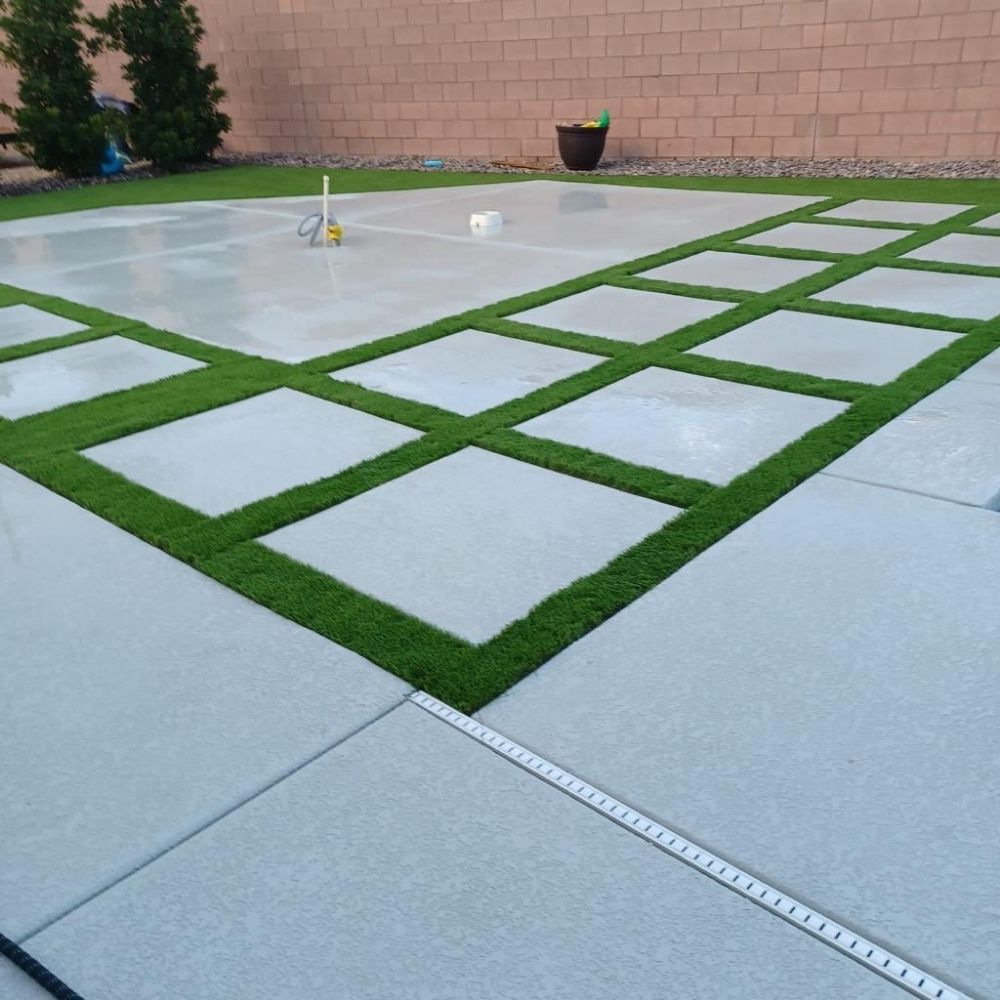
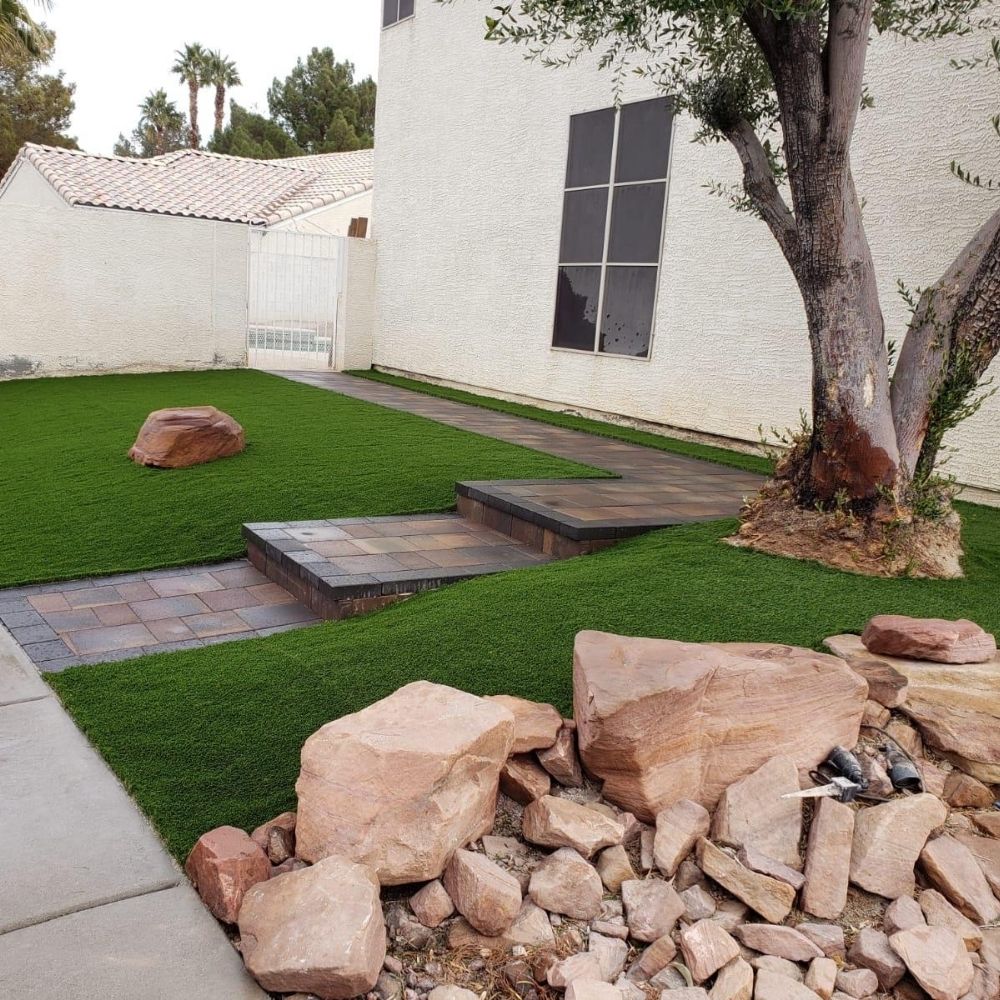
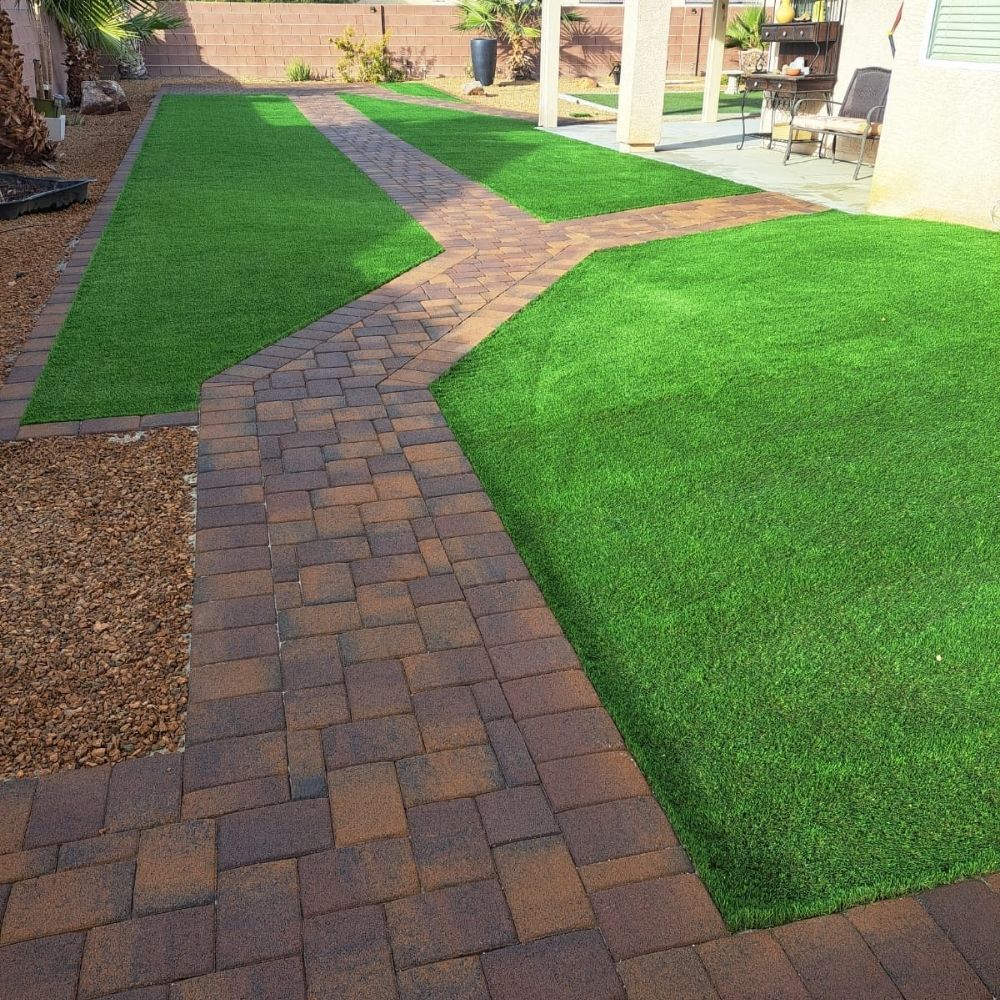
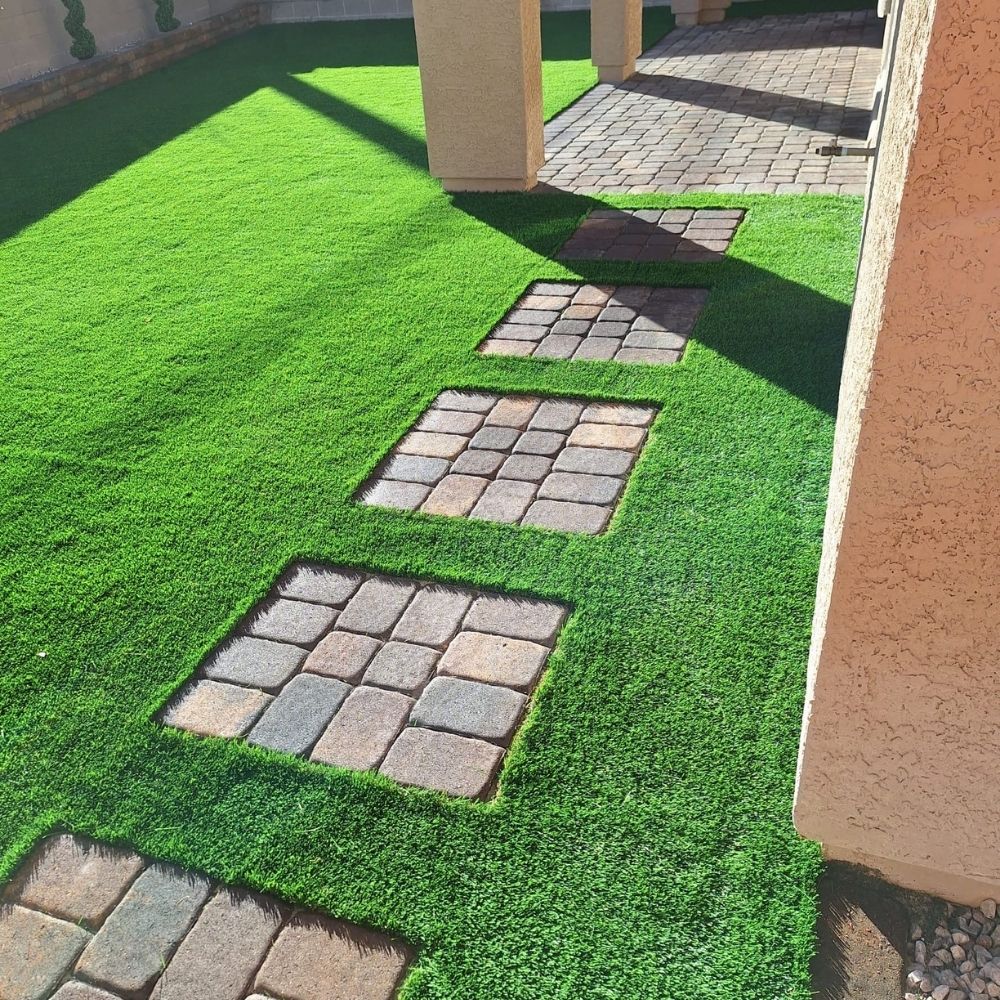
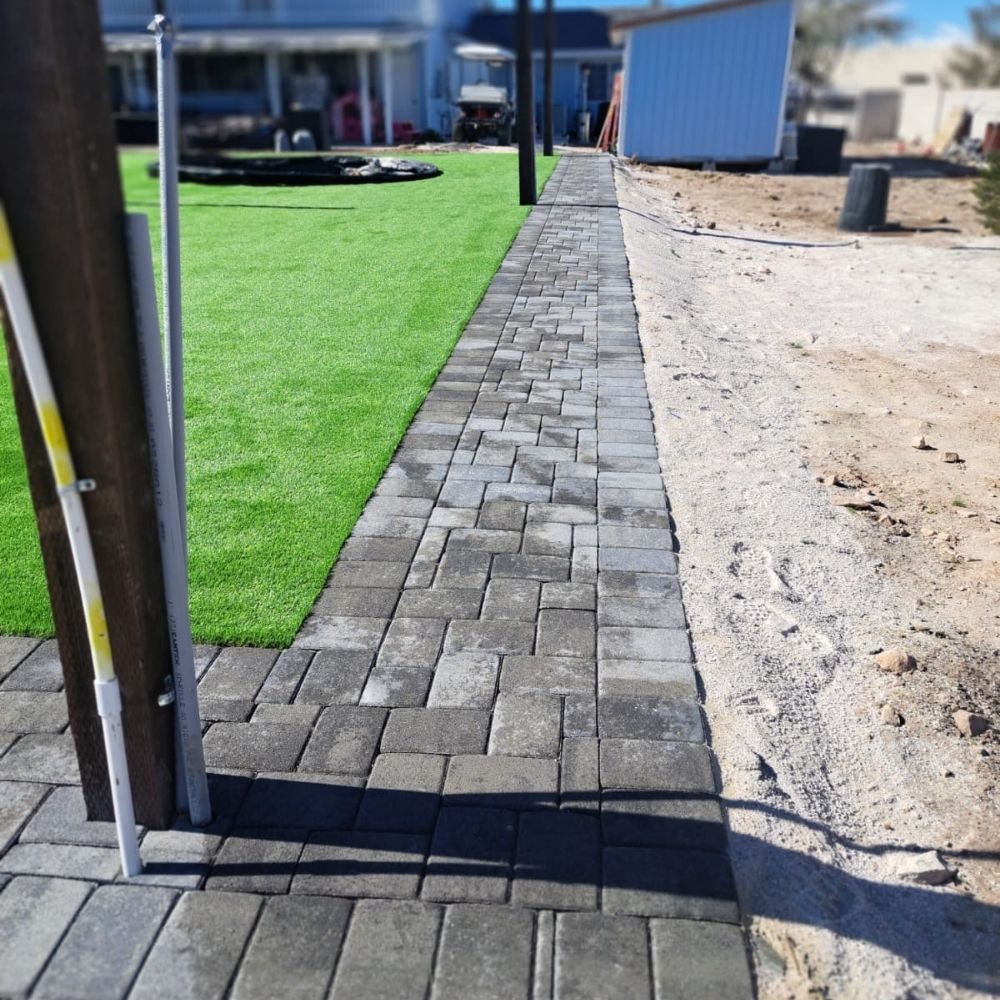
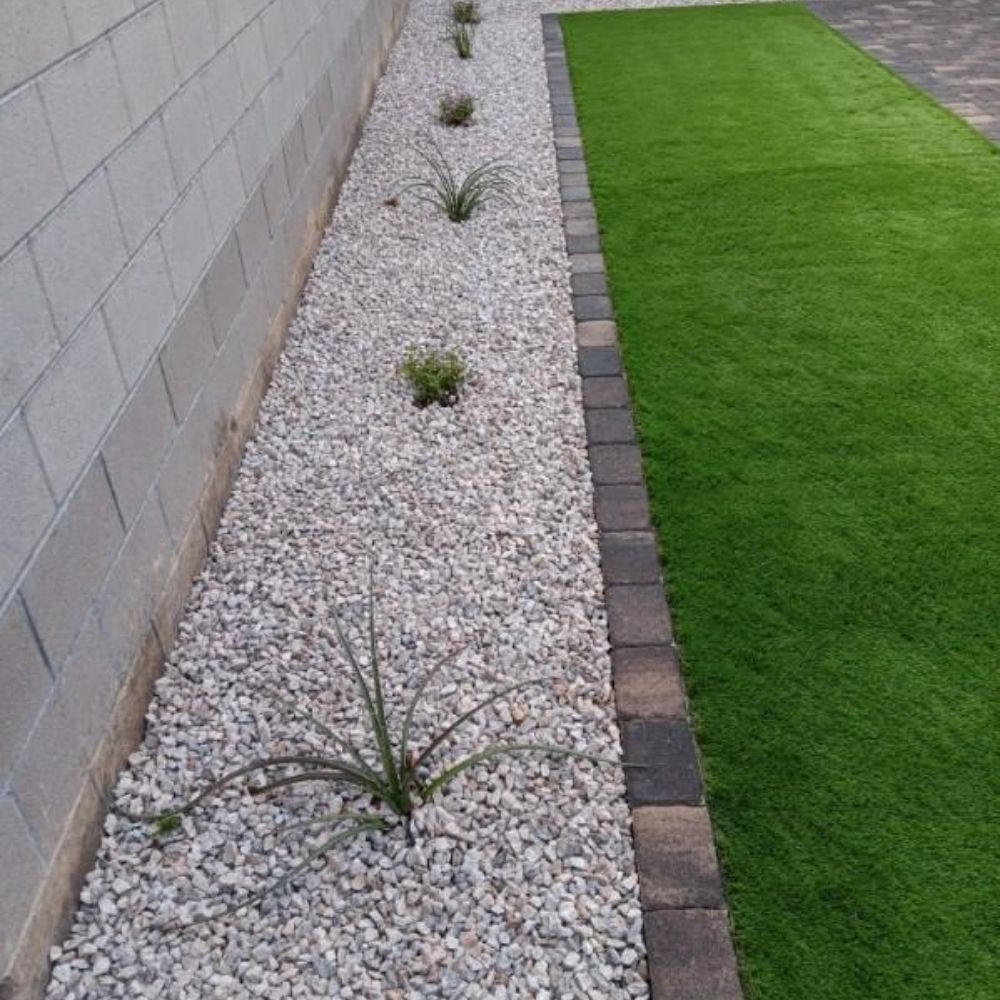
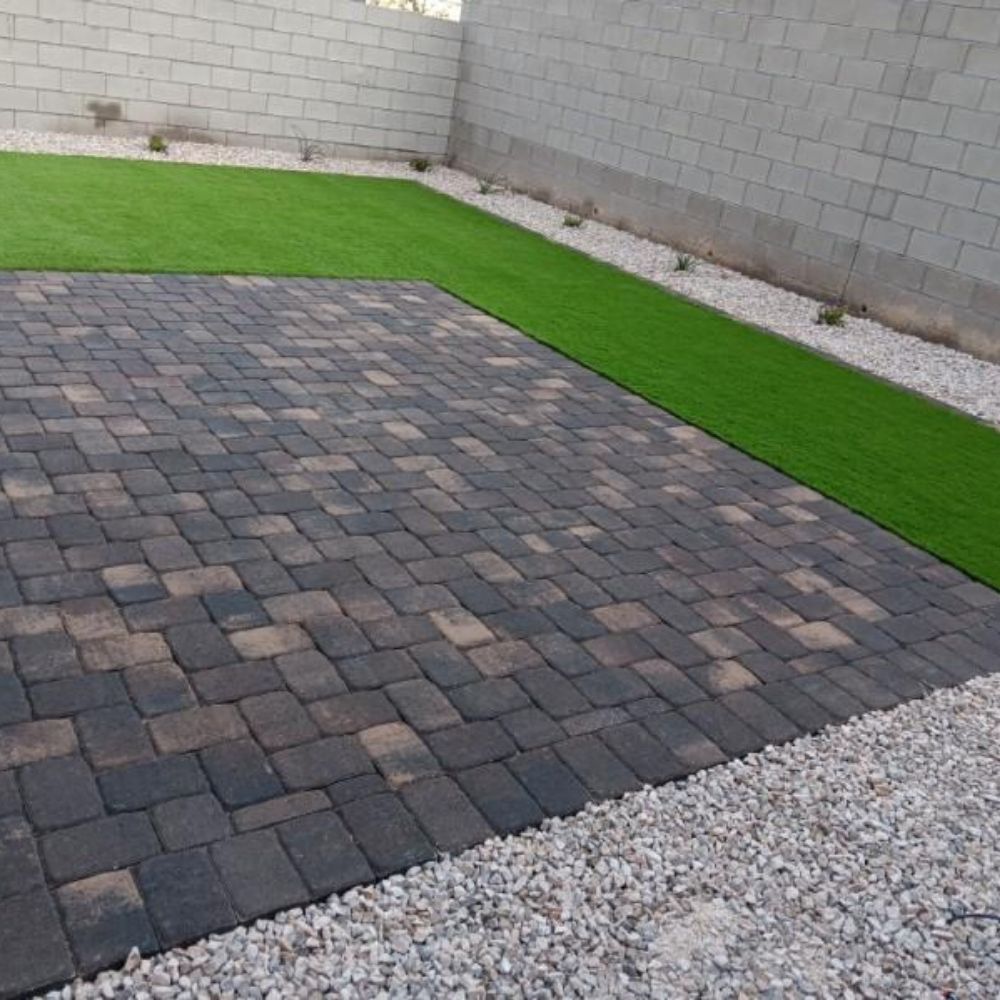
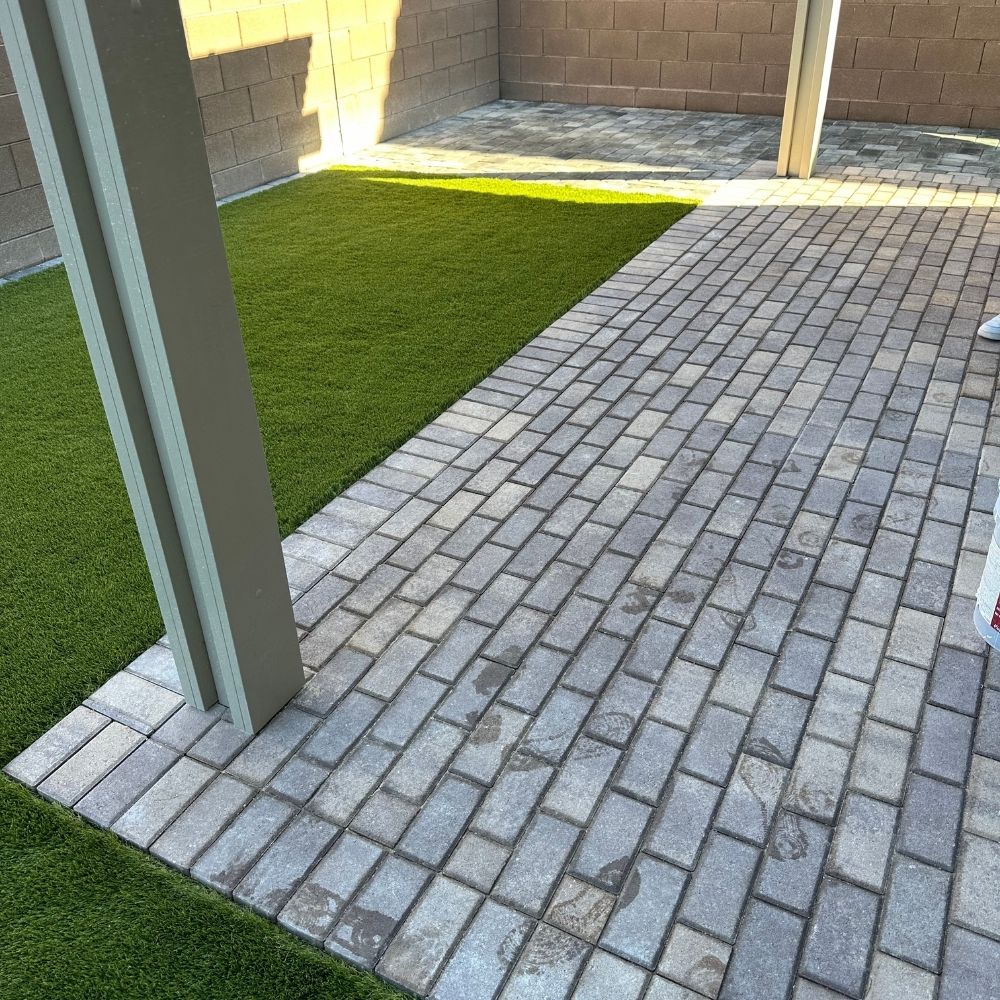
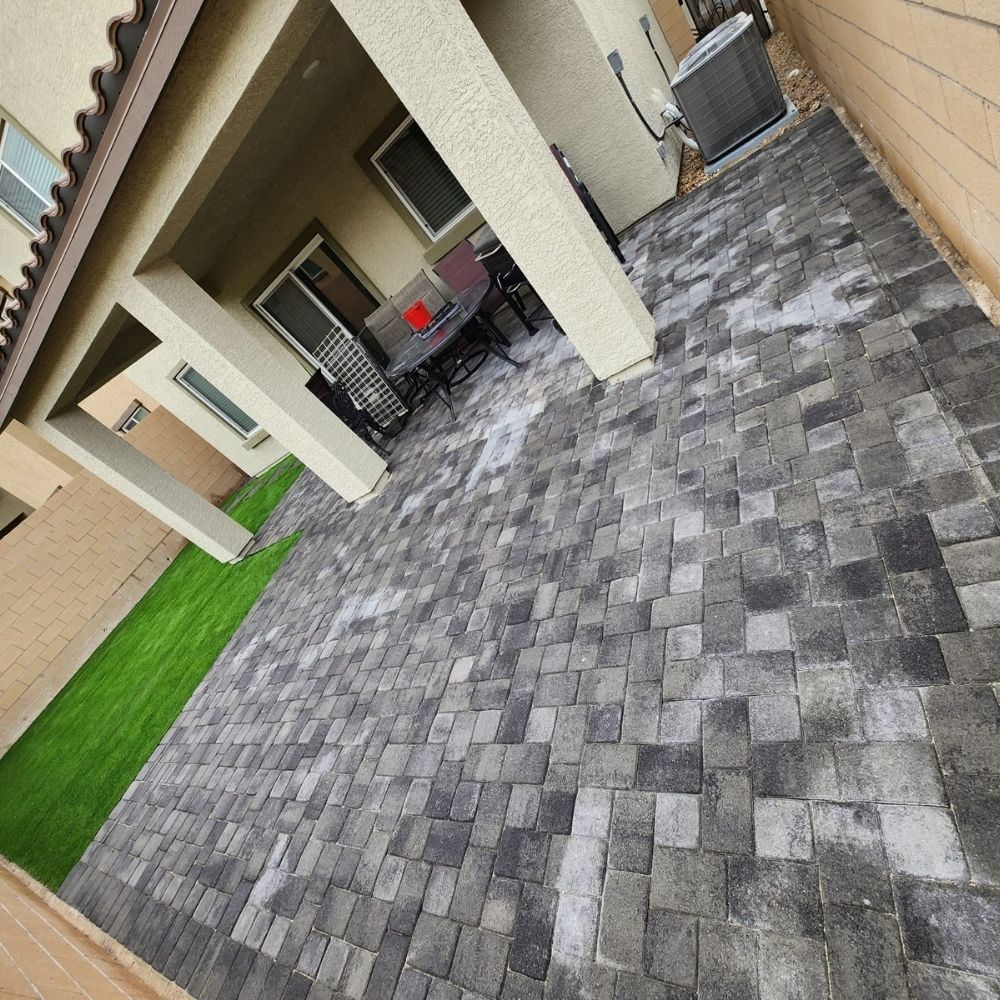
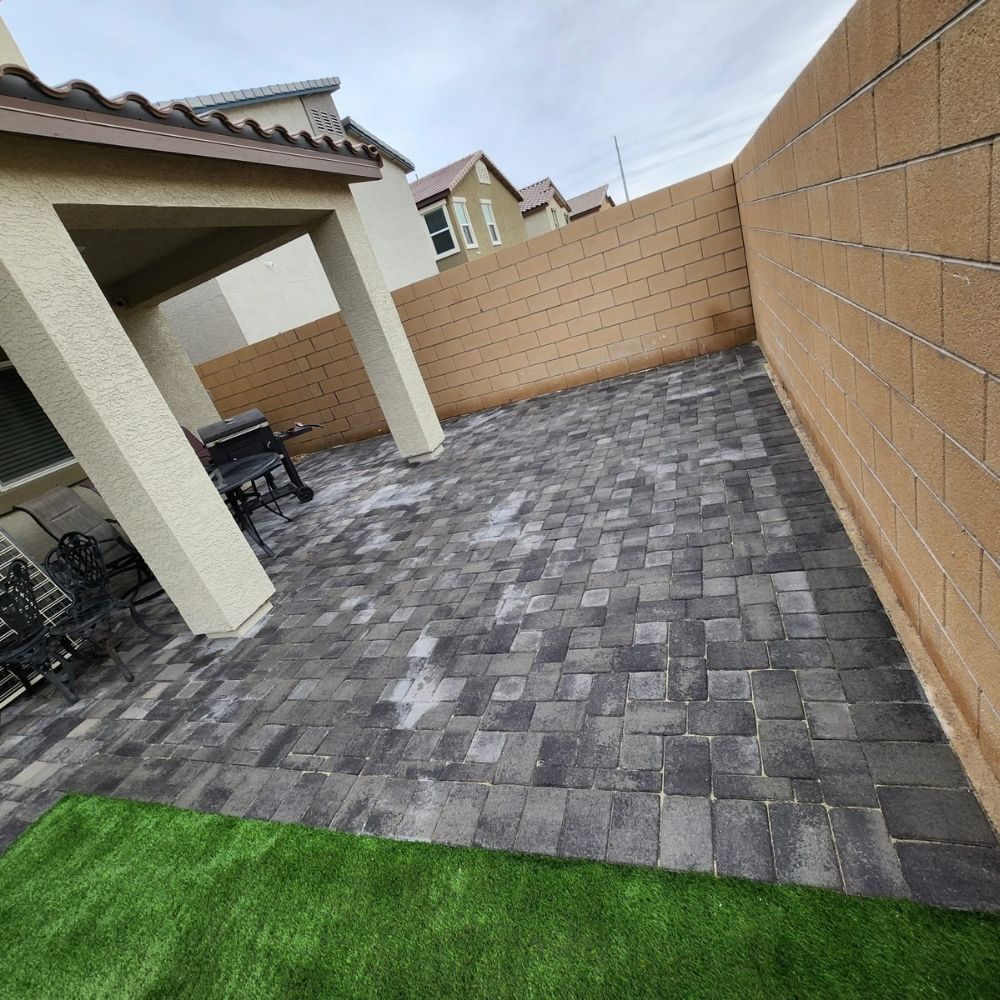
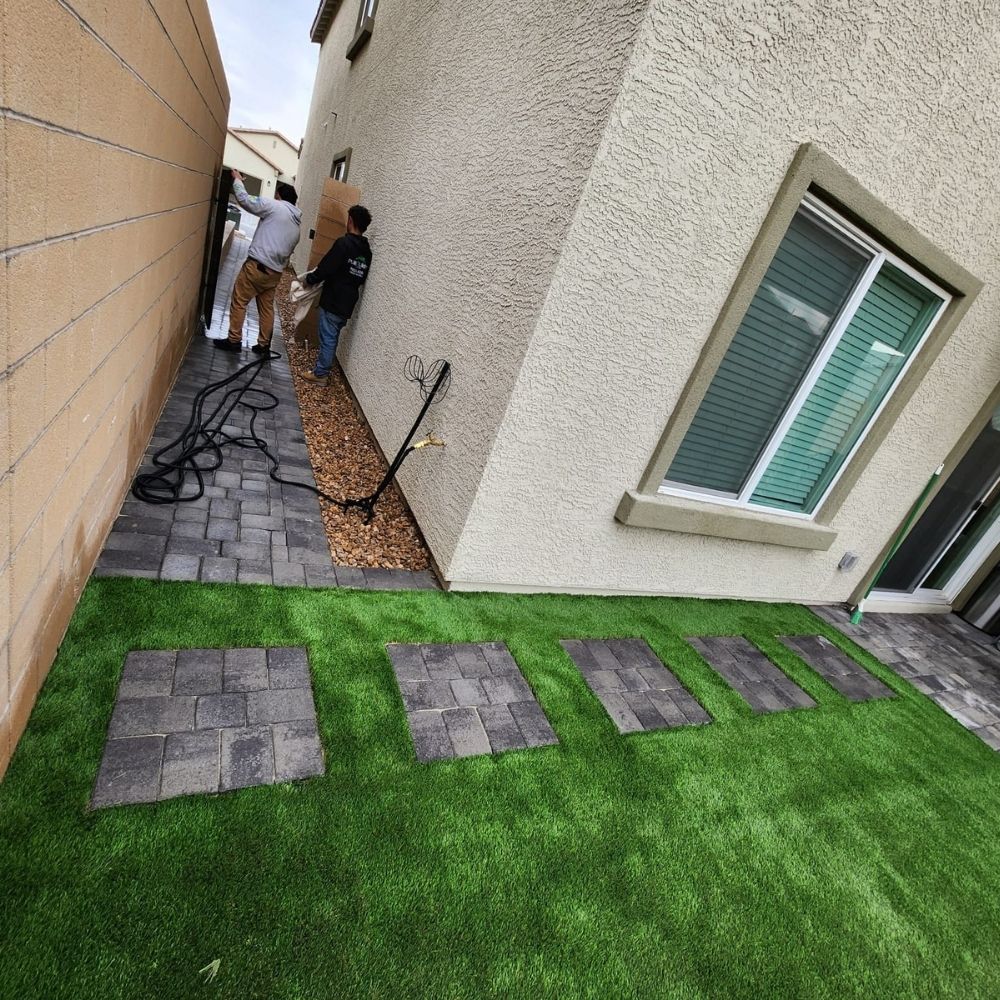
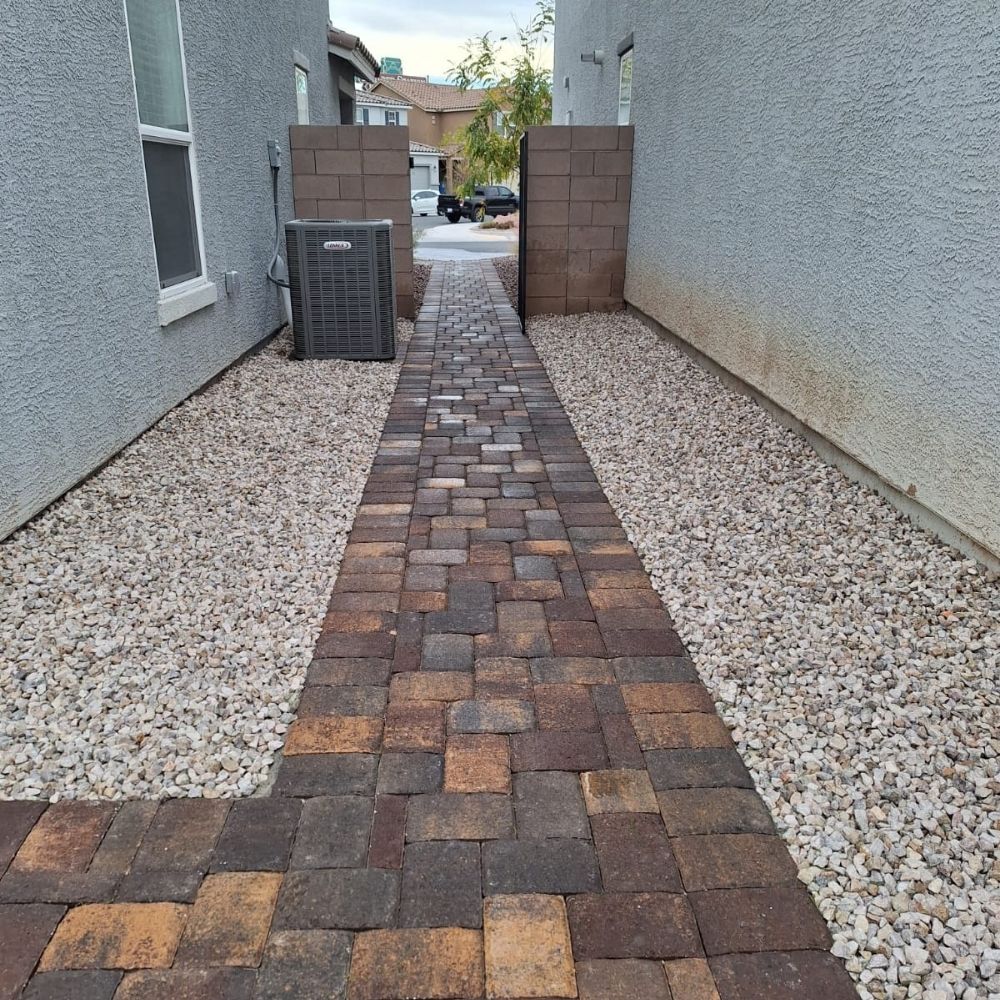
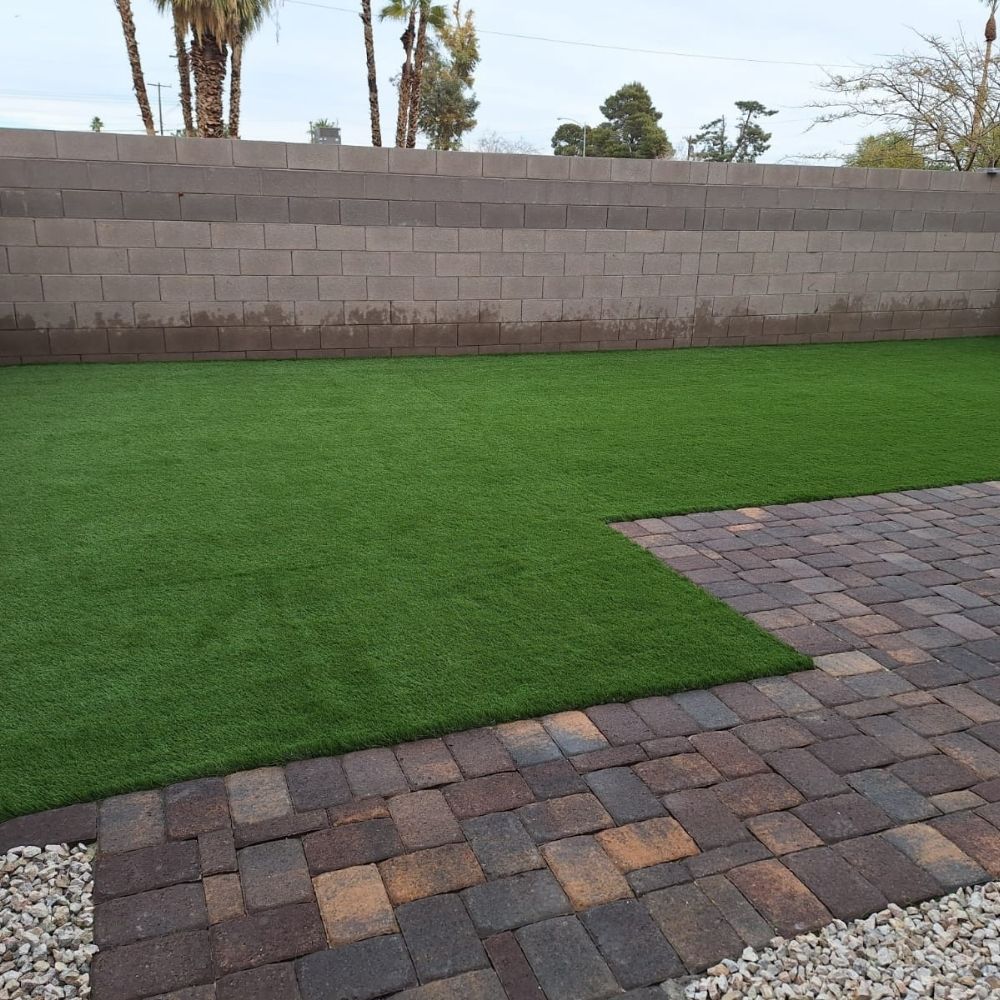
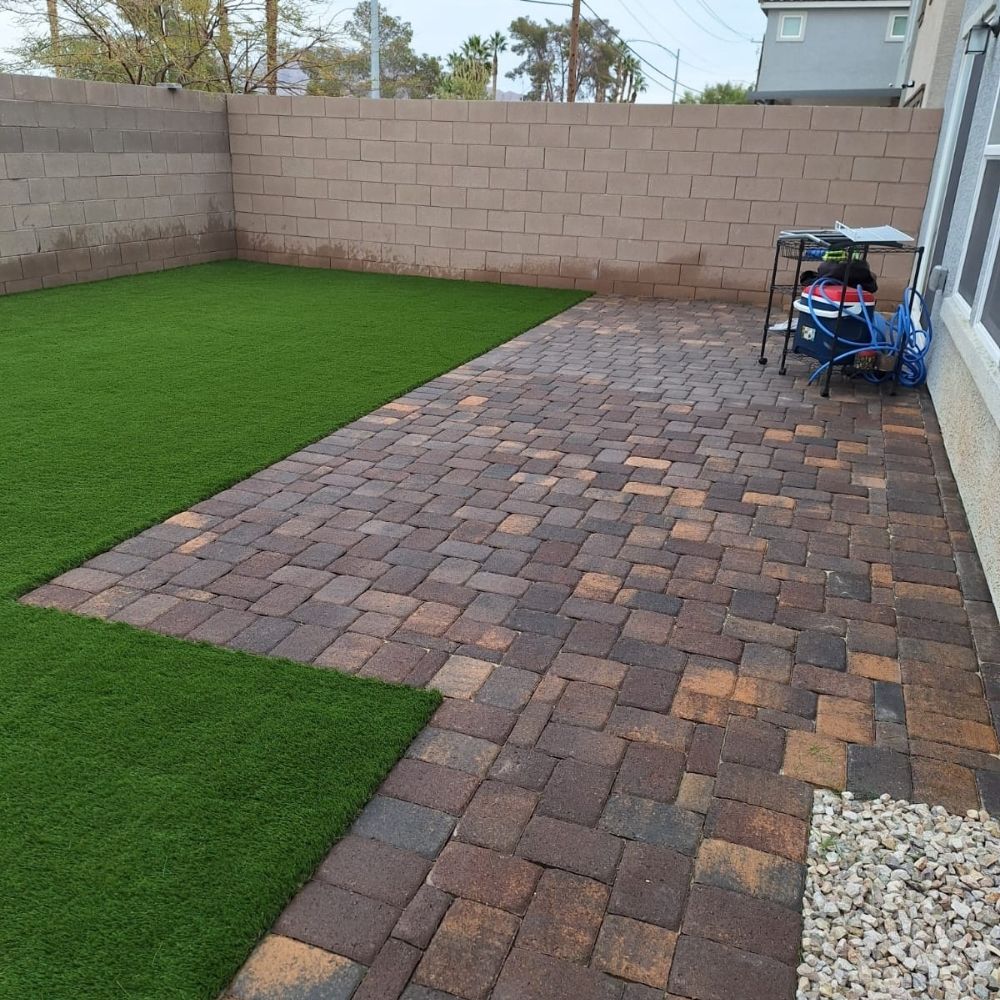
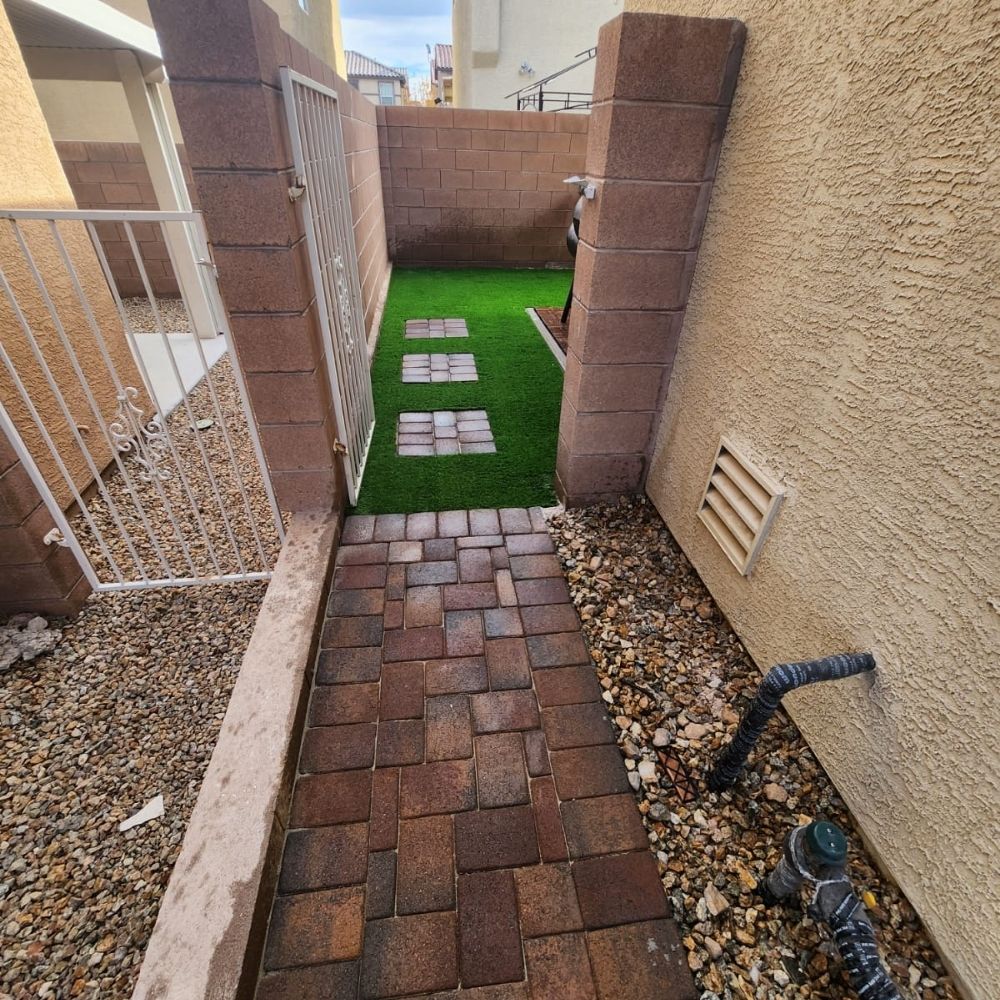
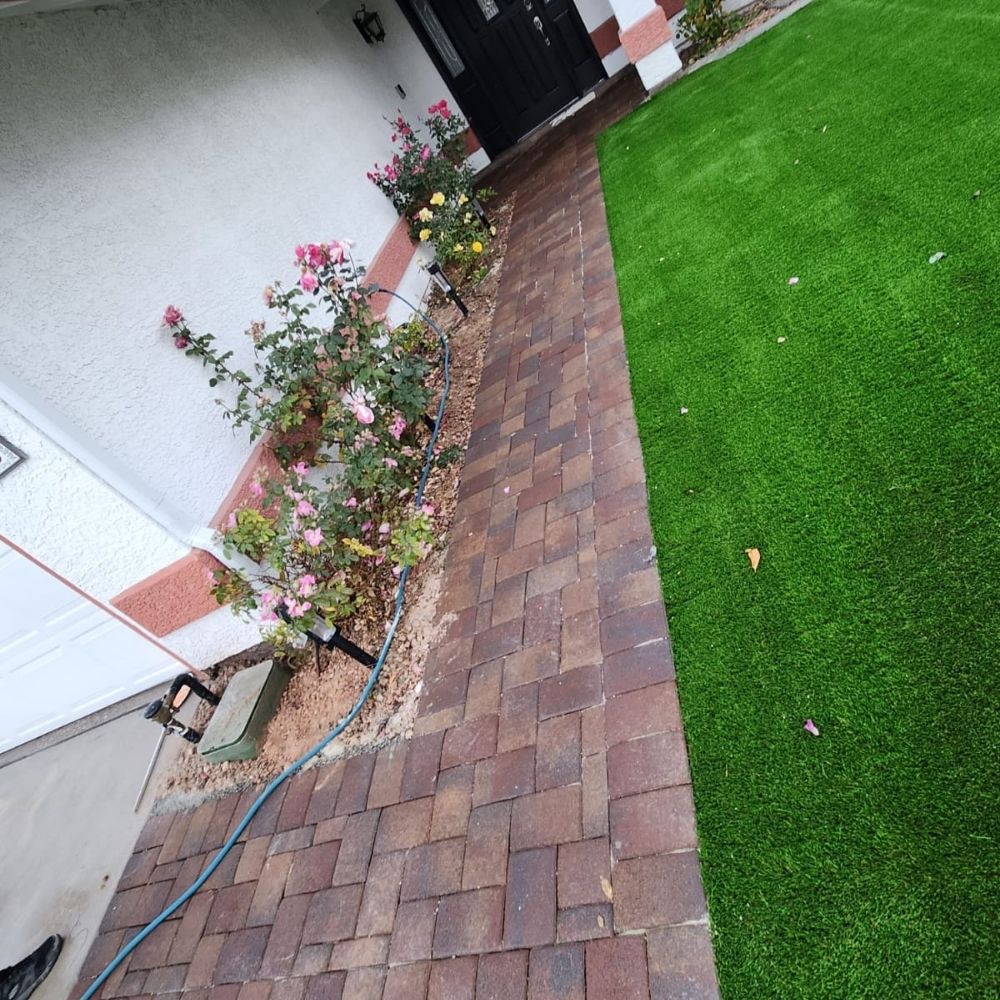
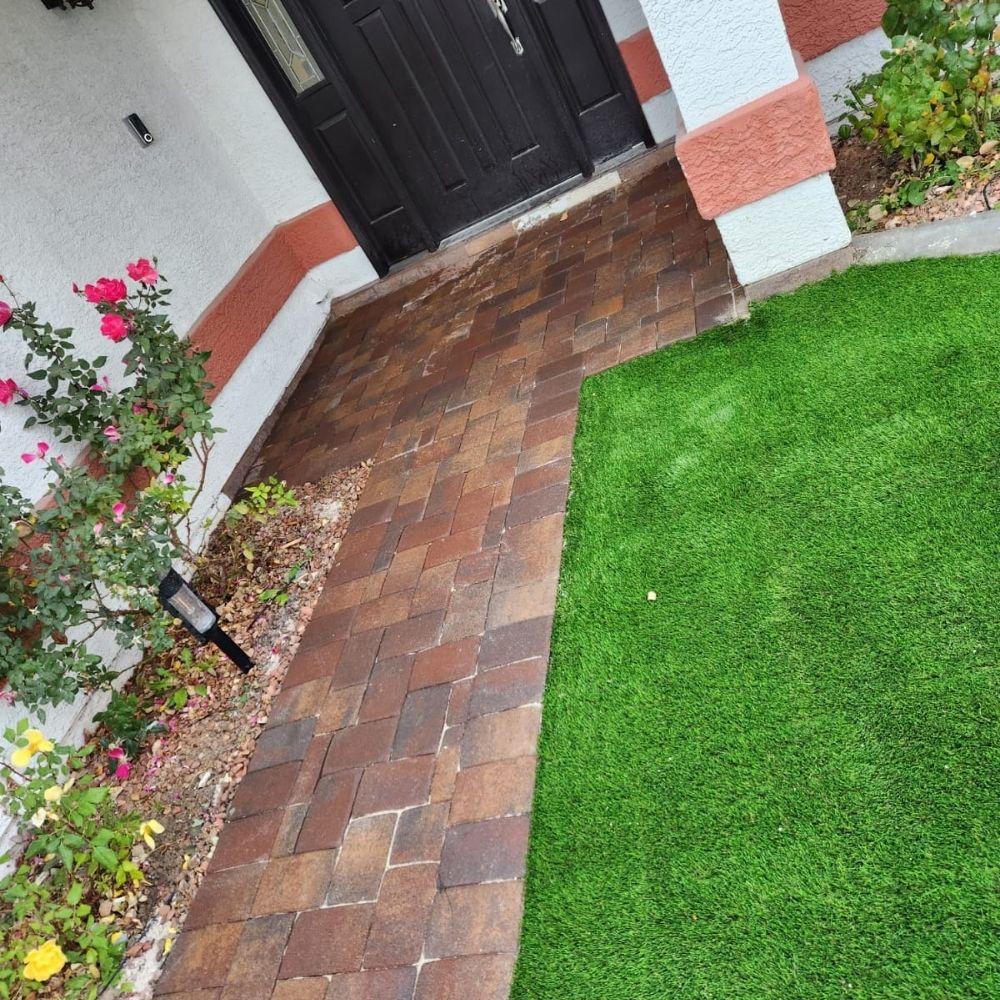
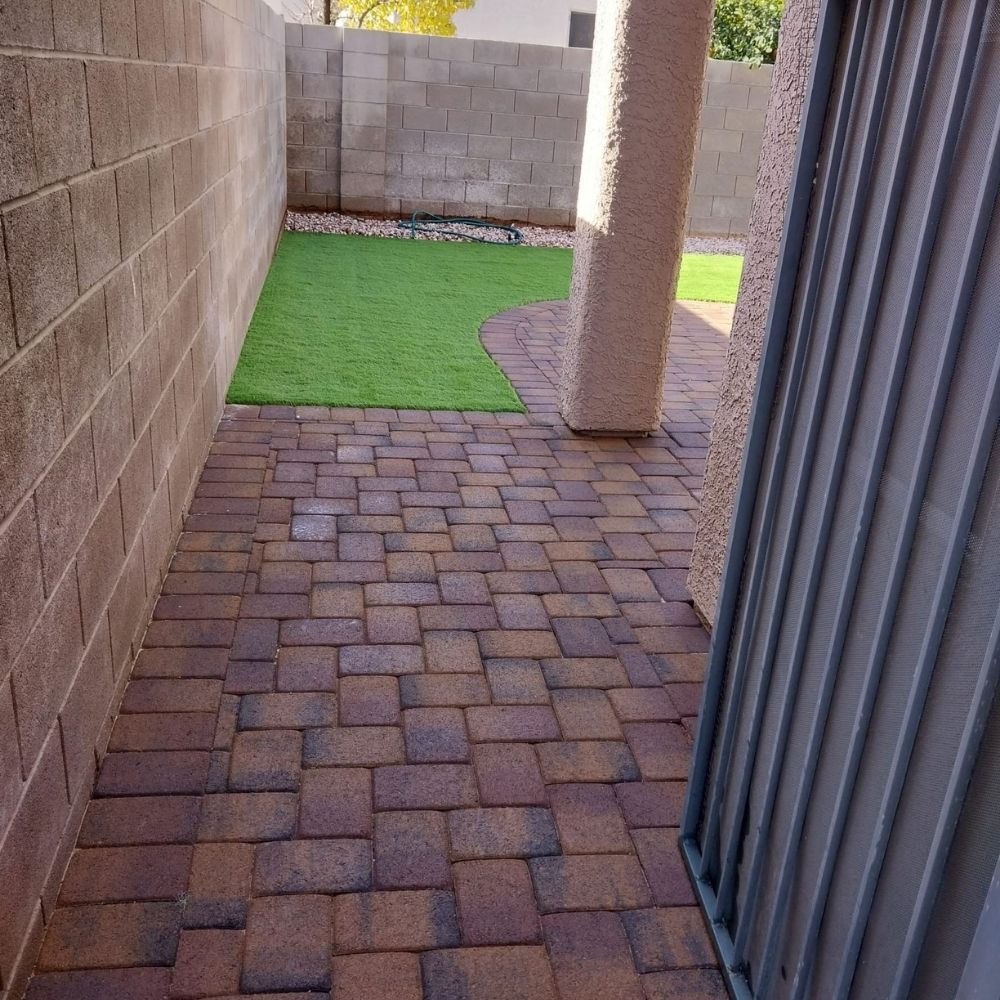
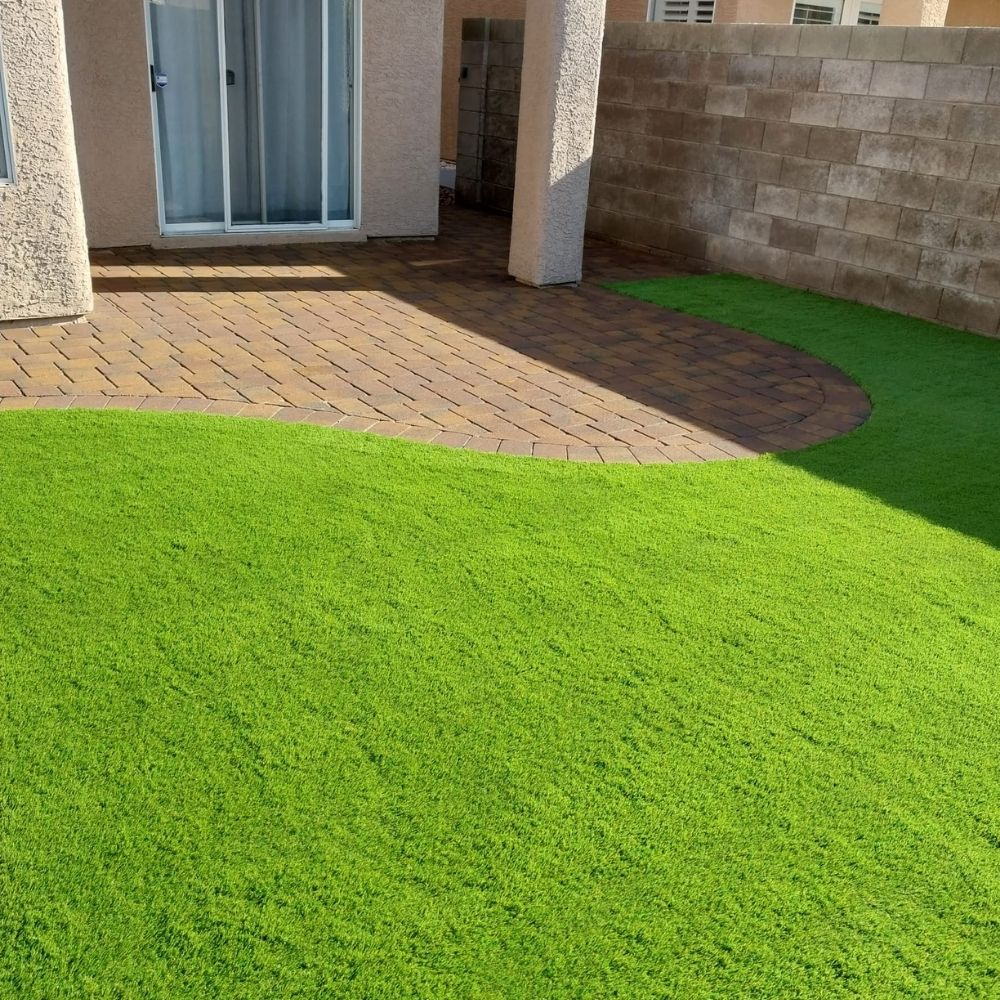
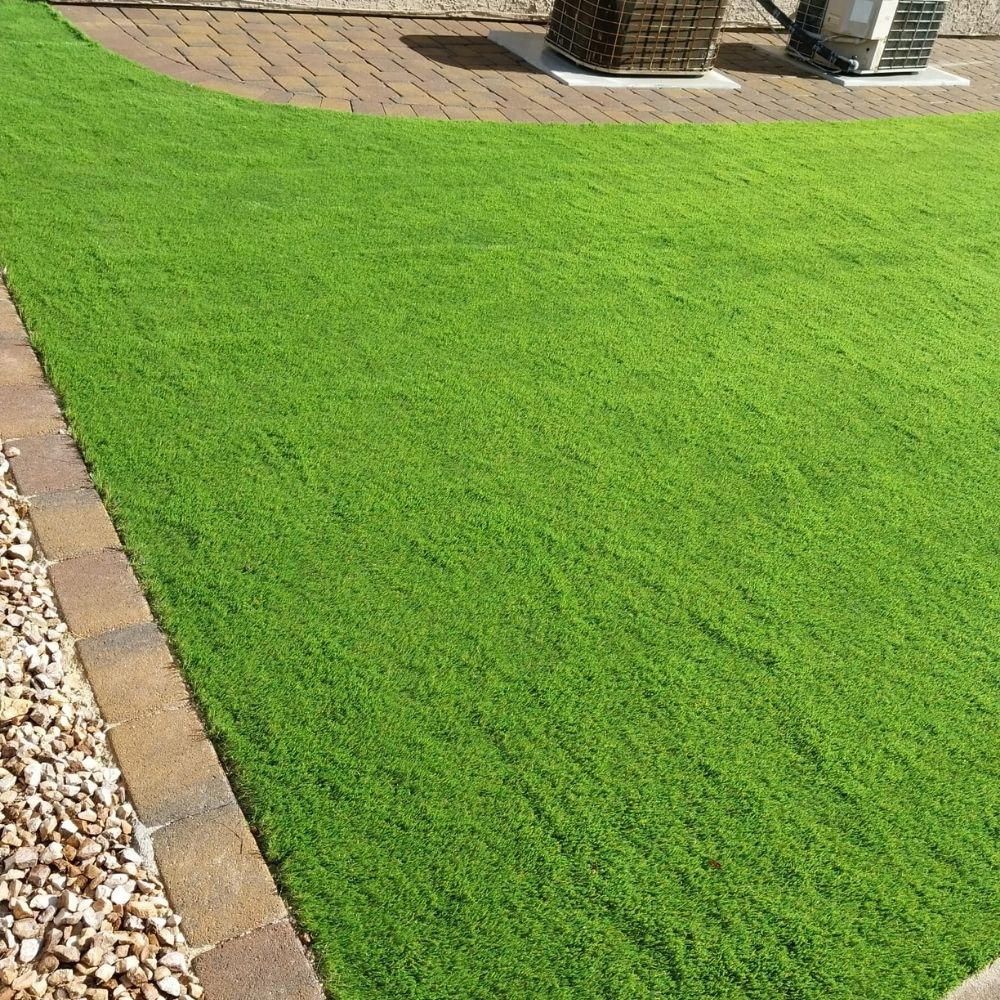
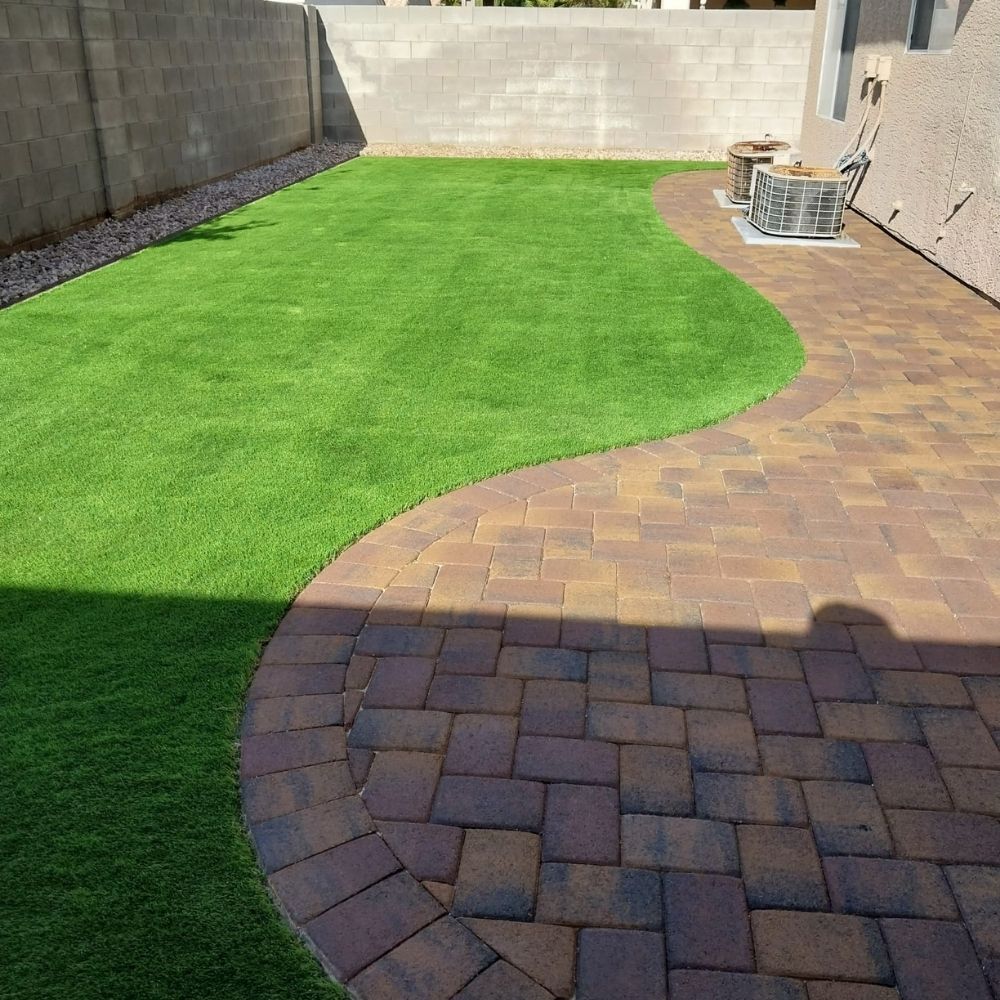
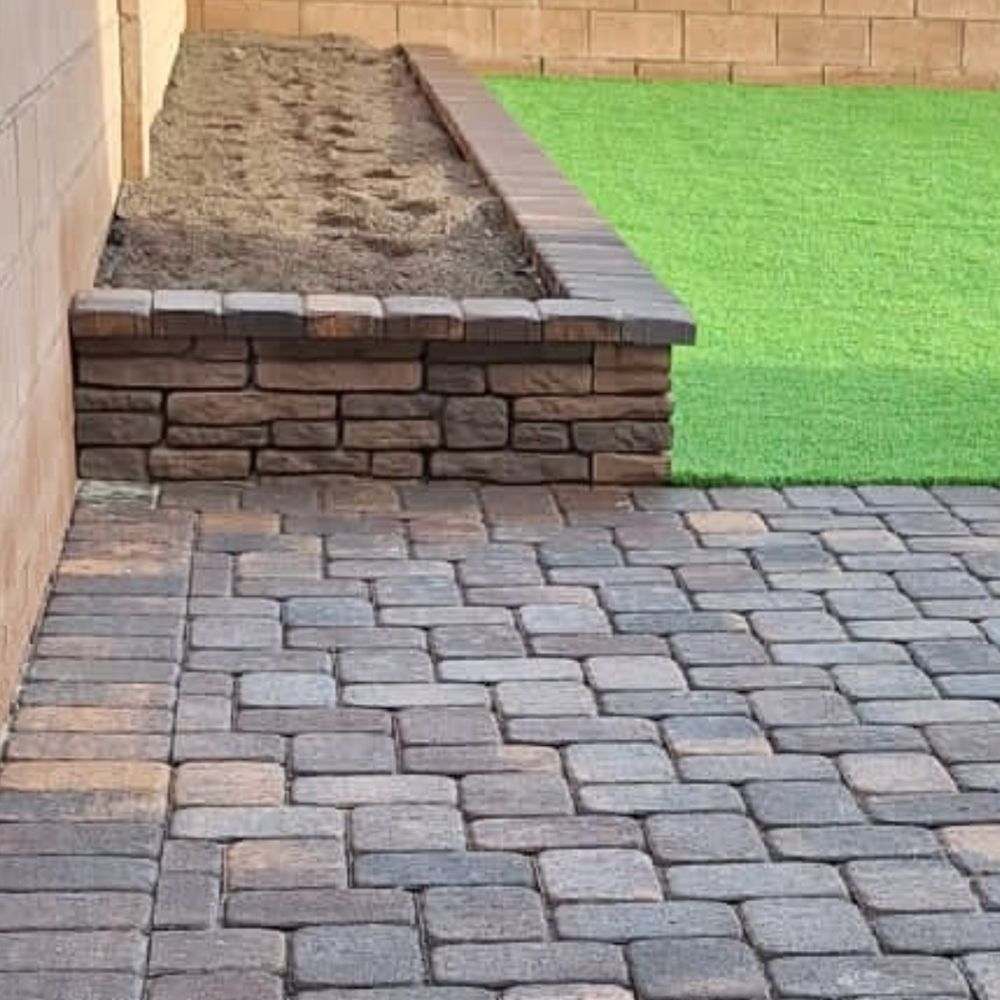
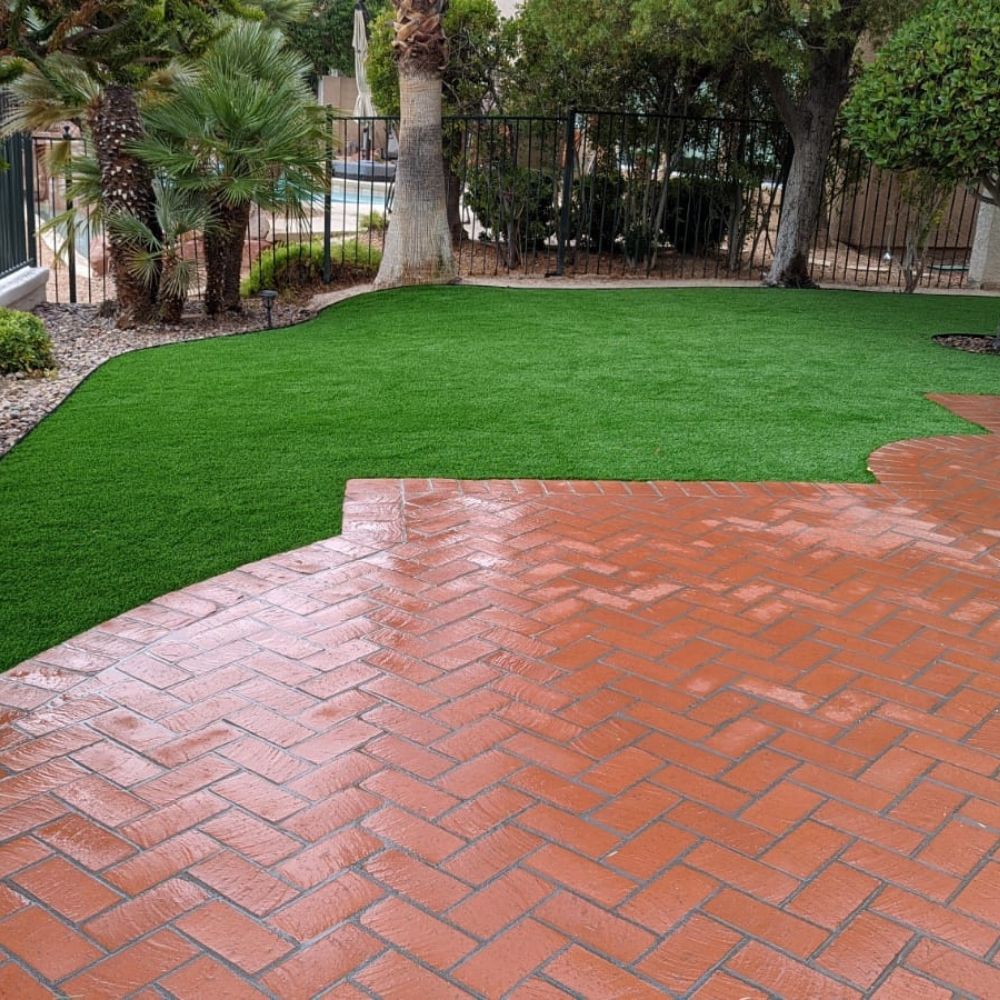
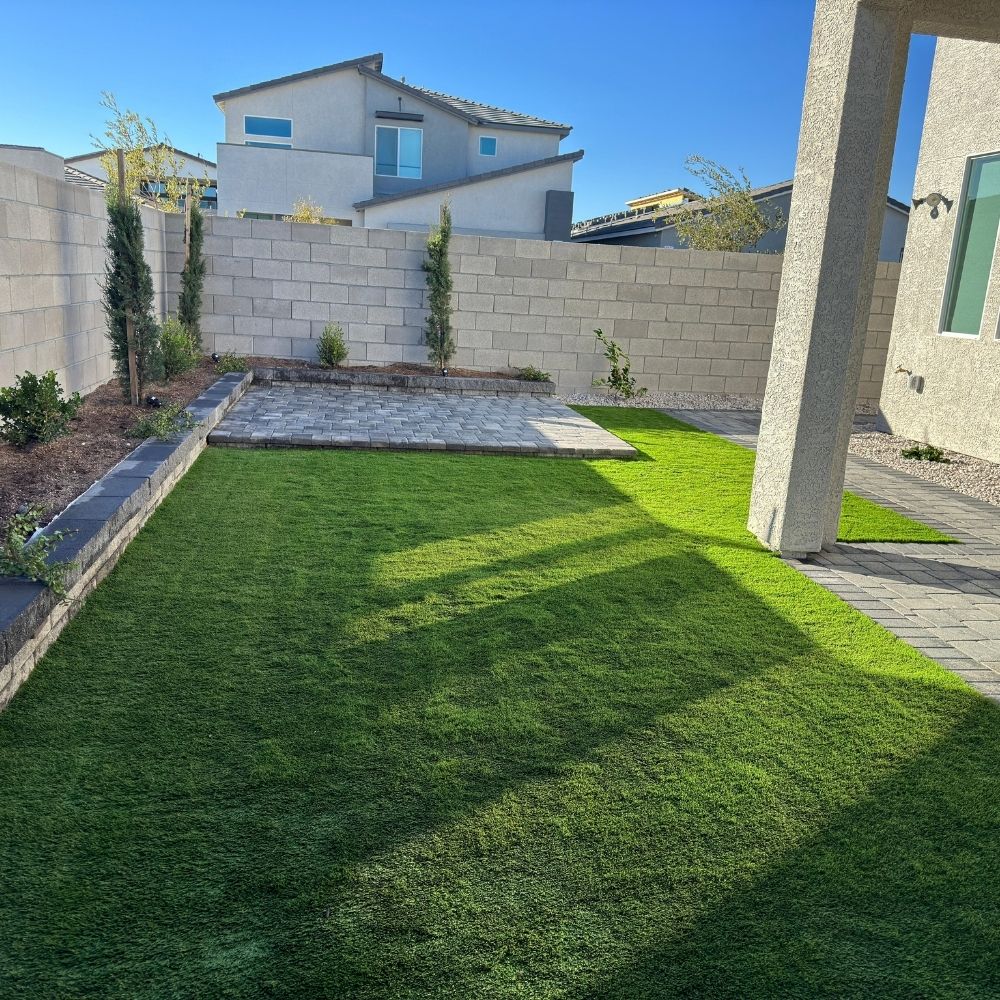
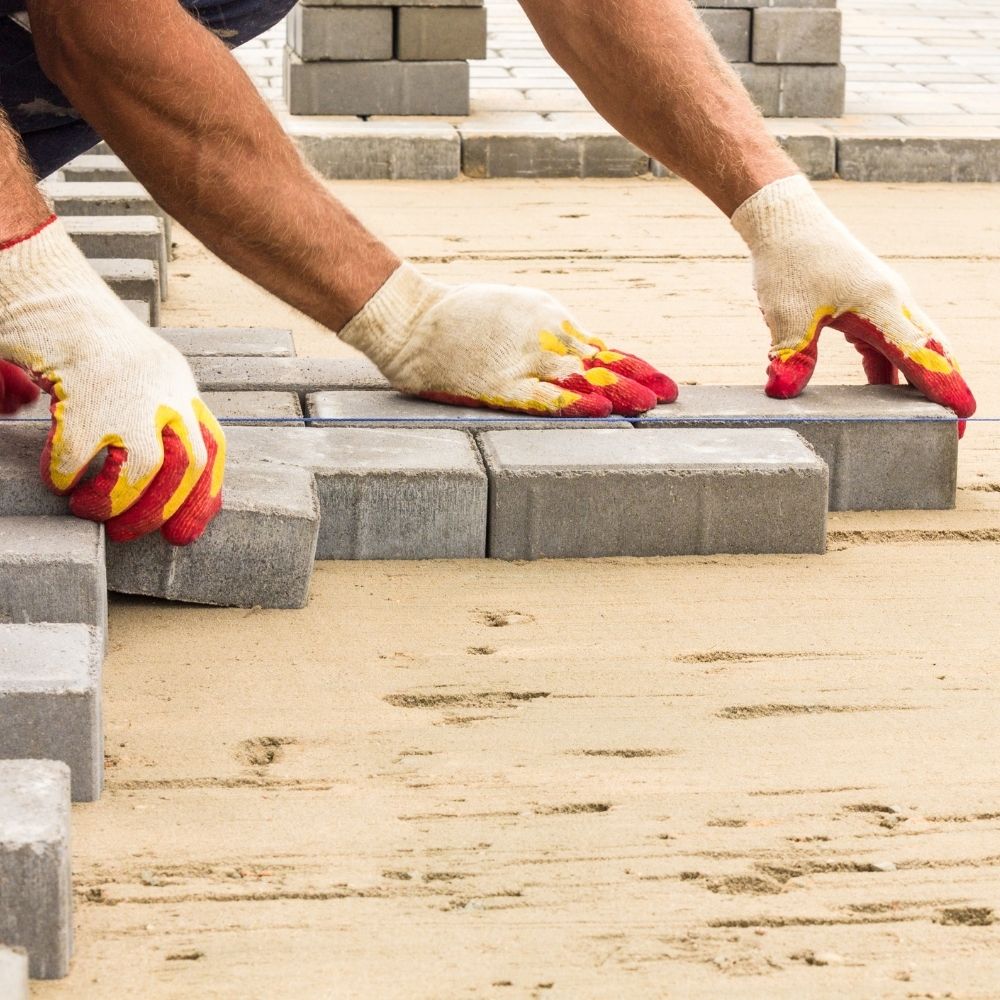
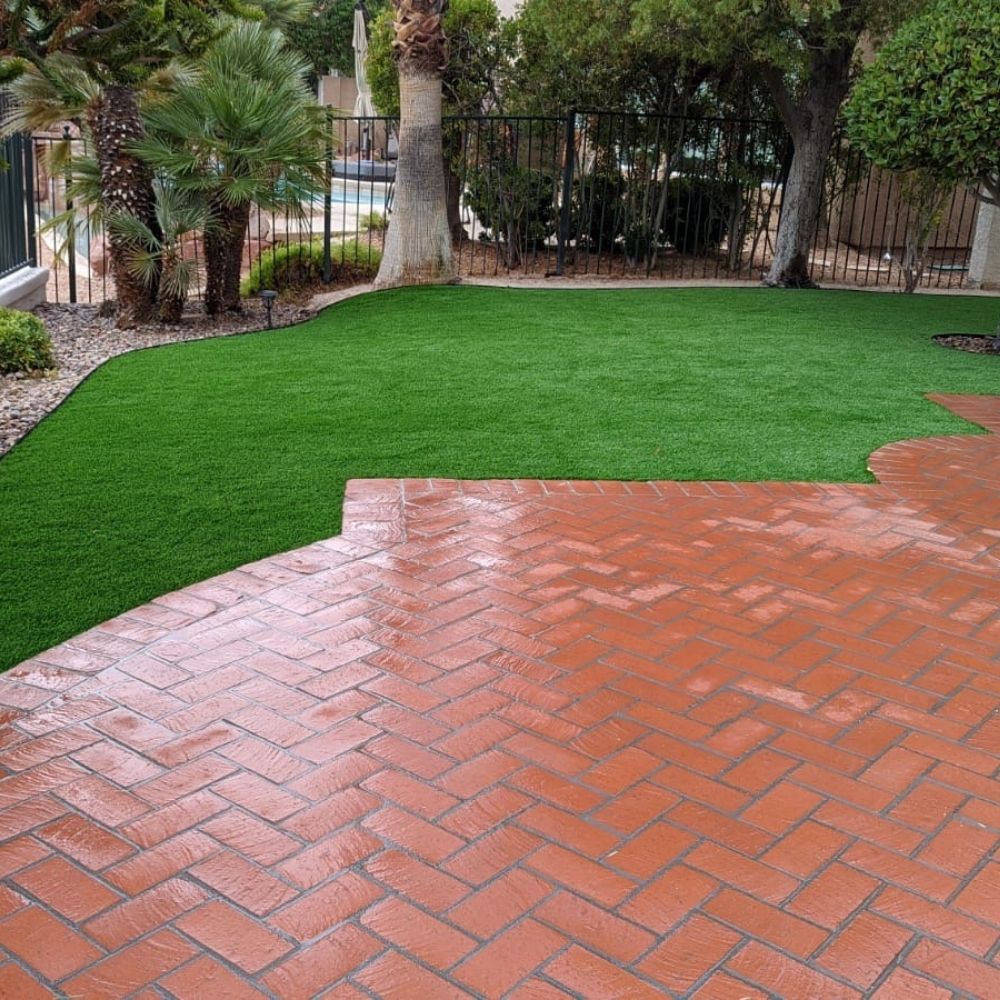
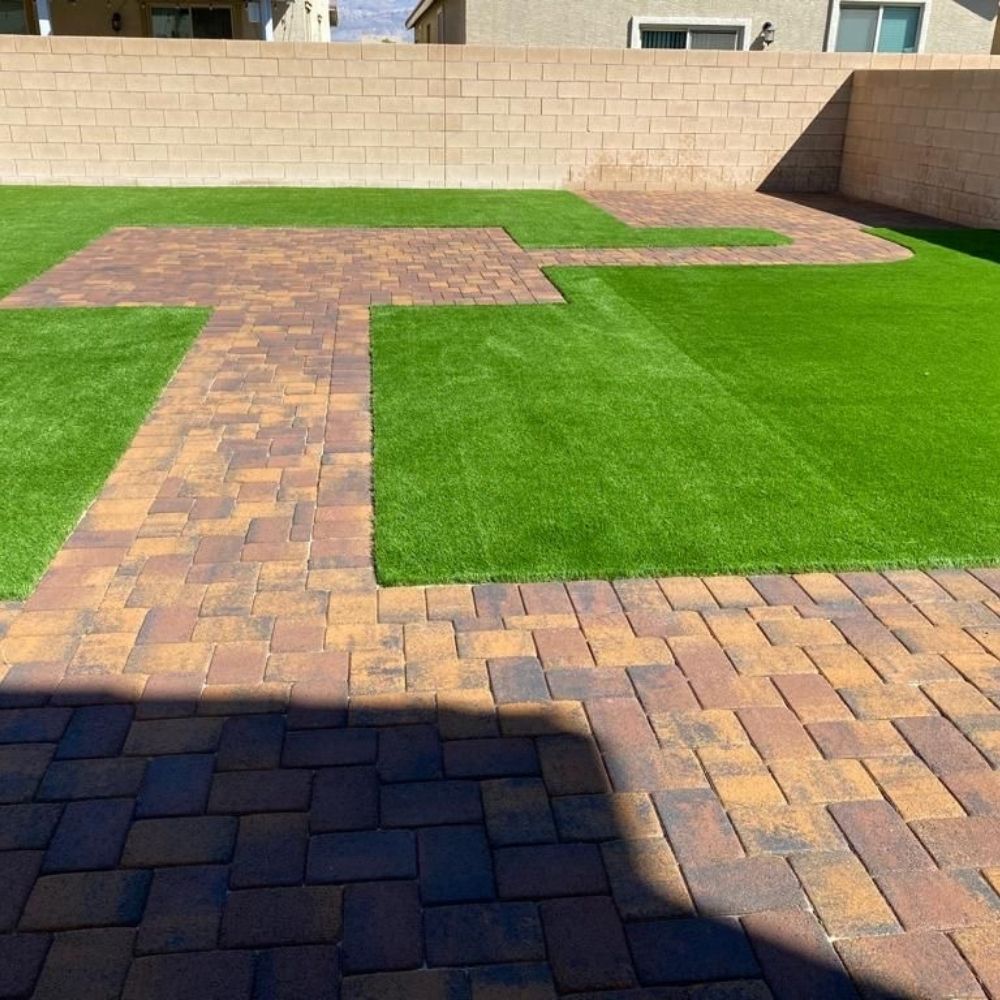
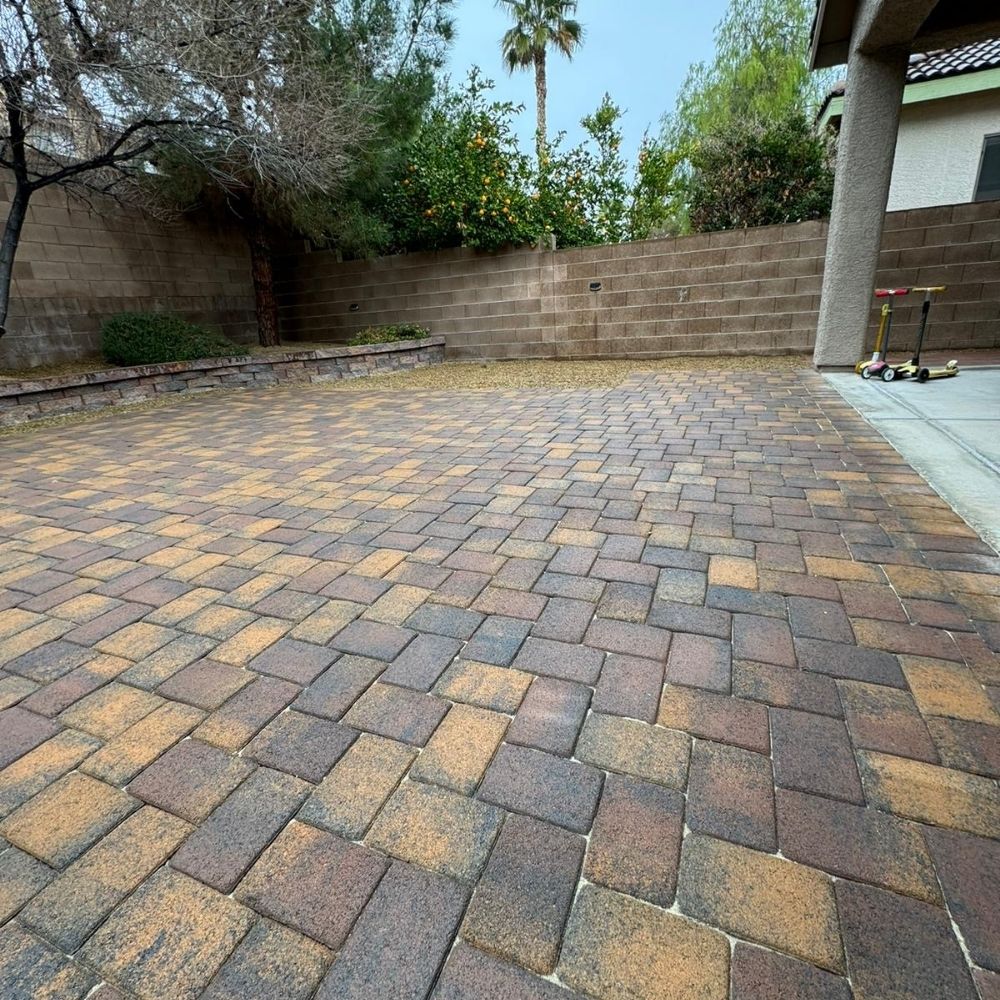
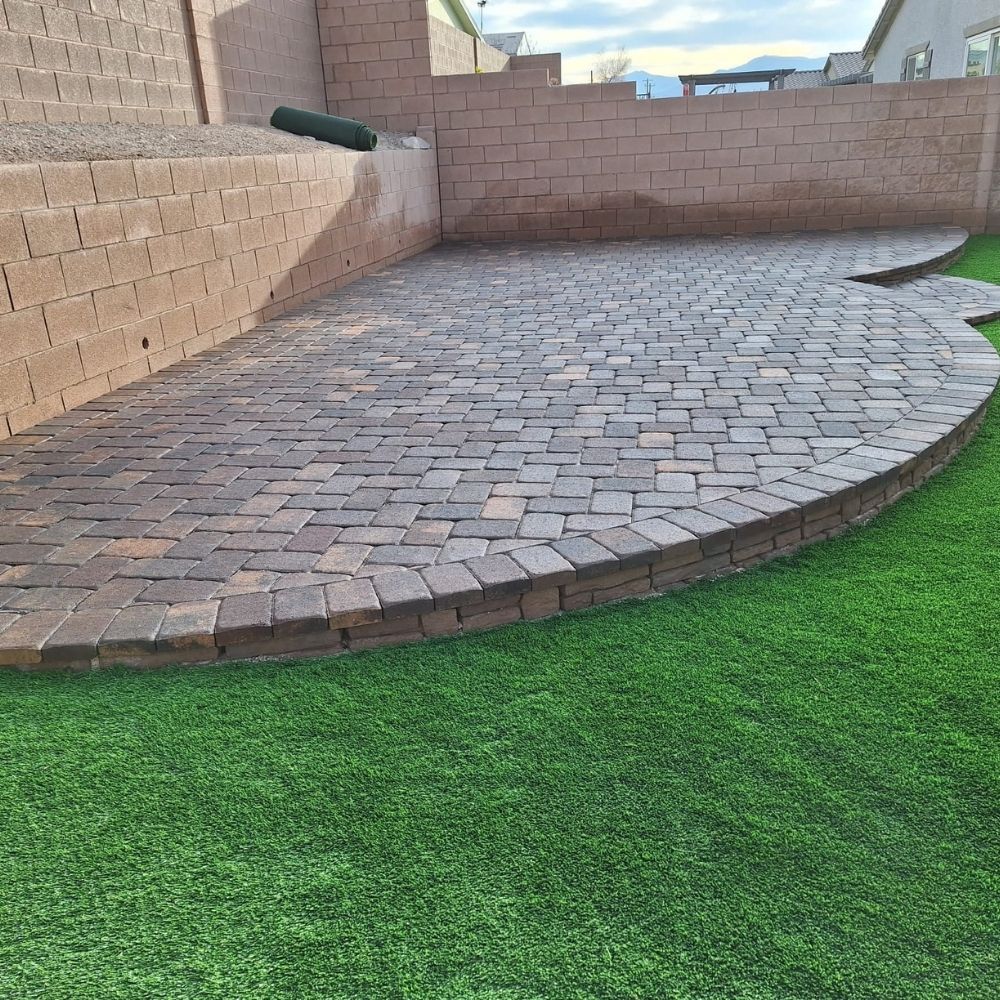
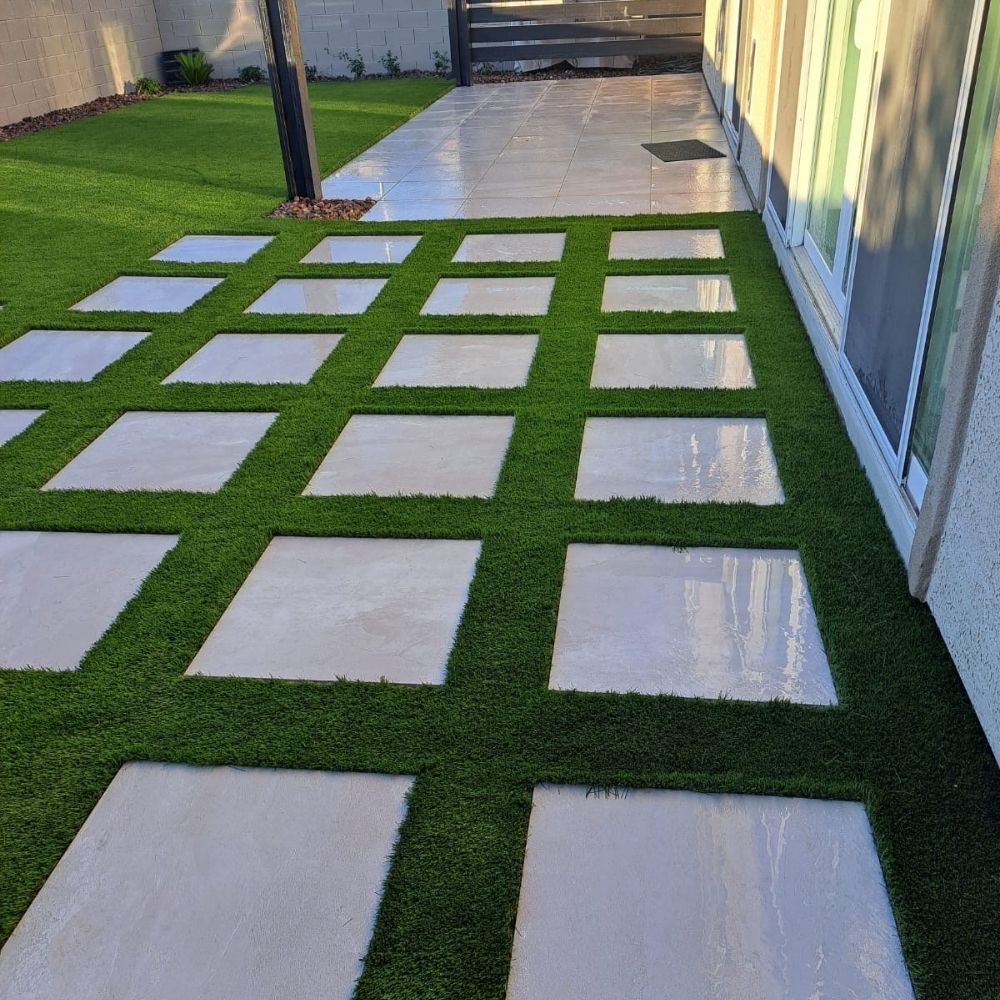
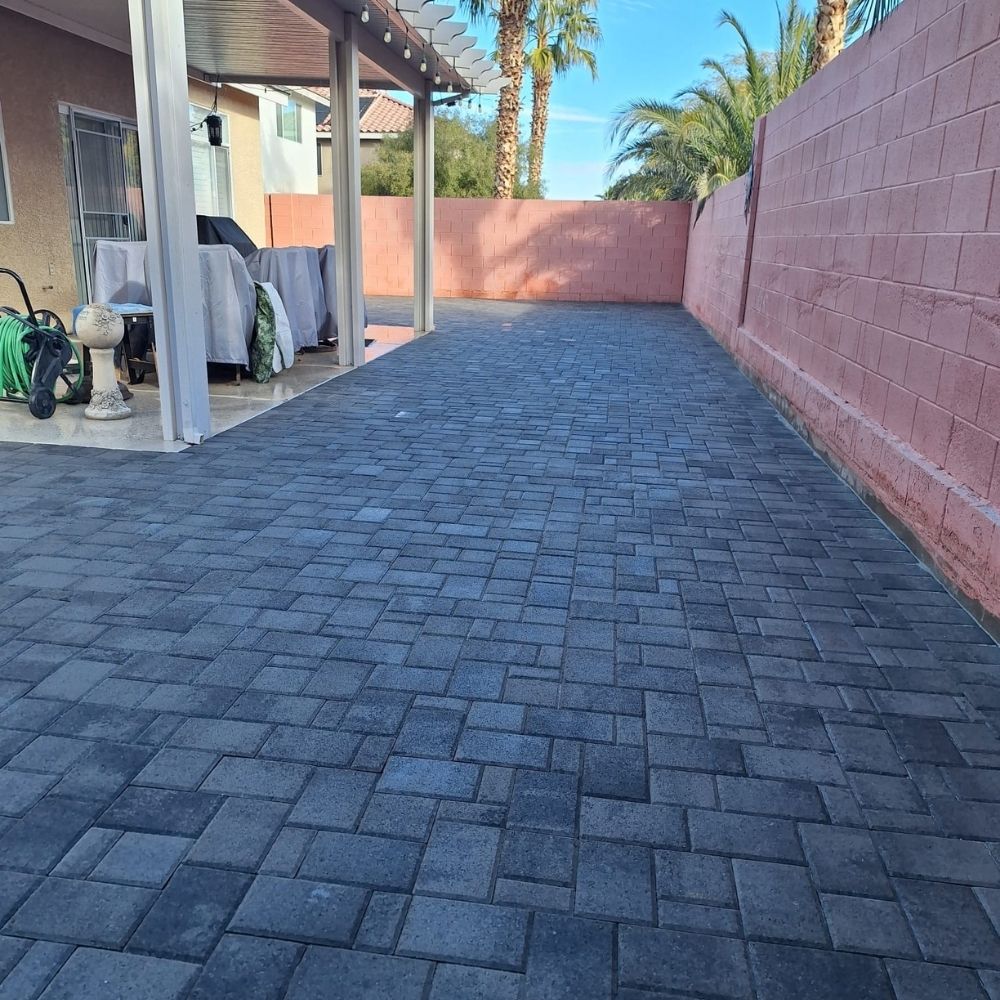
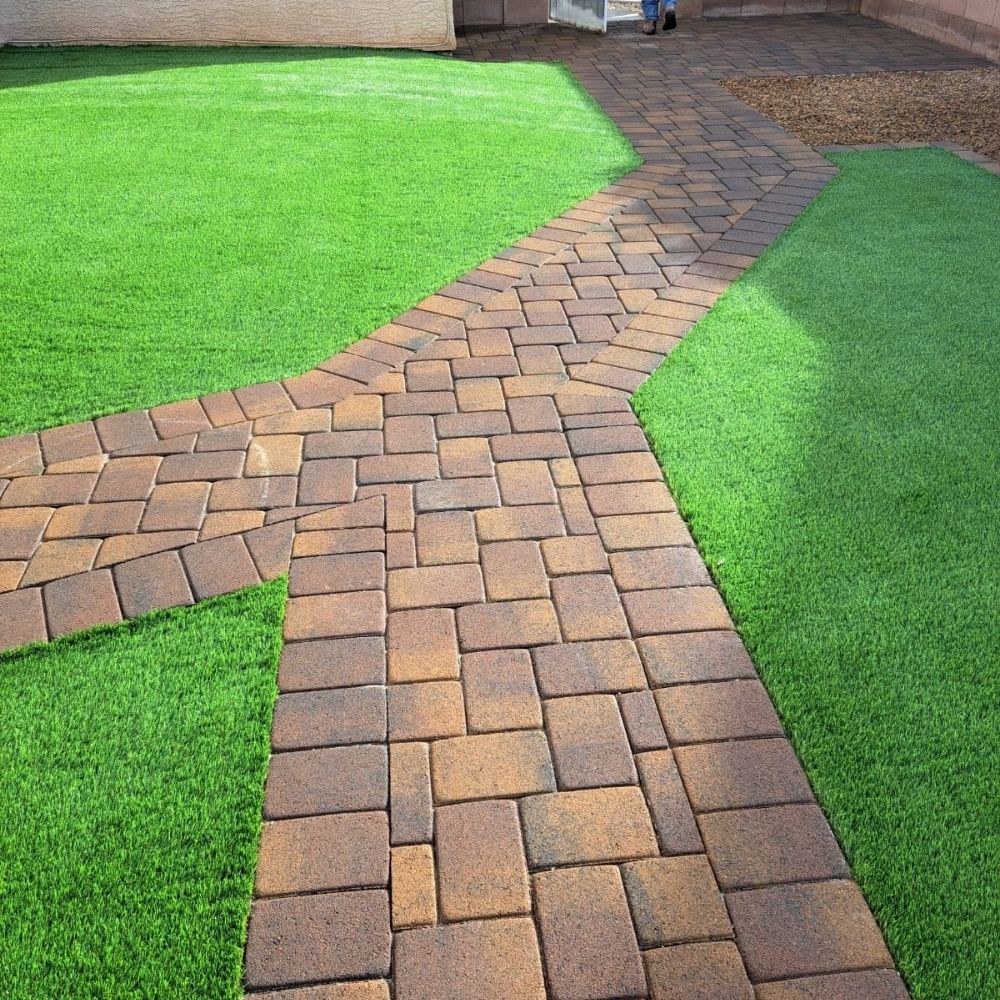
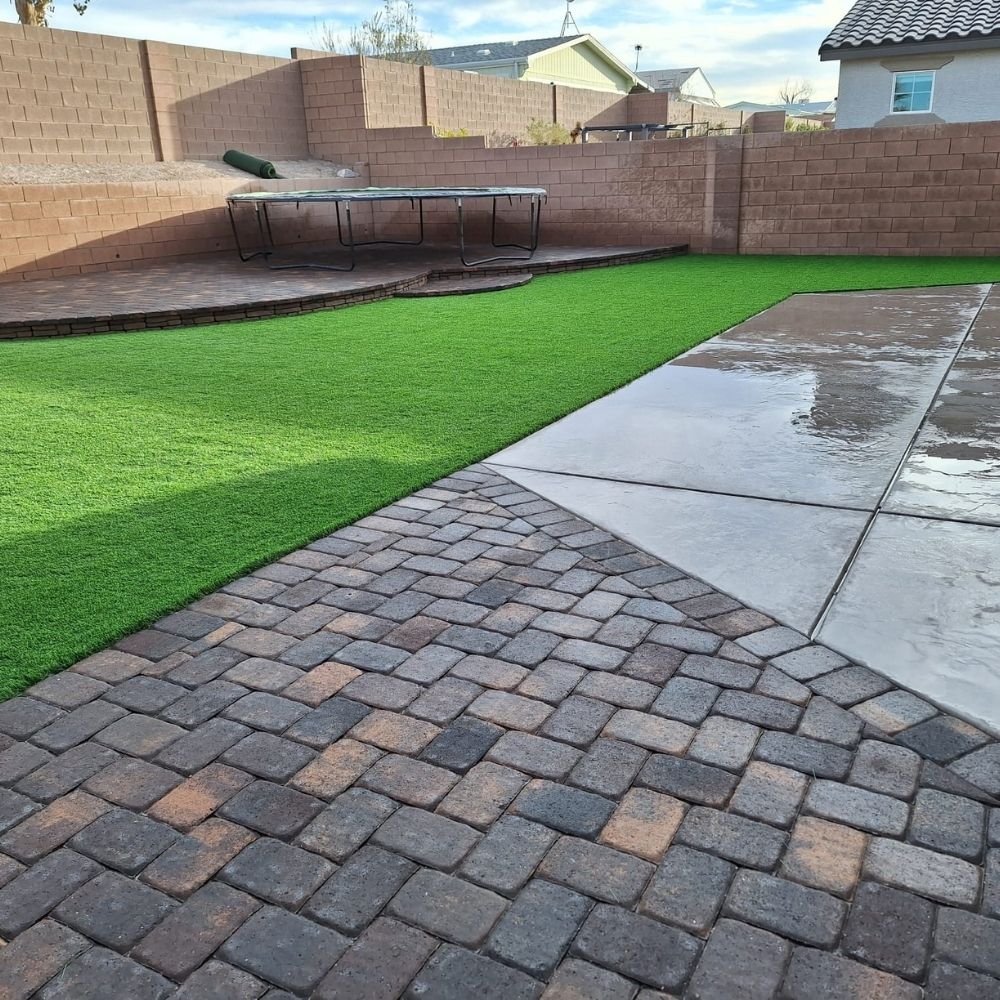
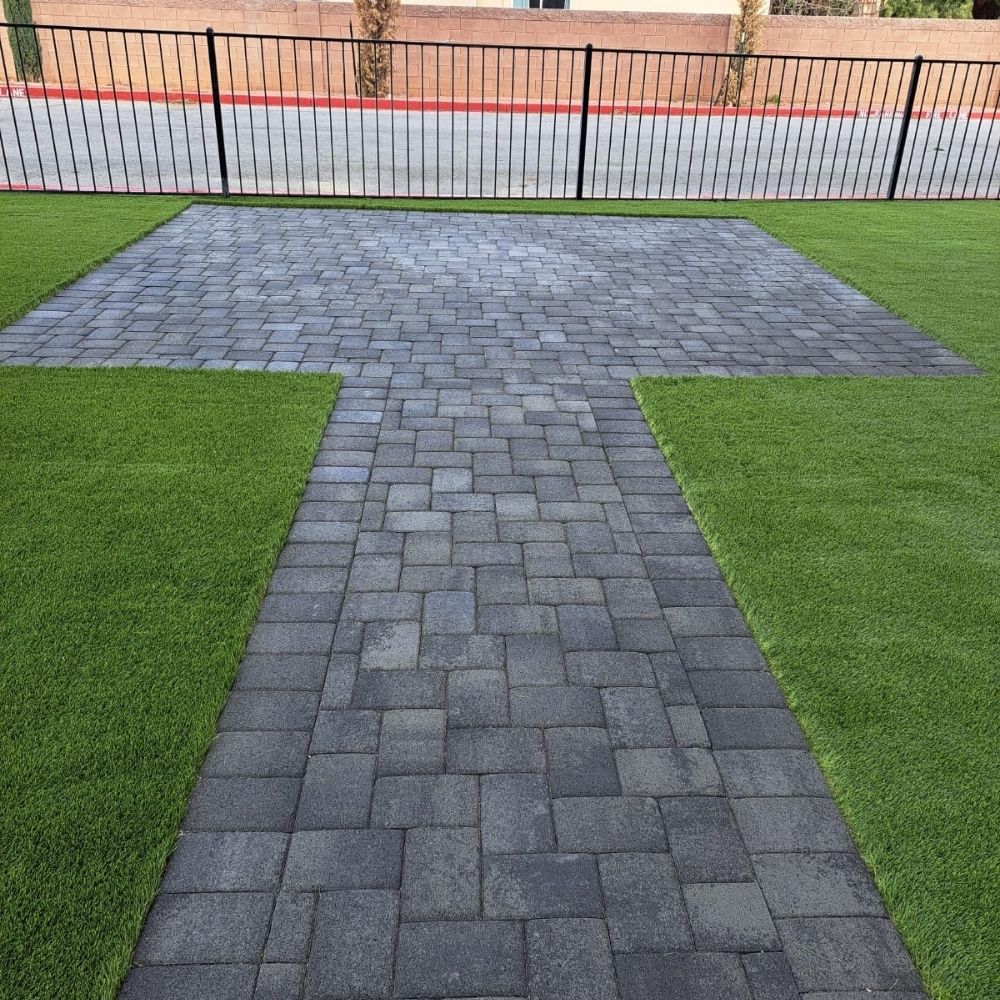
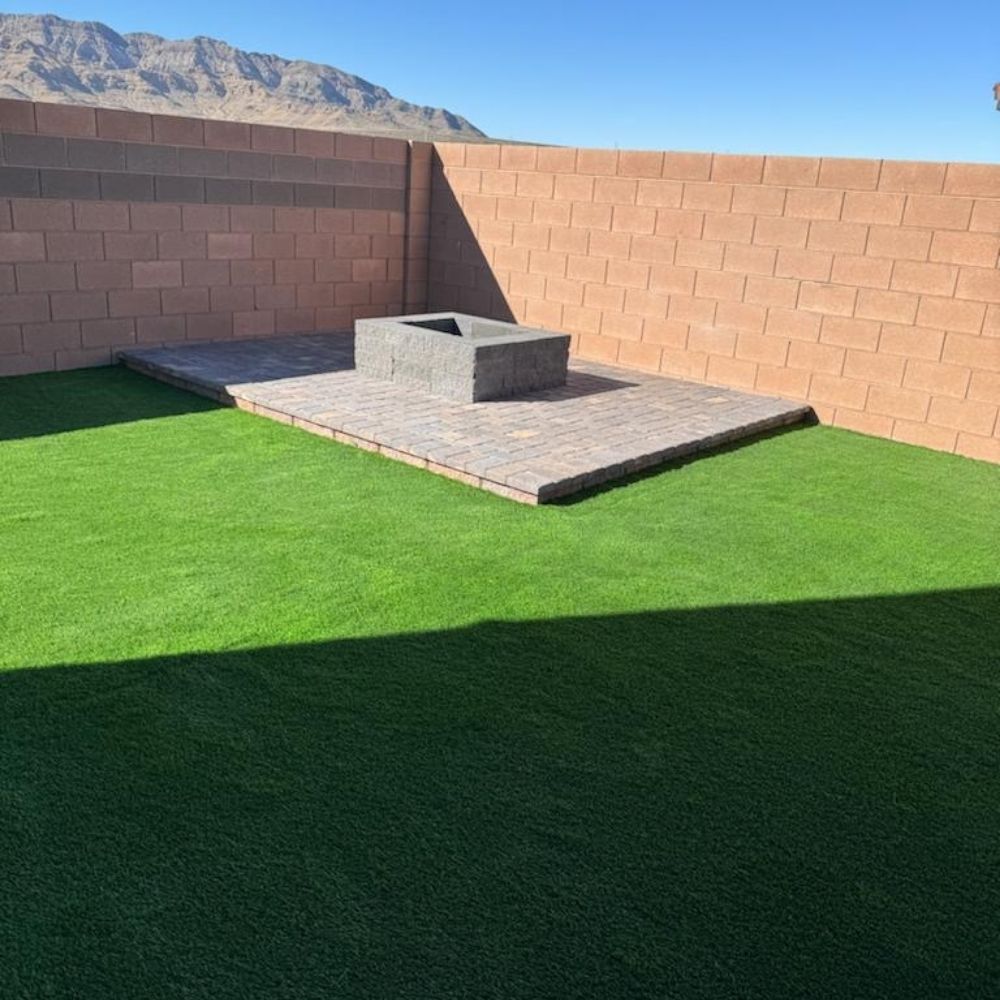
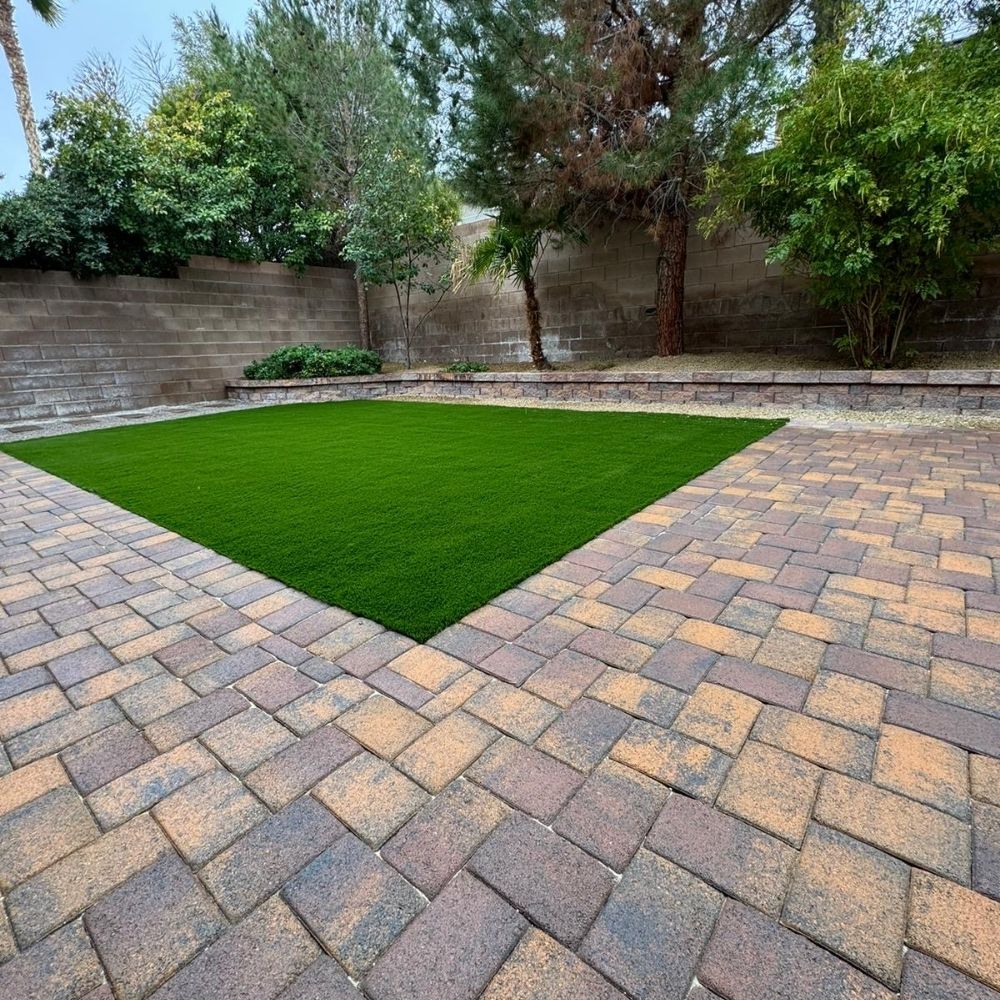
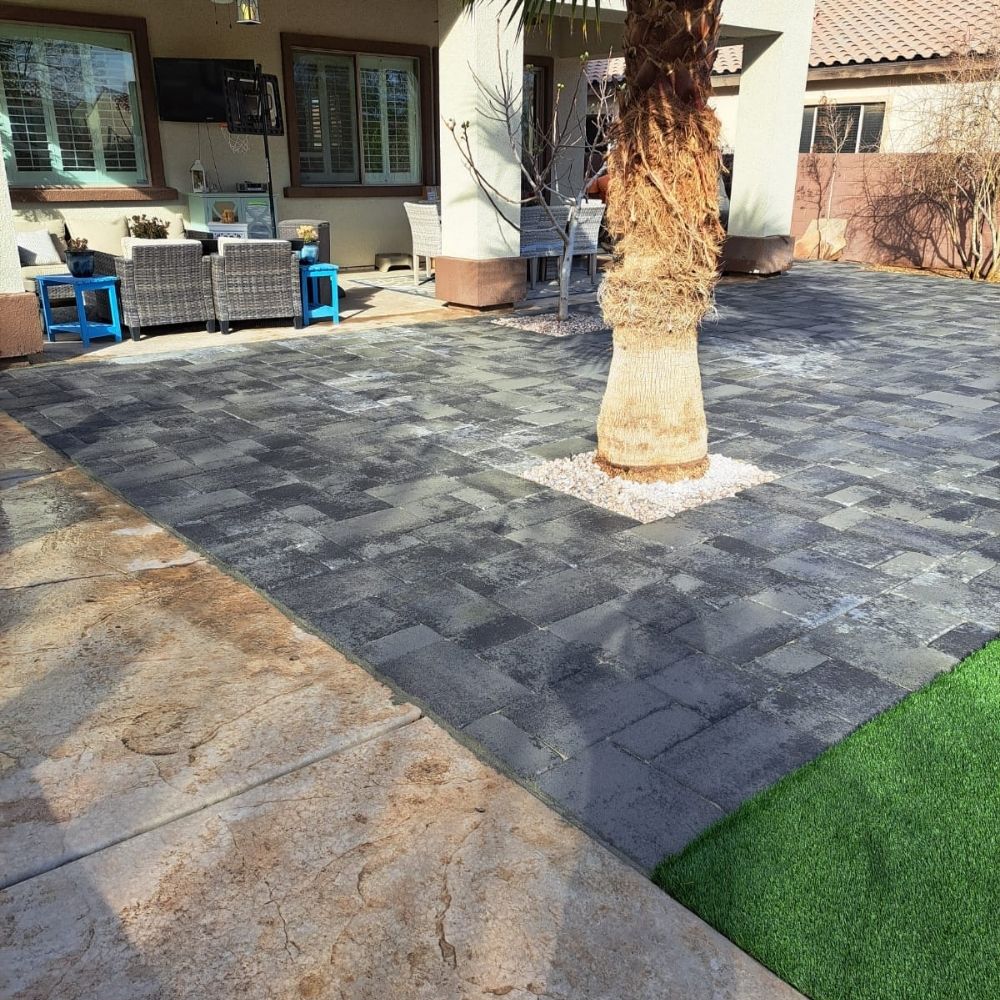
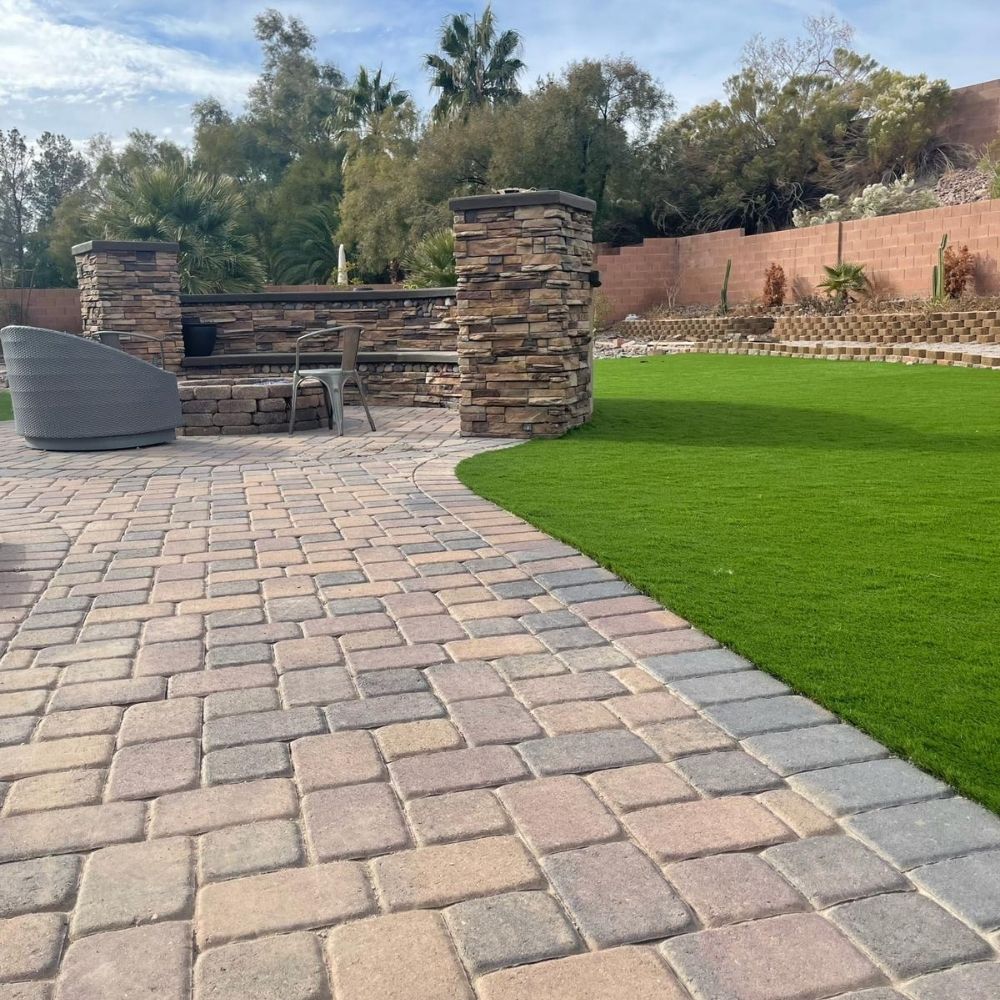
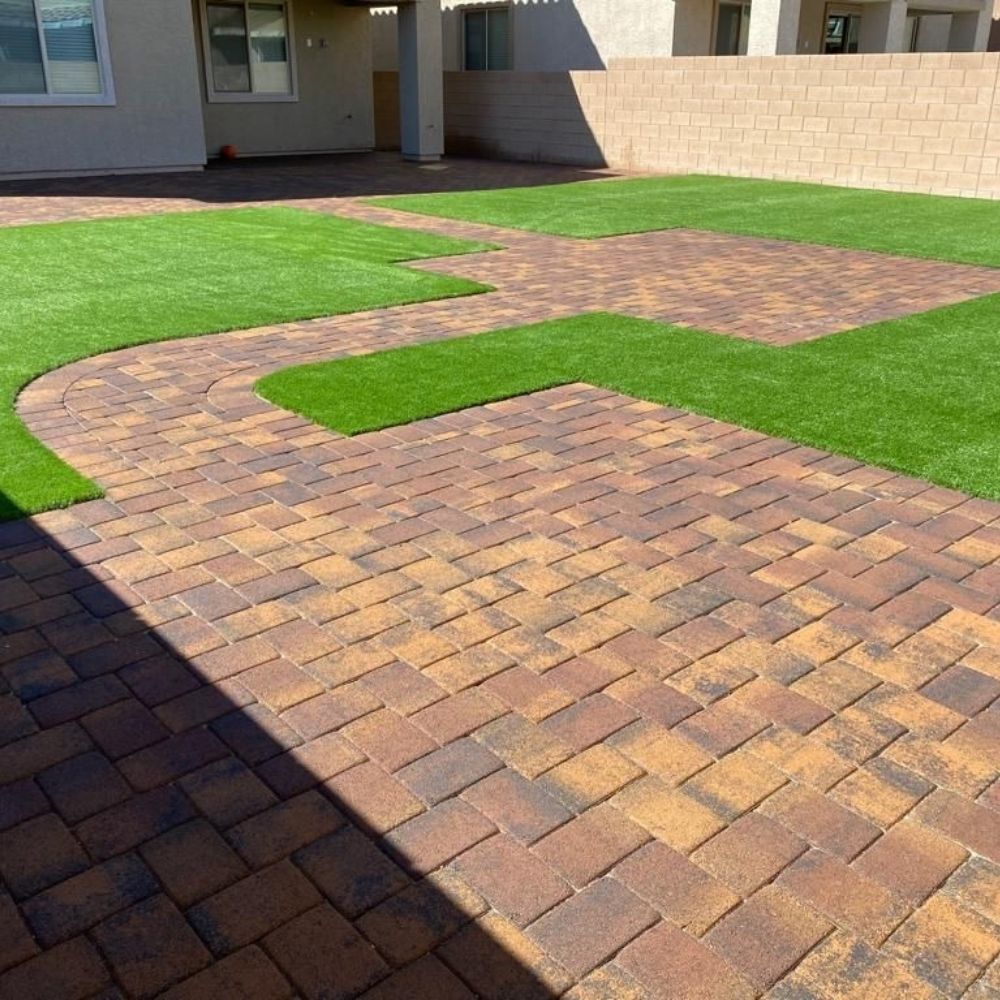
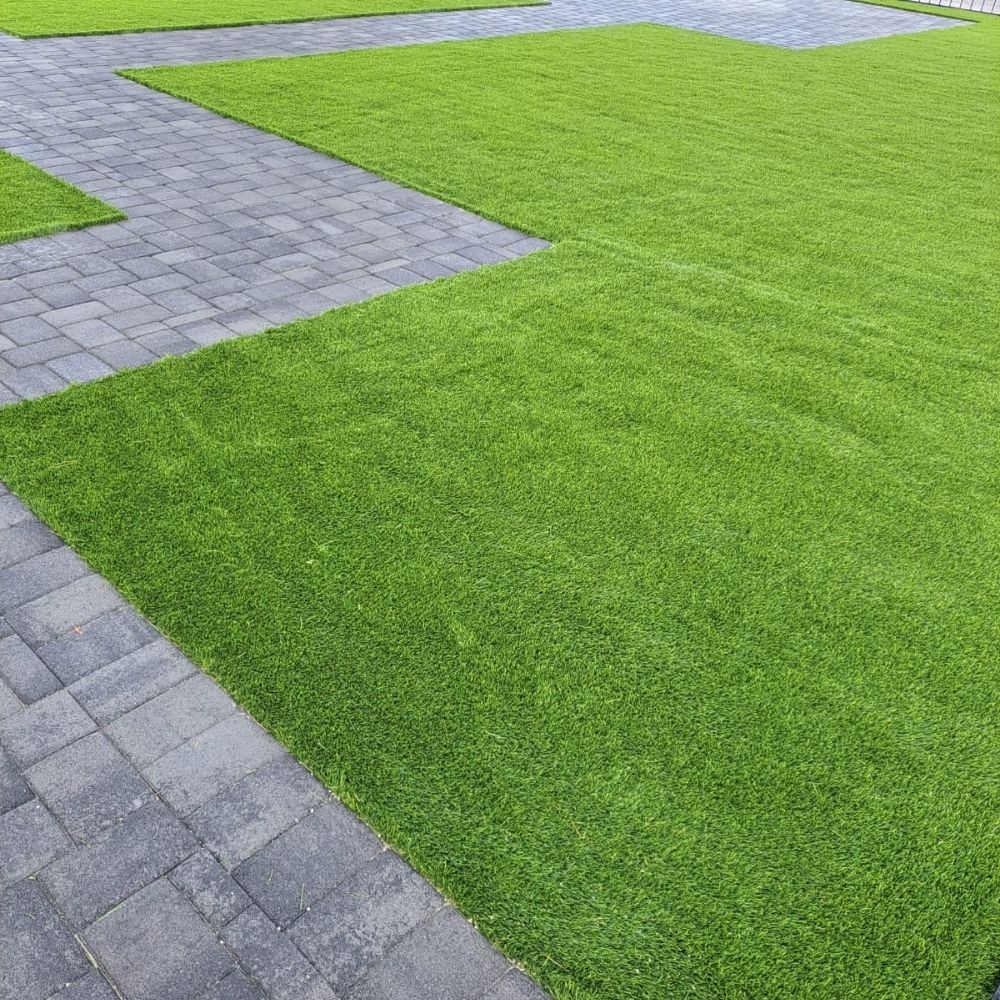
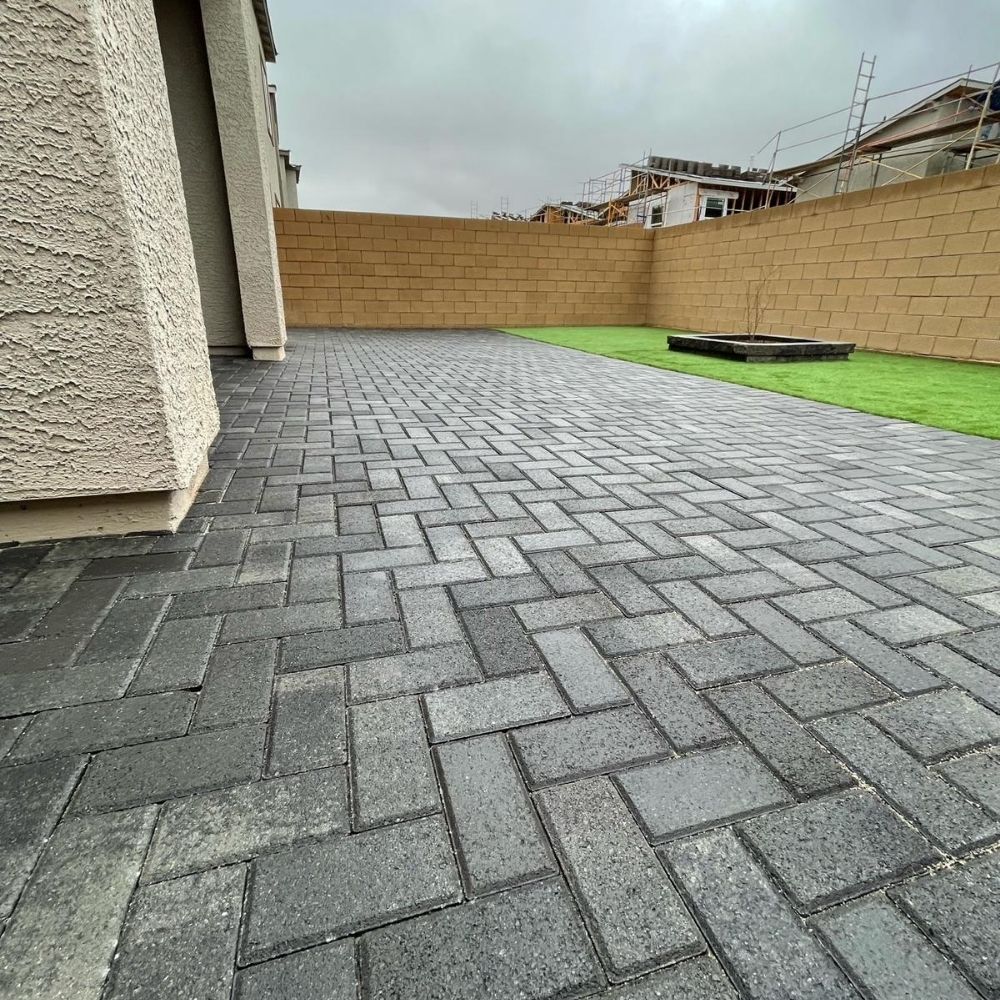
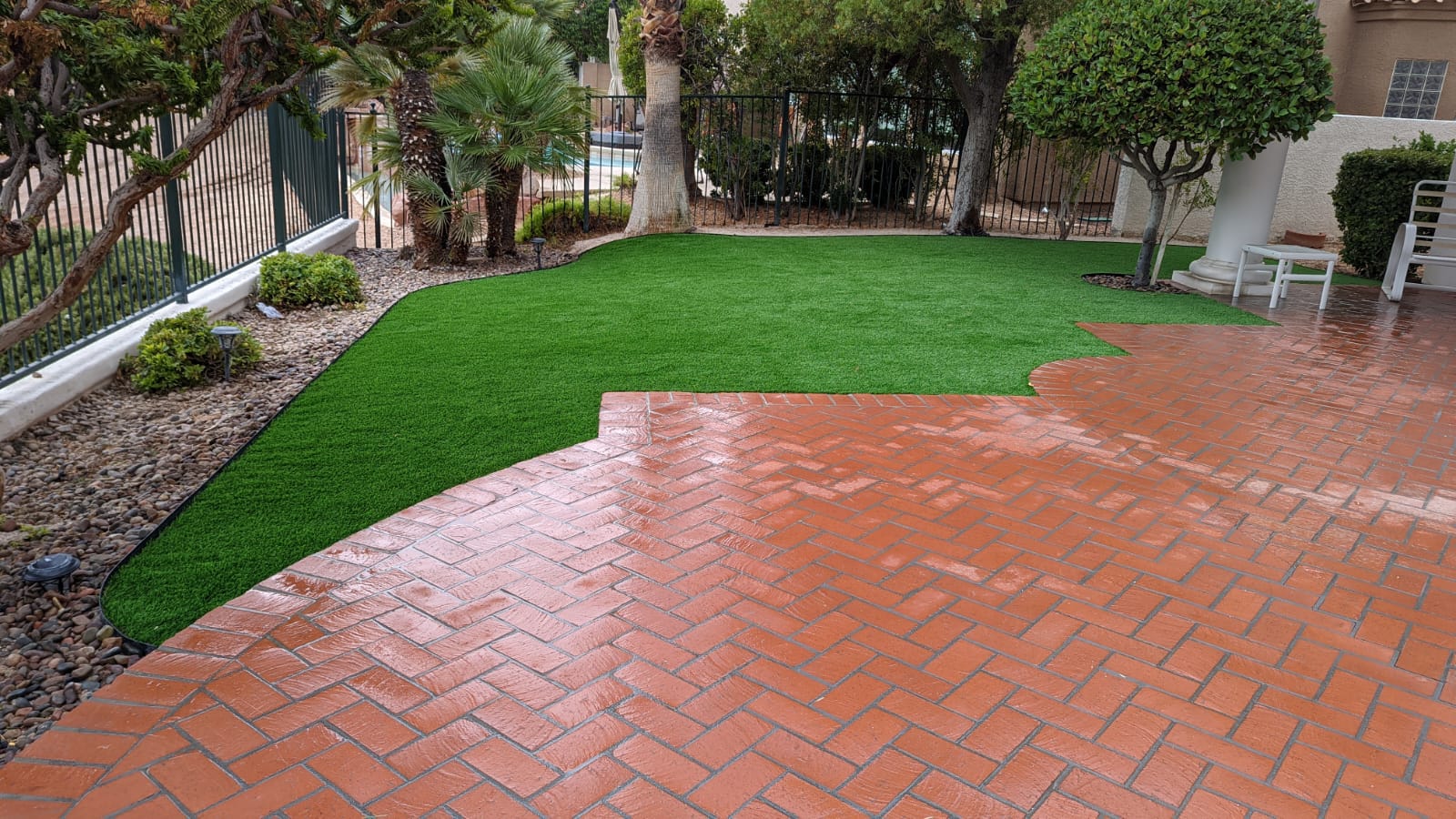
Pavers and Hardscape — Turf system borders are detailed against paver edges, concrete curbs, and hardscape perimeters during installation. The transition condition between turf and paver determines whether the border stays clean and stable over time or shifts and separates. Turf base and paver base are graded to the same drainage plane to prevent water from collecting at the interface. For properties with extensive hardscape alongside turf, see our hardscape installation page.
-
✓
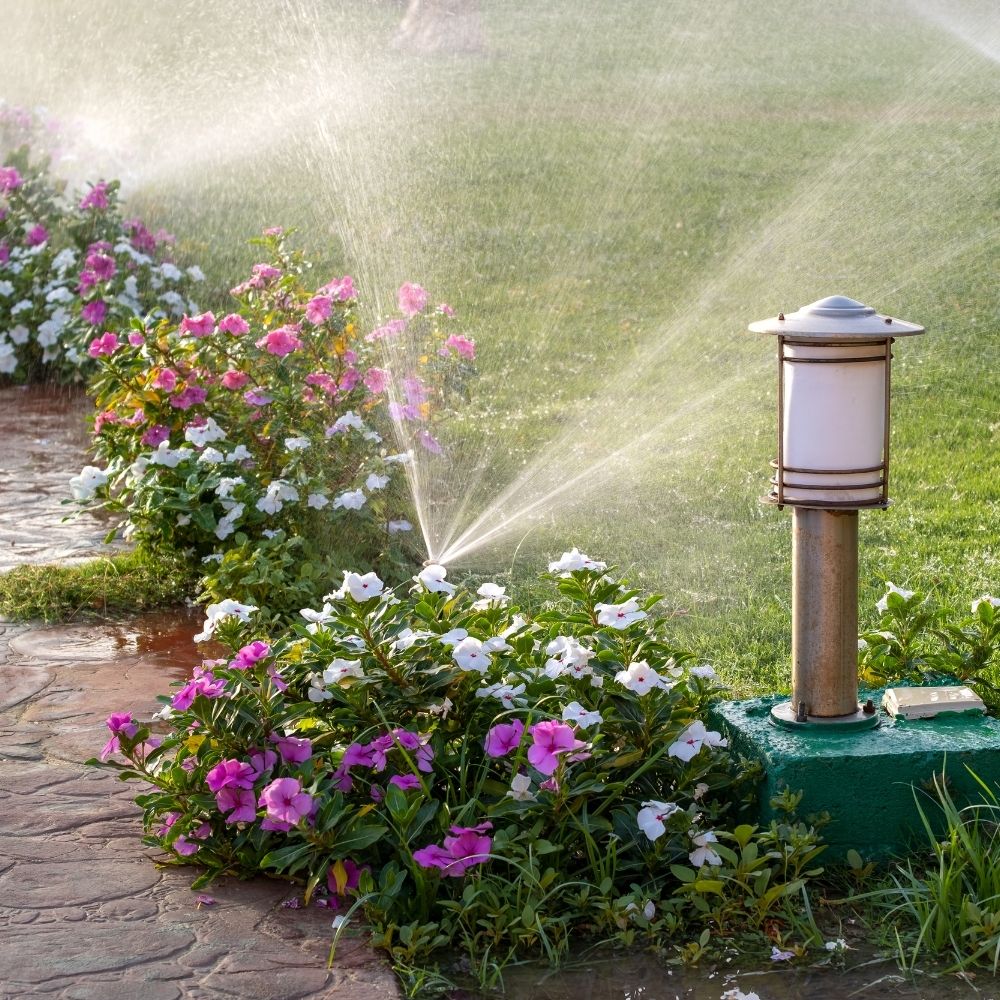
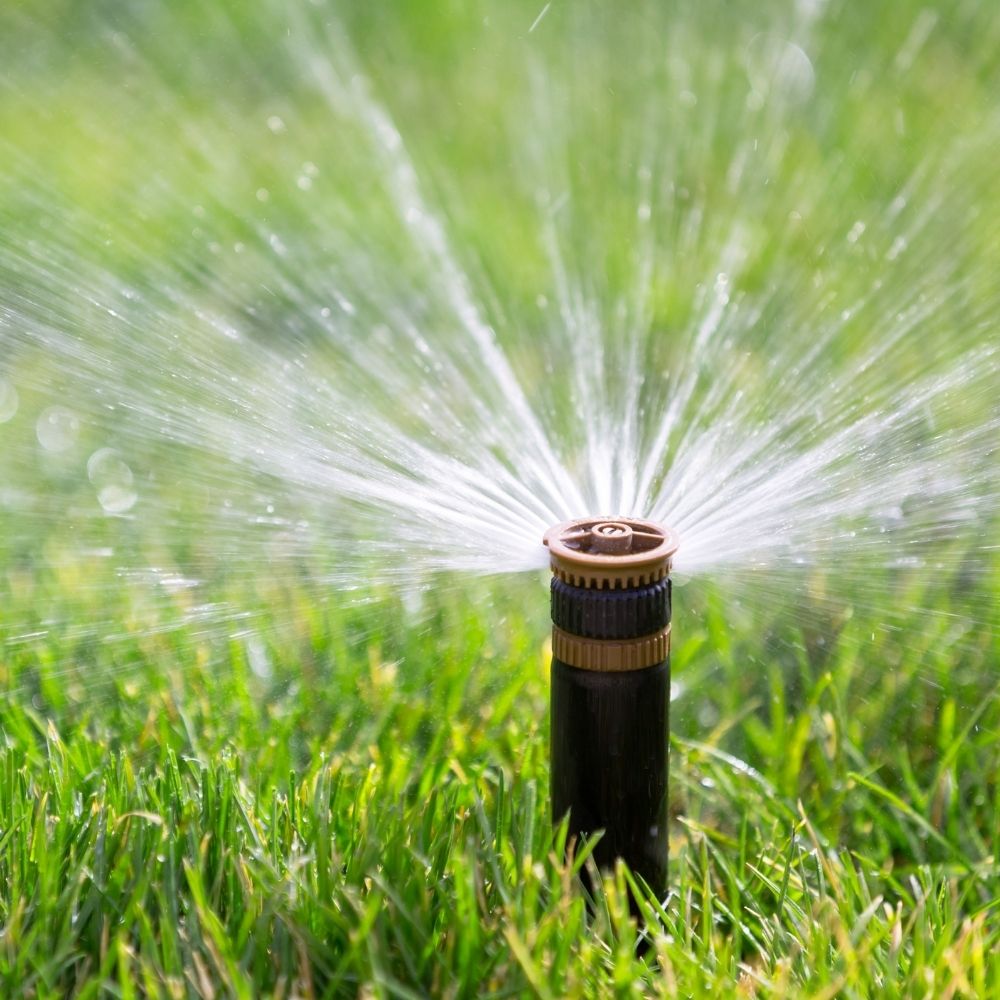
Irrigation System Decommissioning — Converting irrigated areas to artificial turf requires removing or capping irrigation infrastructure within the turf footprint. Sprinkler heads left in place beneath turf will create surface irregularities and eventual backing damage as they cycle. Lateral lines left pressurized can leak and saturate the base. We coordinate irrigation decommissioning as part of the system installation sequence so the base is not compromised by infrastructure that was not properly addressed.
-
✓
Outdoor Lighting — Low-voltage wire runs for pathway lighting, perimeter lighting, and uplight fixtures adjacent to turf areas are buried during base excavation and preparation. Running wire after the turf system is installed requires cutting through the finished surface — avoidable when lighting is included in the project plan from the start. For commercial properties adding lighting alongside turf, we coordinate wire routing so both systems are installed cleanly in the same mobilization.
-
✓
Artificial Green Walls — Vertical green wall systems on fences, entry walls, and perimeter structures adjacent to ground-level turf areas are coordinated so the two systems present as a unified landscape rather than separate installations. Backing system installation for green walls and base work for ground turf are sequenced together when both are part of the same project scope.
-
✓
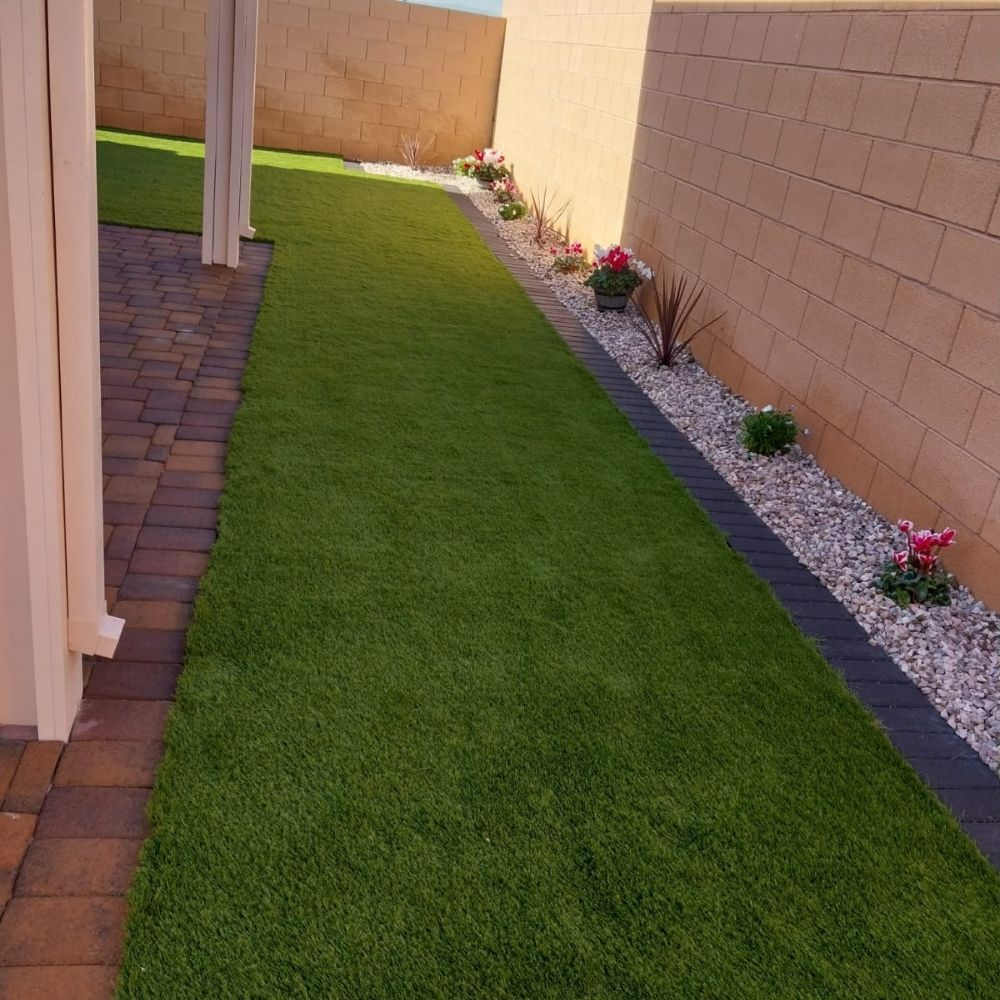
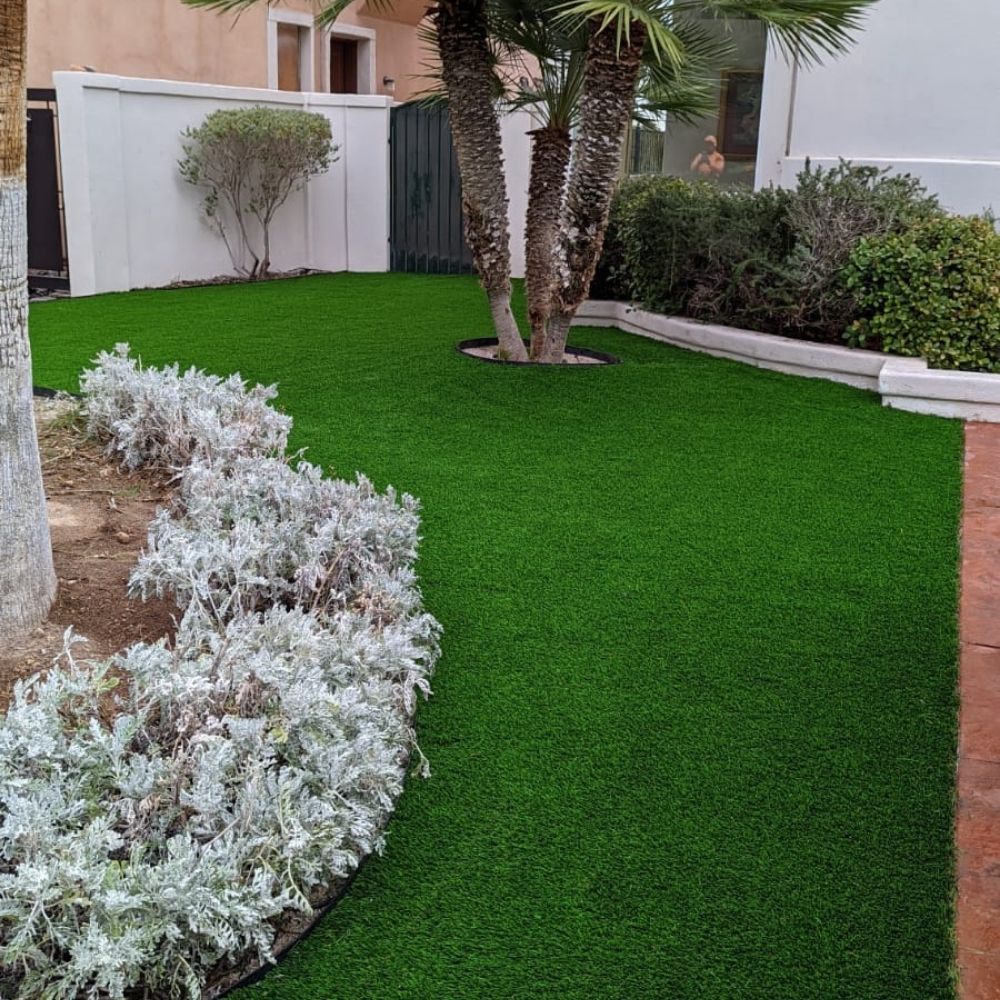
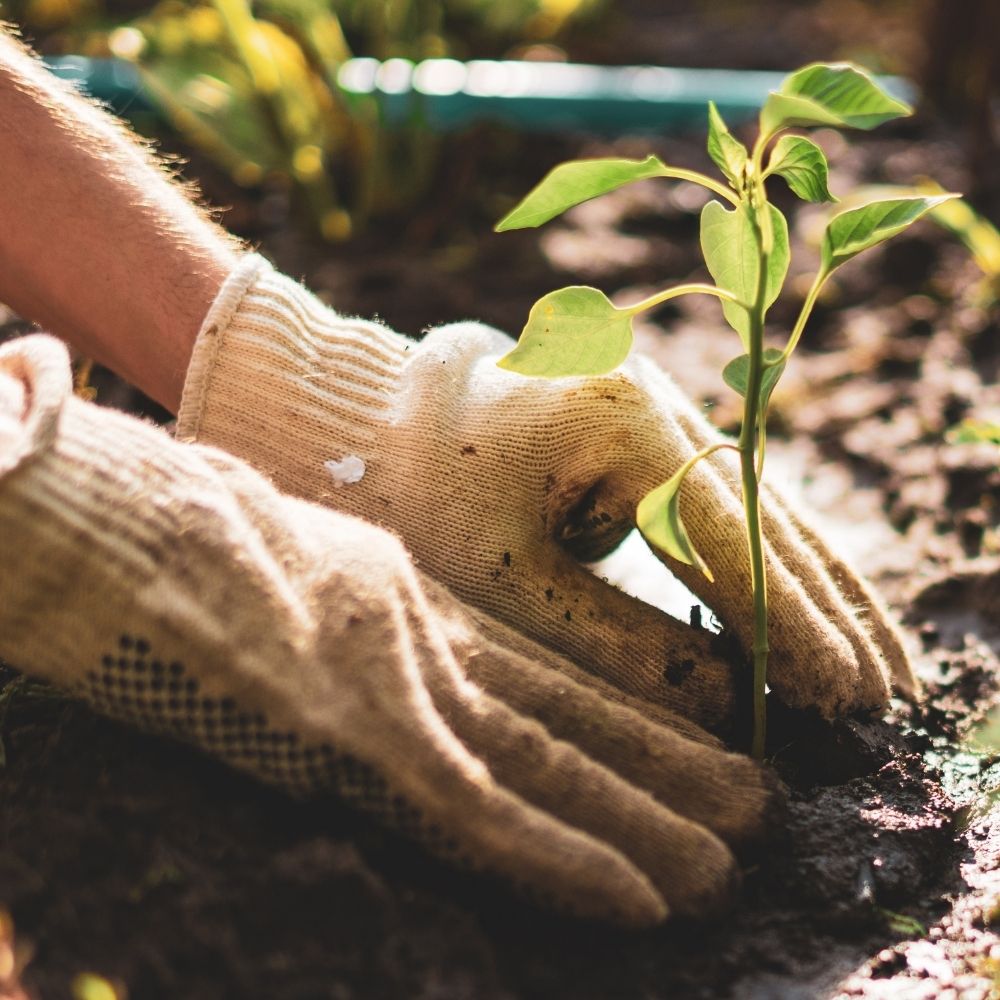
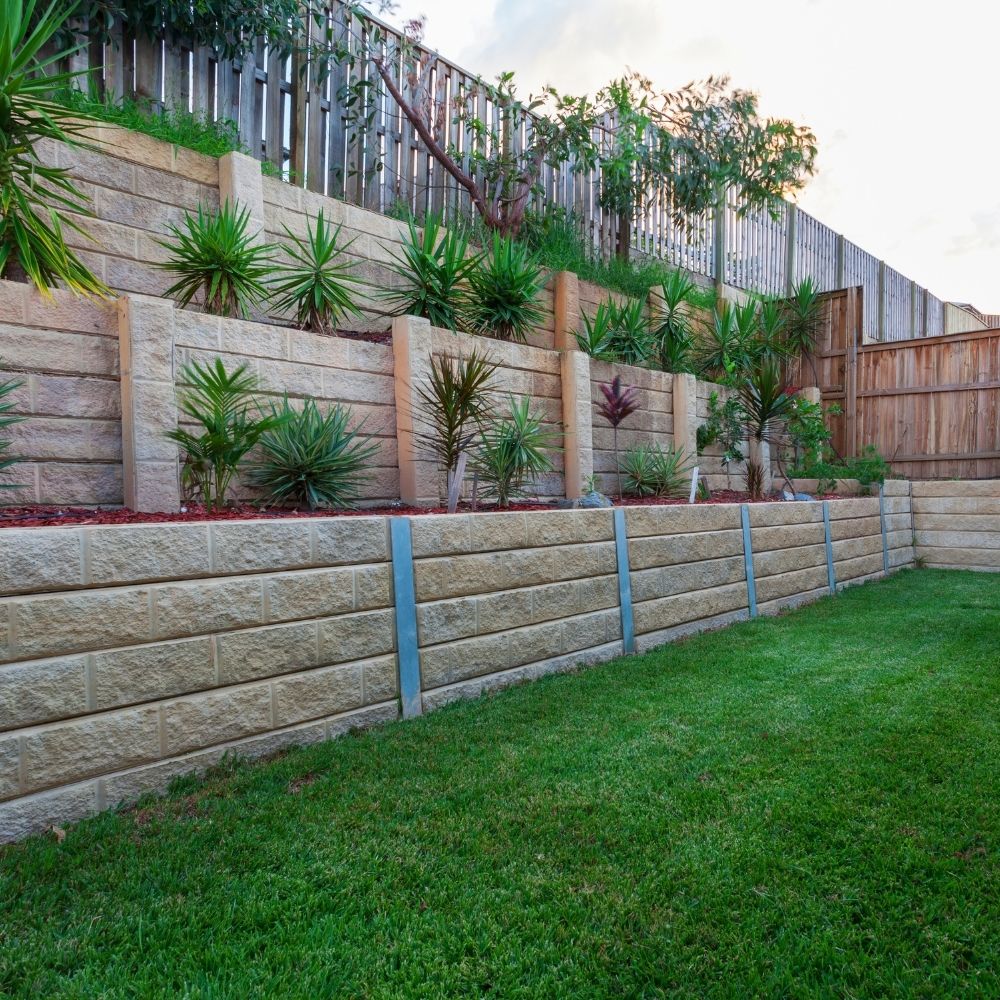
Garden Beds and Planted Borders — Planted areas framing or adjacent to turf zones require a defined edge condition that keeps mulch, bark, and soil from migrating onto the turf surface and into the infill. We design and install border conditions between turf and planted areas that maintain a clean separation over time without constant re-edging. For plants installation coordinated with turf work, species selection and bed layout are planned relative to the turf border.
-
✓
Turf Maintenance and Repairs — A commercial artificial grass system is designed for low maintenance, not zero maintenance. Grooming schedules, infill top-up intervals, and rinsing frequency are part of the system handoff documentation we provide. For properties that want those services managed professionally, we offer ongoing turf maintenance and repair programs sized for commercial square footage.
Service Areas
We design and install commercial artificial grass systems for properties throughout the Las Vegas Valley. All projects begin with a free site assessment and system recommendation before any commitment is made.
Frequently Asked Questions — Commercial Artificial Grass Systems
The difference is in how every component is specified, not just the turf product itself. Commercial systems use heavier face weight turf with more durable fiber constructions, deeper and more precisely compacted base layers, higher-permeability backing systems for drainage, and commercial-grade seaming adhesives rated for outdoor temperature extremes. Infill selection accounts for traffic load, thermal performance, and application-specific requirements like odor control in pet areas. The engineering of the system as a whole — how base depth, backing permeability, drainage design, and infill density interact — is what separates a commercial system from a residential installation applied at a larger scale.
System specification starts with a site visit. We assess the soil conditions, existing drainage, what is currently in the turf area, foot traffic patterns and expected use intensity, sun exposure and orientation of each zone, and what other work is being done on the property at the same time. Based on those site conditions and the client’s use requirements, we specify the base depth, turf product grade, infill type, drainage design, and seaming approach for each area. Properties with multiple zones — a putting green, a pet area, and a landscape corridor, for example — receive different specifications for each zone within the same system proposal.
Infill affects surface temperature, pile stability, drainage rate, and — in pet applications — odor control. In Las Vegas, the most significant variable is surface temperature. Standard crumb rubber infill absorbs and retains more heat than coated sand or organic alternatives, which can make the surface uncomfortably hot during summer afternoons. For commercial properties where daytime use is expected, we discuss infill options that moderate peak surface temperature without compromising pile support. Infill selection also affects how the surface feels underfoot and how the fiber recovers from foot traffic over time — a consideration for high-pedestrian-traffic commercial zones.
Yes. Large commercial and HOA properties often require phased installation across budget cycles or around operational constraints that limit when and where work can happen. Phased systems are designed so each phase is a complete, functioning installation that connects cleanly to subsequent phases when they are installed. Product specifications are locked at the start of the project so consistency is maintained across phases even when installation is separated by months or a full season. For more on how phased projects are managed, see our commercial and HOA turf installation page.
Commercial systems require significantly less ongoing maintenance than live grass but are not maintenance-free. Rinsing to clear desert dust and debris is recommended two to four times per year for outdoor Las Vegas installations. Power brushing to redistribute infill and lift compressed pile is recommended annually for high-traffic areas. Infill should be inspected and topped up as needed — high-traffic areas lose infill reliableer than low-use display zones. Any debris that accumulates against the turf border should be cleared to prevent material from working into the infill layer. We provide written maintenance schedules with every commercial installation handoff, and offer scheduled turf maintenance and repair programs for properties that prefer managed professional care.
Yes. Artificial grass systems require no irrigation and are not subject to Southern Nevada Water Authority restrictions on ornamental grass water use. Converting irrigated turf areas to artificial grass removes those areas from SNWA compliance requirements entirely. For commercial and HOA properties currently managing large irrigated grass areas, converting to artificial grass eliminates the compliance risk associated with ongoing SNWA regulations while also removing the daily water cost of maintaining those areas. For properties with existing irrigation systems, we advise on what to decommission, cap, or redirect to support remaining planted areas after the turf conversion.
Get a Commercial System Specified for Your Property
We visit the site, assess the conditions, and provide a complete system recommendation and project estimate at no charge. Every commercial installation starts with a site assessment — not a generic proposal.
Turning Outdoor Dreams into Reality
Call Us Today
OUR GALLERY


Your Dream Outdoor Space is Just a Call Away
Get Your Free Consultation Today!
RAVING REVIEWS
Join the many who’ve transformed their spaces with us
Check out their reviews!
Schedule Your Pet Turf Consultation in Las Vegas
Ready to upgrade your commercial or community property with premium artificial turf?
Call (702) 757-4433 or request a Free Commercial Quote today.