Artificial Turf in Las Vegas: Premium Products & Materials
Durable artificial turf in Las Vegas designed for residential lawns, putting greens, pet areas, and commercial landscapes. We supply and install premium turf products with advanced backing systems and cooling technology to withstand desert heat.
Artificial Turf in Las Vegas – Premium Products & Materials
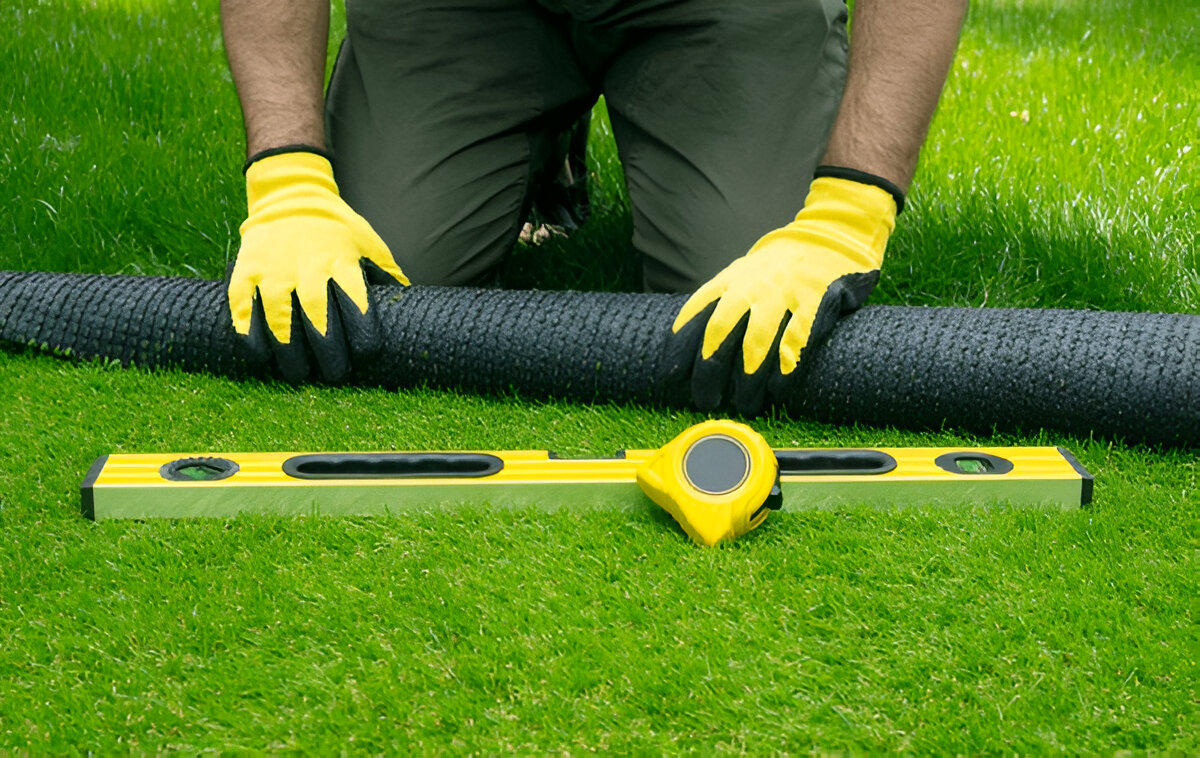
Premium artificial turf in Las Vegas offers high-performance synthetic materials designed to withstand Mojave desert conditions while providing year-round green appeal.
Selecting the right products involves analyzing face weight, polyurethane backing, and cooling fiber technologies. If you want to compare residential benefits, water conservation rules, and lawn options, read our guide on Synthetic Grass benefits and comparisons. For detailed steps on base compaction, soil excavation, and costs, review our Commercial & Residential Installation Process guide.
This page is designed to help homeowners select the ideal turf product grades, learn about advanced cooling materials, and see how artificial turf integrates into commercial facilities and backyard designs.
Ready to get started? Request a free quote and our team will assess your property, identify qualifying areas, and provide a detailed project estimate — including SNWA Water Smart Rebate calculations at no charge.
Why Artificial Grass Is Common in Las Vegas Homes
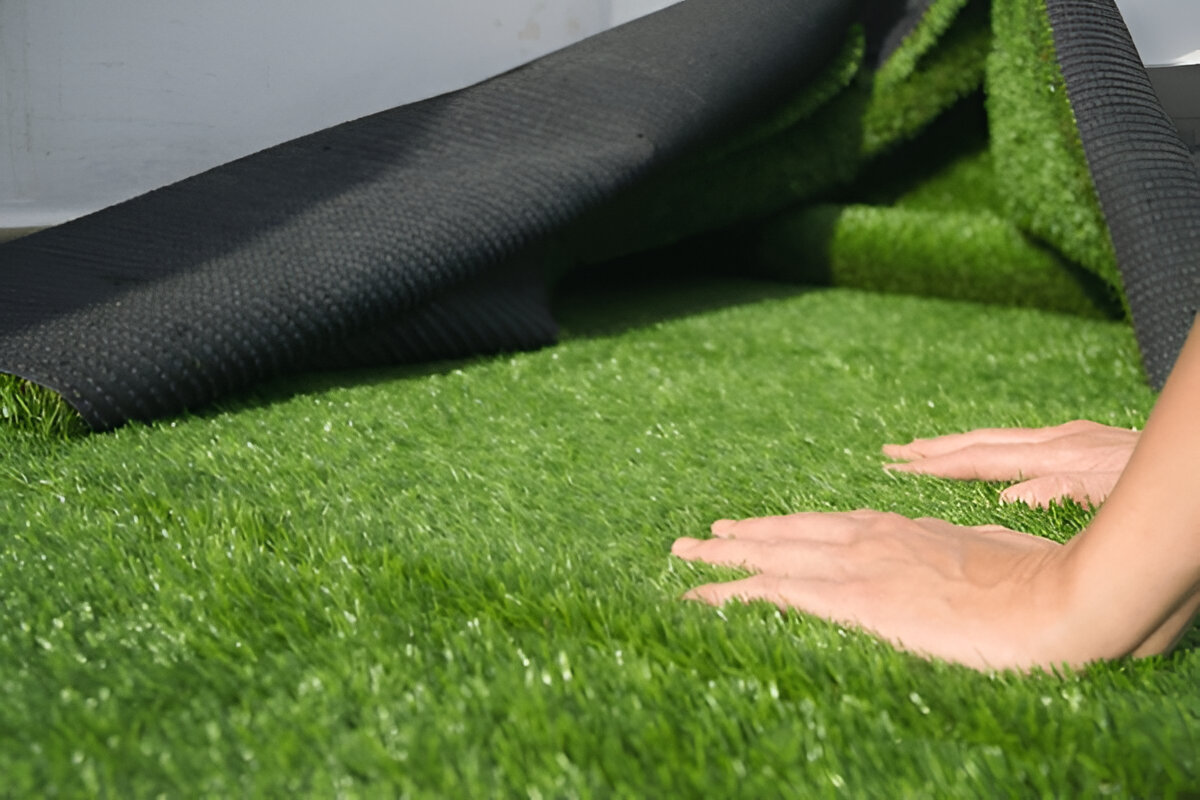
Maintaining natural grass in Las Vegas requires constant irrigation and upkeep. Even with proper care, lawns in Southern Nevada often become patchy, discolored, uneven, and muddy in certain areas due to the extreme climate. Artificial grass solves these issues by providing a stable, consistent surface that does not depend on water or seasonal conditions.
Water Reduction & Utility Savings
Artificial grass eliminates irrigation for lawn areas, which significantly reduces outdoor water usage. Las Vegas homeowners can reduce outdoor water consumption by eliminating turf irrigation entirely — and converting qualifying irrigated grass may qualify for the SNWA Water Smart Landscapes Rebate. Use our SNWA rebate calculator to estimate your savings.
Lower Maintenance Overhead
No mowing, fertilizing, or reseeding is required. Occasional rinsing and brushing are the only routine tasks needed to keep residential turf looking clean and upright — even in high-traffic areas or yards with active pets and children.
Consistent Appearance in All Seasons
Turf maintains a uniform, green appearance without seasonal changes. There are no dormant brown periods in winter, no heat-stress yellowing in summer, and no worn patches from foot traffic.
Improved Year-Round Usability
Yards remain clean and usable without mud, bare dirt, or worn grass areas. Whether the yard is used for entertaining, relaxation, children's play, or pets, artificial turf provides a reliable surface in every season.
Specifying Turf Materials for the Southern Nevada Climate
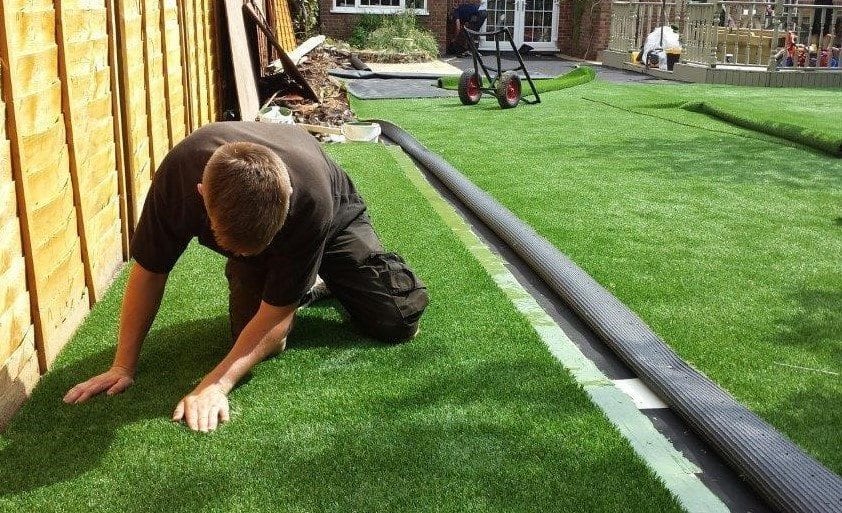
Not all synthetic grass is manufactured equal. In Las Vegas, where summer temperatures regularly exceed 110°F, low-cost turf products will degrade, fade, or flatten reliablely. Specifying the correct materials for your front or backyard layout is critical to achieving a 15- to 20-year lifespan.
Blade Shapes and Heat Reflection: Modern turf fibers are engineered with specific structural shapes. W-shaped, C-shaped, and S-shaped blades are designed to reflect sunlight and deflect heat, keeping surface temperatures up to 15 degrees cooler than flat, older blade designs. These shapes also provide structural resilience, bouncing back under heavy foot traffic instead of packing down flat.
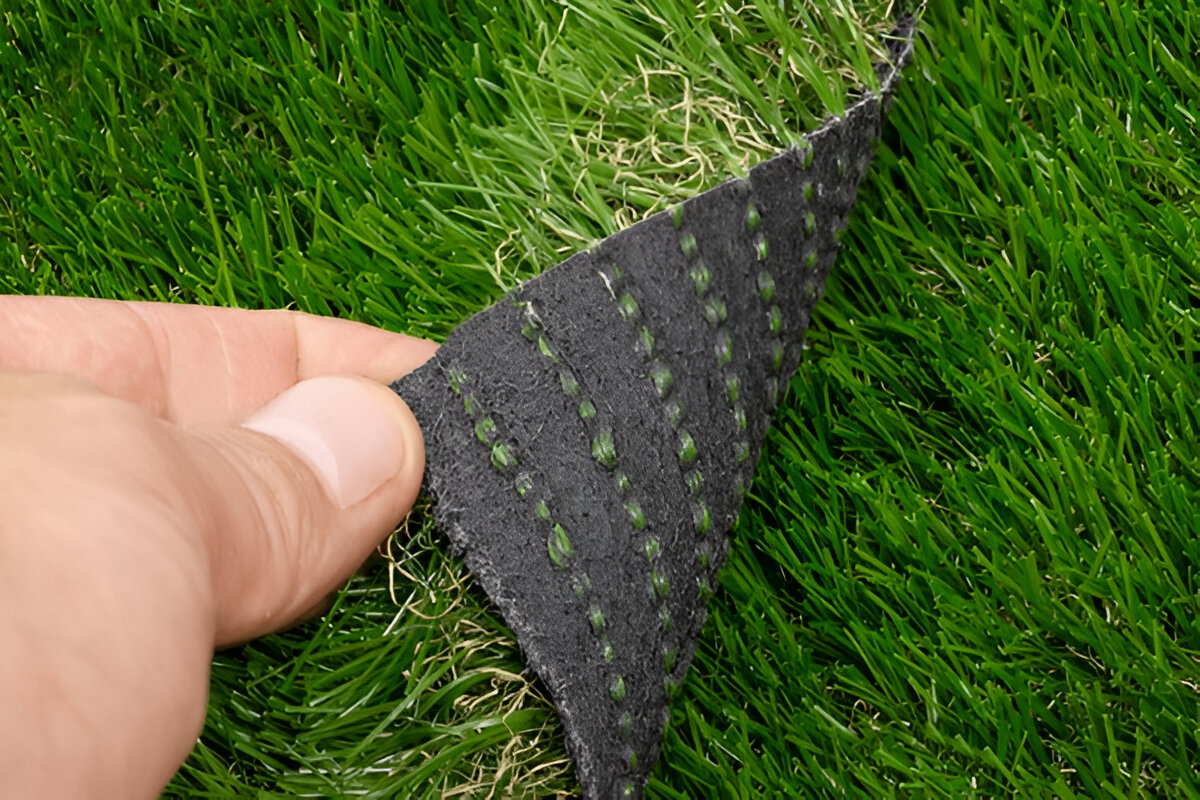
Backing Systems and Permeability: The backing holds the turf fibers in place. For Las Vegas residential yards, dual-layered polyurethane backing is the gold standard. It resists expansion and contraction in intense heat far better than standard latex backings, preventing ripples. Polyurethane is also highly permeable, allowing urine and rainwater to drain at rates exceeding 30 inches per hour.
Infill Options: Infill is swept into the turf base to keep blades standing upright and add weight to prevent shifting. Silica sand is standard for decorative lawns, while acrylic-coated antimicrobial sand (like Envirofill) and natural zeolite aggregates are specified for dog yards to filter liquids and neutralize ammonia odors at the base level.
Where Artificial Grass Is Installed in Residential Properties
Artificial turf is highly versatile and can be installed in almost any outdoor area of a residential property. The most common applications in Las Vegas homes are listed below.
Front Yard Turf
Improve curb appeal, replace decorative grass, and reduce water usage. Front yard turf is one of the most common SNWA rebate projects. See our page on front yard and backyard turf.
Backyard Turf
Create a clean, functional backyard for relaxing, entertaining, and family use. A low-maintenance surface that works daily without upkeep. Explore our backyard turf design guidelines.
Pet Turf Areas
Designed for durability, drainage, and cleanliness. Ideal for dog runs, side yards, and backyard pet areas with antimicrobial infill. Read our guide to pet turf systems.
Playground Turf
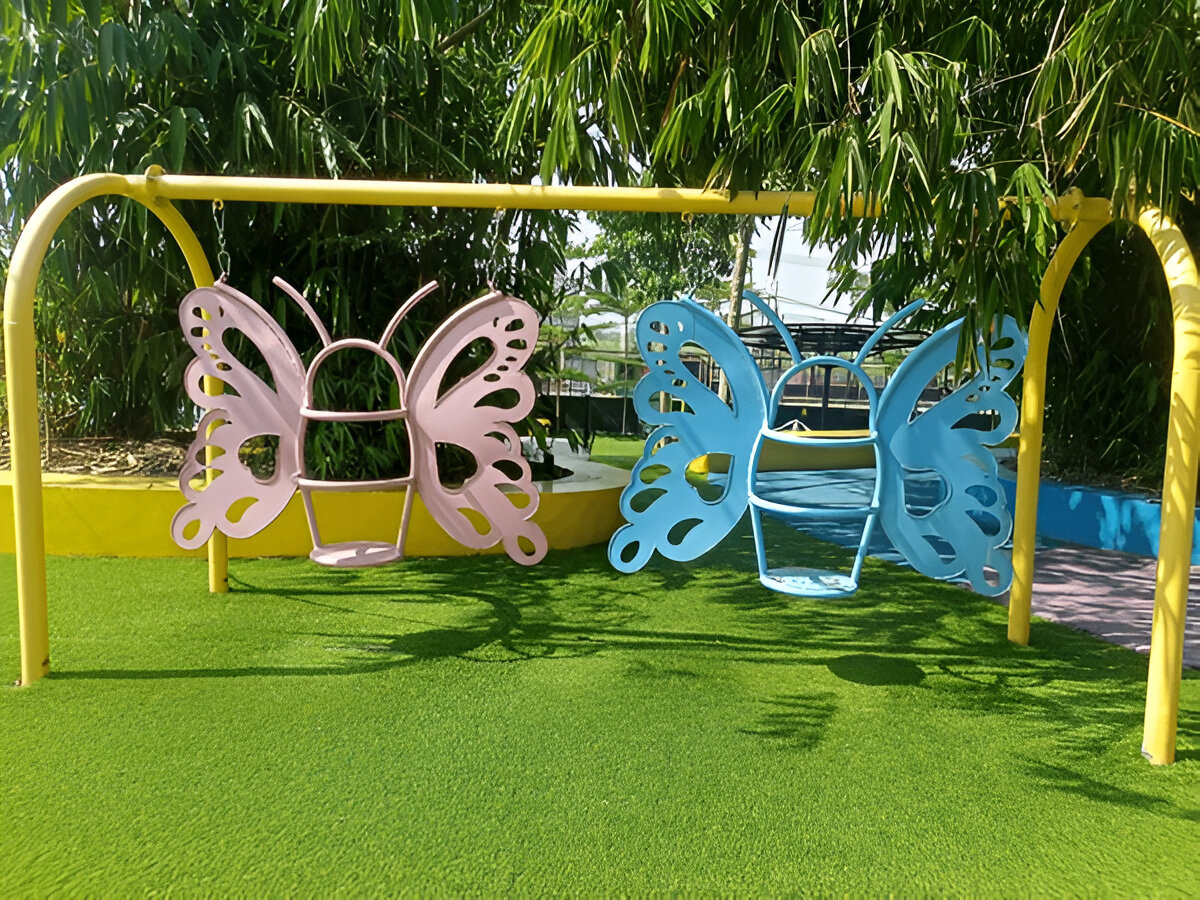
A consistent, safe surface for children's play areas. Easier to maintain than natural grass and available with cushioned foam underlayment. Visit our page on playgrounds.
Poolside Turf
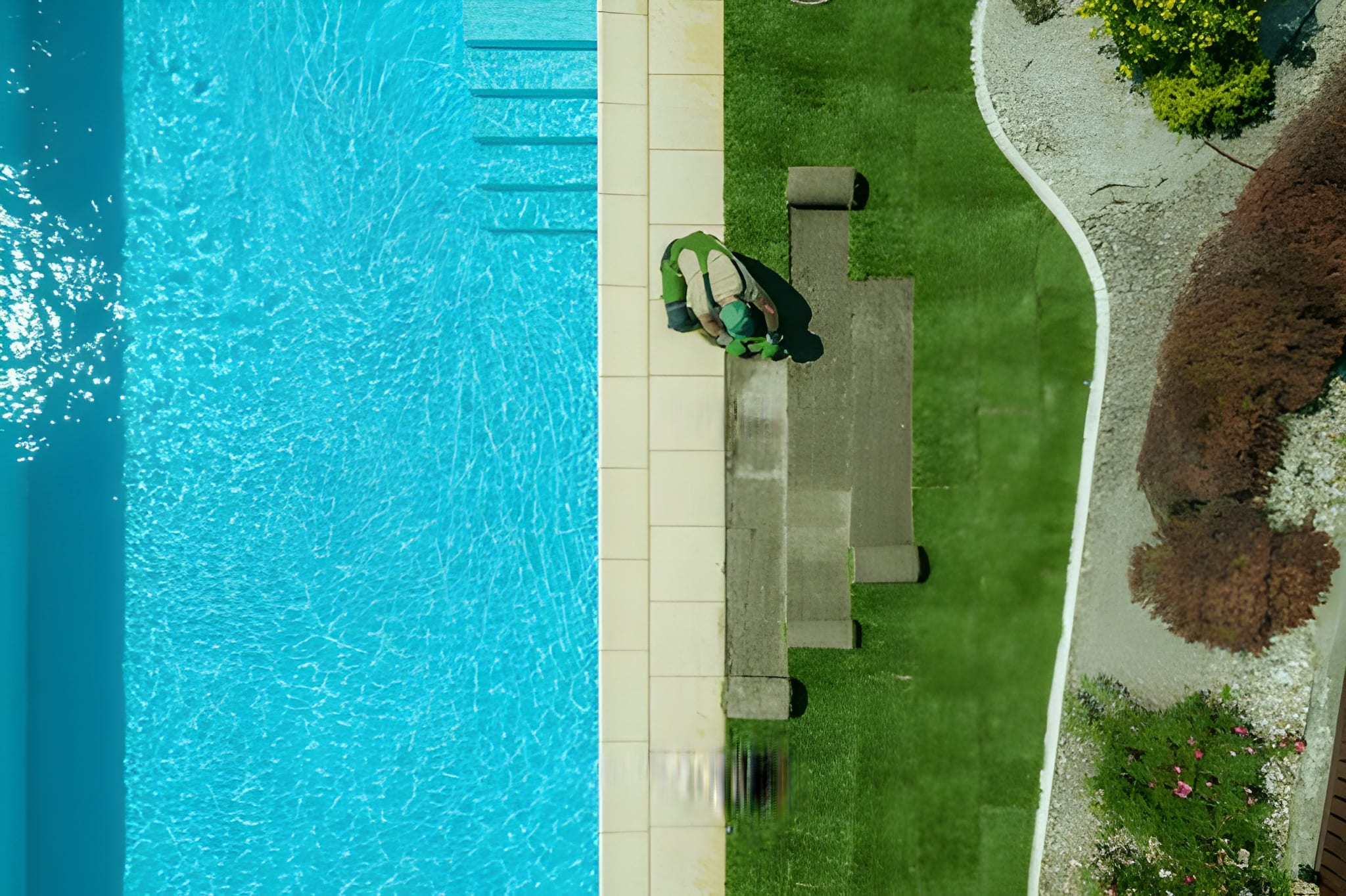
Clean appearance around pools with reduced dirt and debris tracked inside. Comfortable underfoot and designed to handle pool water runoff. Learn more about poolside turf.
Putting Greens
Custom home putting greens with adjustable contours, fringe turf, and seamless integration with surrounding landscape areas. Explore our premium putting greens installation.
Side yards — often narrow and difficult to maintain with natural grass — are also a common application. Turf provides easy maintenance, clean pathways, and a durable surface in spaces that are typically neglected with traditional landscaping.
Artificial Grass vs. Natural Grass in Las Vegas
In desert climates, the practical gap between artificial and natural grass is much larger than in moderate climates. This comparison reflects Las Vegas conditions specifically.
| Feature | Artificial Grass | Natural Grass |
|---|---|---|
| Water Usage | None — no irrigation needed | High — constant irrigation required |
| Maintenance | Low — rinse and brush occasionally | High — mow, fertilize, reseed |
| Appearance | Consistent year-round | Seasonal — browns in heat and winter |
| Durability | 15–20 years with proper installation | Limited — wears with traffic and heat |
| Mud & Dirt | None | Common in irrigated areas |
| Pet Areas | Designed for drainage and odor control | Dead spots, odor, and muddy patches |
| SNWA Rebate | Qualifies when replacing irrigated grass | N/A |
For a full breakdown of your options, see our artificial grass vs. gravel comparison for Las Vegas desert landscaping.
How Artificial Grass Fits Into Backyard Remodels
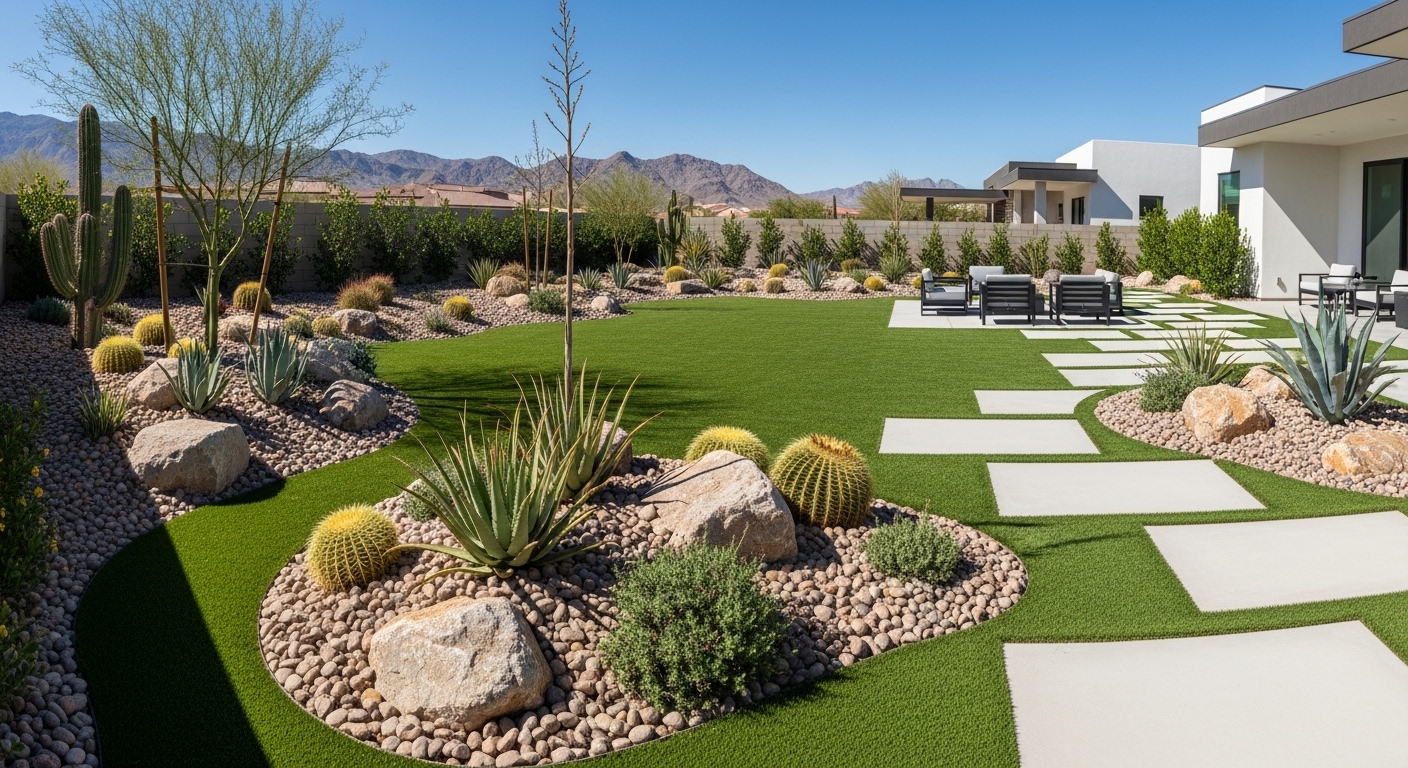
Artificial grass is rarely installed in isolation. In Las Vegas, it is most often part of a full outdoor remodel that combines multiple elements into a cohesive design. This allows homeowners to create a complete, functional outdoor layout that serves multiple uses.
Turf is commonly combined with hardscaping, shade structures, and lighting to expand the outdoor livable space and make the area functional during the hot summer months. By coordinating these elements, homeowners avoid mismatched borders and ensure proper grading and drainage across the entire yard from day one.
Our team designs and installs every element of a backyard project — from turf to hardscape to lighting — as a single cohesive project. Visit our backyard remodel page to see how we approach full outdoor design.
Turf is commonly combined with:
-
Pavers and Concrete — Clean transitions between turf and hardscape areas create defined outdoor zones for seating, pathways, and entertainment.
-
Patio Covers and Pergolas — Shade structures keep turf cooler and make outdoor areas more comfortable during Las Vegas summers.
-
Outdoor Kitchens — Integrated cooking and dining areas combined with turf create a complete entertainment space.
-
Landscape Lighting — LED lighting enhances the appearance of turf at night and improves safety around pathways and seating areas.
-
Desert Plants and Garden Beds — Desert-adapted plants integrated into turf areas add natural texture and visual depth to the overall design.
Artificial Grass Installation Process — What to Expect
Understanding the installation process helps homeowners plan effectively and evaluate installer quality. Each step affects the long-term durability and performance of the finished installation. Our team follows a strict, professional sequence tailored to Las Vegas soil, temperature, and drainage conditions.
Site Preparation — Existing Grass and Vegetation Removal
All existing grass, roots, and organic material are removed from the area. In Las Vegas, Bermuda grass requires careful removal — its root system is aggressive and any live rhizomes left in the soil can push through the finished installation. A pre-treatment herbicide application is recommended on established Bermuda lawns before mechanical removal begins.
Irrigation lines in the converted area are capped, removed, or rerouted as part of this step. Leaving live irrigation under the new base creates leak risk and is a common source of subsurface erosion in failed installations.
Base Preparation — Excavation and Aggregate
A compacted aggregate base — typically Class II road base — is installed to create the stable, permeable foundation that everything else depends on. Residential installations are typically excavated to 3–4 inches below the finished grade of surrounding hardscape, with the base compacted in lifts using a plate compactor.
This step is where most installation failures originate. Soft spots, uneven base material, or skipped compaction steps all show through the finished turf surface within weeks of installation.
Grading and Drainage
The subgrade and base are graded to ensure water moves away from the house foundation and toward appropriate drainage points. A minimum 1% slope is standard for residential installations. Flat yards or yards with poor natural drainage may require French drain or channel drain systems installed at the subgrade level before base material is placed.
In Las Vegas, poor drainage creates odor problems in pet areas and can cause base shifting during heavy monsoon rain events. Drainage planning is non-negotiable on every project our team completes.
Weed Barrier Installation
A commercial-grade, permeable weed barrier fabric is installed at the subgrade level — beneath the aggregate base, not on top of it. Placing the barrier on top of the base does nothing to prevent weed germination from soil below. The barrier belongs between the native soil and the first aggregate layer, with seams overlapped and secured with landscape staples.
Turf Installation — Placement, Seaming, and Edging
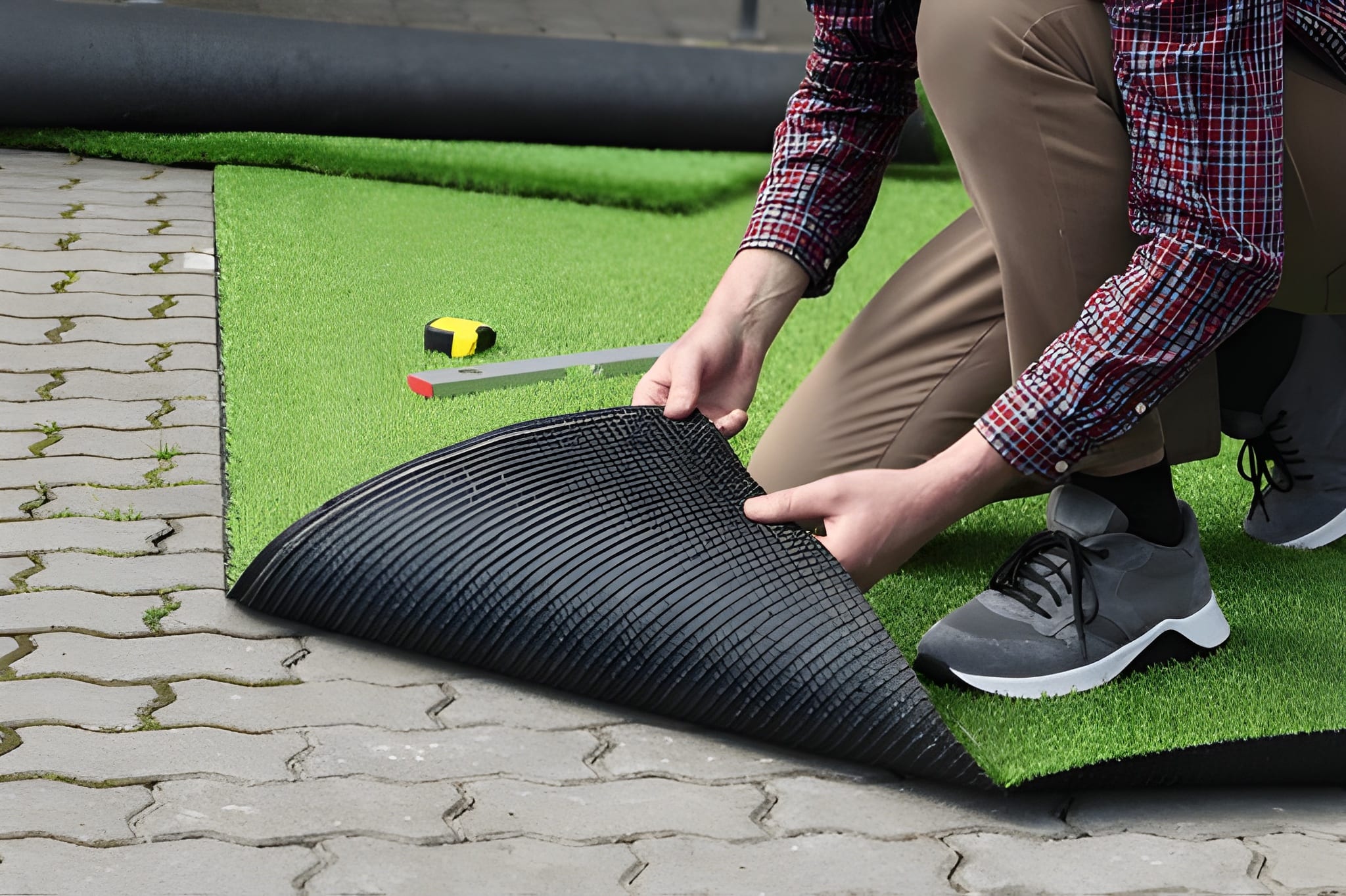
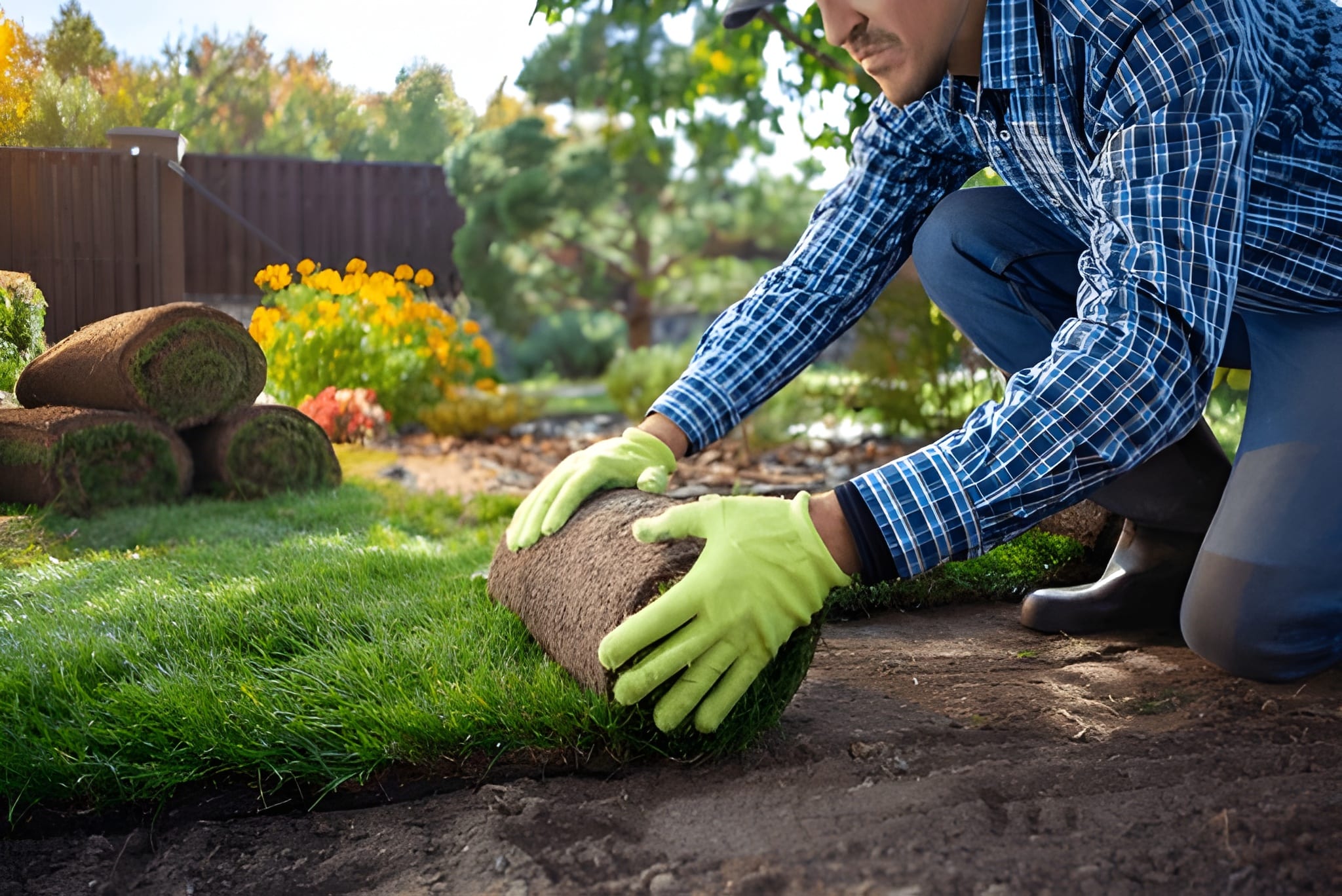
Artificial grass rolls are positioned with grain direction aligned for consistent color and texture across the entire area. Edges are trimmed precisely, then seamed using industrial-grade tape and adhesive formulated for Las Vegas heat conditions. Every seam is power-rolled to produce an invisible joint.
Rigid bender board or metal edging is installed at all perimeters to keep turf secure and create clean transitions to surrounding pavers, planters, or concrete.
Infill Application and Final Grooming
Infill material — silica sand, zeolite, or a cooling infill product depending on the application — is spread evenly across the surface to support blade structure, add weight, and improve comfort underfoot. For heat reduction, specialized cooling infill is available that significantly lowers surface temperature during peak Las Vegas summer days.
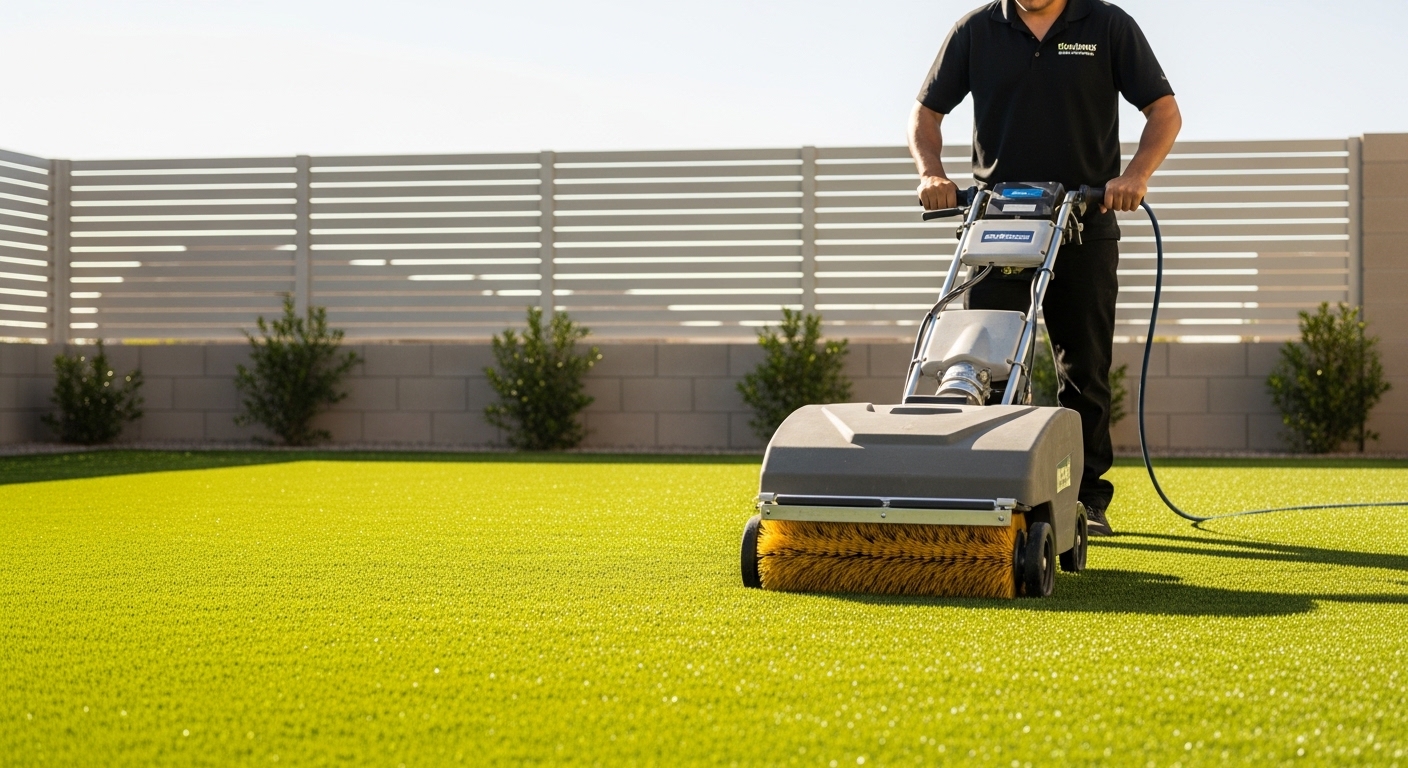
A power broom lifts fibers to a natural, upright position. A final walk-through confirms seam alignment, infill distribution, and edge finish before the project is complete.
Overcoming Las Vegas Soil and Sod Challenges
Installing artificial grass in the Mojave Desert presents physical challenges that require local expertise to resolve. Standard installation guides written for soft loam soils do not apply to Southern Nevada's hardpack clay and aggressive grass species.
Managing Caliche Hardpan: Caliche is a natural, concrete-like layer of calcium carbonate found just beneath the surface throughout the Las Vegas Valley. When excavating 3 to 4 inches for a turf base, installers often strike caliche layers that block all downward water movement. Our team uses electric jackhammers to break up this hardpan layer, backfilling with coarse sand and crushed aggregate to create drainage paths. Skipping this step leads to trapped moisture beneath the turf, shifting bases, and persistent mildew odor.
Eradicating Bermuda Grass Rhizomes: Most older lawns in Las Vegas are Bermuda grass. Bermuda is an aggressive, drought-resistant grass that spreads via deep underground root structures (rhizomes). Simply running a sod cutter over the top of a Bermuda lawn is not enough to kill it. If live roots are left beneath the aggregate base, they will eventually grow through the turf seams and drainage perforations, ruining the lawn. We implement a systematic glyphosate spray and water cycle at least two weeks before excavation to kill the lawn down to the deepest root tips, ensuring the subgrade is completely dead before laying aggregate.
Drainage and Performance Considerations
Drainage is one of the most important factors in turf performance — and one of the most frequently overlooked in lower-quality installations. A properly installed drainage system allows water to pass through efficiently, prevents pooling on the surface, and maintains the stability of the base material over time.
In Las Vegas, drainage performance is especially critical because of the region's soil composition (including caliche hardpan layers that block drainage if not broken up during excavation) and the occasional heavy monsoon rain events that put severe short-term pressure on a drainage system that otherwise handles near-zero rainfall for months at a time.
For pet turf areas specifically, drainage design is the primary factor determining whether a yard develops odor problems. A properly graded surface with permeable backing and appropriate infill drains and dries reliablely — poor drainage traps liquid and creates persistent odor regardless of how well the turf surface is maintained.
Drainage problems cannot be corrected after the base is compacted without removing and reinstalling the turf. Addressing drainage at the subgrade stage — before any material goes down — is always significantly less expensive than correcting it after the fact. See our full guide on yard preparation for artificial grass installation in Las Vegas for more detail.
Common Installation Mistakes to Avoid
Most turf issues that develop after installation trace back to improper planning or installation decisions that were made during the preparation phase. Understanding these failure points helps homeowners evaluate installer quality before committing to a project.
By avoiding these common shortcuts, you protect your landscape investment. Standardizing compaction techniques, selecting specialized turf grades, and securing correct subgrade weed protection ensures your turf is durable, safe, and retains its green beauty for decades.
-
Poor Base Preparation — Skipping compaction lifts or using inadequate base material leads to soft spots and uneven surfaces that appear within weeks of installation.
-
Incorrect Grading — A flat or negatively-sloped subgrade causes drainage pooling and, in pet areas, persistent odor that no amount of surface cleaning can resolve.
-
Wrong Turf Product for the Application — Using a general-purpose turf in a high-traffic pet area, or selecting a product without adequate UV stabilization for Las Vegas sun exposure, leads to premature wear and color fading.
-
Improper Seam Placement — Seams placed perpendicular to the primary viewing angle, or seamed with inadequate adhesive, become visible within months. Seam direction and adhesive quality are critical to a natural-looking finished result.
-
Weed Barrier Placed on Top of Base — A common shortcut that provides no protection against weed germination from the soil below. The barrier must be placed at the subgrade level to be effective.
-
Live Bermuda Rhizomes Left in Soil — Bermuda grass is the dominant lawn type in Las Vegas and its root system is extremely persistent. Without proper herbicide pre-treatment and complete removal, Bermuda can push through the finished installation from below.
Artificial Grass and Water Conservation in Las Vegas
Water conservation is one of the primary reasons Las Vegas homeowners switch to artificial turf. Natural grass is one of the largest consumers of residential outdoor water — and in Southern Nevada, where the Colorado River supplies the majority of the region's water and faces ongoing drought conditions, reducing lawn irrigation is both financially and environmentally significant.
Artificial grass eliminates irrigation for converted lawn areas entirely. A typical Las Vegas front yard of 500–1,000 square feet can save thousands of gallons of water per year after conversion. Paired with drought-resistant landscaping in remaining planting beds, a converted property can dramatically reduce its total outdoor water footprint.
Homeowners who replace qualifying irrigated nonfunctional grass with approved landscaping — including artificial turf — are eligible for the SNWA Water Smart Landscapes Rebate. Our team handles all application documentation and coordinates with SNWA on every qualifying project. Use the SNWA rebate calculator to estimate what your project qualifies for before you commit.
SNWA approval must be received before any grass removal begins. Our team submits the application as part of project planning — never after work has started.
Residential Turf Design Considerations
Every Las Vegas property is different, and turf should be planned based on the specific characteristics of the yard and how the homeowner intends to use it. Proper planning ensures the turf product, base specification, and layout all match the actual conditions and usage demands of the space.
Yard Layout — Shape and Size
The shape and size of the space affects seam placement, roll direction, and material requirements. Irregular shapes and narrow runs require more planning to minimize visible seams and waste. Accurate measurements before installation prevent material shortages and documentation issues for SNWA rebate applications.
Usage Needs — Pets, Children, or General Use
Pet areas require different turf products and infill specifications than general lawn areas. Pet turf uses permeable backing and antimicrobial or deodorizing infill designed for drainage and odor control. Playground areas for children may require cushioned underlayment for impact absorption. General lawn areas have different pile height and blade shape preferences than putting greens or sports surfaces.
Sun Exposure and Heat Mitigation
Las Vegas sun exposure is extreme. UV-resistant, heat-stabilized turf products are specified for all outdoor residential applications. For south-facing yards or areas with limited shade, cooling infill technology can significantly reduce surface temperature during summer peak hours.
Integration with Hardscape elements
How turf connects with surrounding pavers, concrete, and hardscape elements affects both appearance and long-term performance. Edging type, transition details, and grade relationships between turf and hardscape all need to be determined before installation begins. Our custom landscape design with turf integration service addresses all of these elements as a unified design.
Residential Service Areas Across the Las Vegas Valley
We provide residential artificial grass installation throughout the Las Vegas Valley. All service areas are covered by our standard project process including SNWA rebate coordination, base preparation, and workmanship warranty.
Frequently Asked Questions — Residential Artificial Grass
Yes. Front yard turf is one of the most common residential applications in Las Vegas. It improves curb appeal, eliminates irrigation for decorative lawn areas, and qualifies for the SNWA Water Smart Landscapes Rebate when replacing irrigated nonfunctional grass. See our dedicated page on front yard and backyard turf in Las Vegas for more detail.
Yes. Backyard turf is one of the most popular residential installations we complete. It creates a clean, durable surface for relaxing, entertaining, and family use without the maintenance demands of natural grass in Las Vegas heat. Our backyard turf design service covers the full design and installation process for residential backyards.
Minimal maintenance is required compared to natural grass. Occasional rinsing to remove dust, brushing high-traffic areas to keep fibers upright, and removing organic debris are the primary tasks. No mowing, fertilizing, or watering is needed. See our Las Vegas artificial grass maintenance guide for a full breakdown, or ask about our optional turf maintenance and repair service.
Yes. When properly installed with permeable backing and appropriate infill, artificial turf provides a clean, non-toxic, lead-free surface suitable for both pets and children. Antimicrobial infill options are available for pet turf areas to control odor, and cushioned underlayment is available for playground installations.
Yes. Replacing irrigated nonfunctional grass with artificial turf qualifies for the SNWA Water Smart Landscapes Rebate, provided SNWA approval is received before removal begins. Our team handles the entire application process as part of every qualifying project. Use the SNWA rebate calculator to estimate your potential rebate before you start.
With professional installation and routine care, quality artificial turf lasts 15 to 20 years in Las Vegas conditions. UV-resistant and heat-stabilized turf products are specified for all of our residential installations to prevent fading and premature wear. For an estimate of total project expenses, see our artificial grass cost guide.
Contact Us for Residential Artificial Grass in Las Vegas
Get in touch with Las Vegas Artificial Grass to discuss your home property landscape requirements, request an estimate, or plan an SNWA rebate conversion.